
August 27, 2026
Brand Equity and How It Shapes Customer Choice
Excerpts: Brand equity is the added value associated with a brand based on how customers perceive, recognize, and experience it. It can influence purchasing decisions, customer loyalty, and the value customers attach to a brand.
Drishti, Manager - Digital Marketing

Table of Contents
- What Is Brand Equity?
- Why Does Brand Equity Matter to a Business?
- What Are the Key Components of Brand Equity?
- What Are Some Examples of Strong Brand Equity?
- How Do Businesses Build and Strengthen Brand Equity?
- How Can Businesses Measure Brand Equity?
- Conclusion
Brand Equity and How It Shapes Customer Choice
A brand is more than its name, logo, or visual identity. Over time, customers develop perceptions about what a brand represents, the quality they can expect from it, and the experiences they associate with it. These perceptions can influence which brands they choose, whether they return, and how much value they place on their products or services.
This accumulated value is known as brand equity. For businesses, strong brand equity can support customer loyalty, positive brand associations, stronger competitive positioning, and greater perceived value. It is built through consistent experiences, product and service quality, marketing, and the relationships a business develops with its customers.
What Is Brand Equity?
Brand equity is the added value associated with a brand based on how customers perceive, recognize, and experience it. It reflects the strength of the relationship between a brand and its customers and can influence purchasing decisions, loyalty, and the value customers attach to its products or services.
For example, two businesses may offer similar products at similar prices, but customers may consistently prefer one because they recognize the brand, trust its quality, or have had positive experiences with it. Those perceptions contribute to the brand’s equity.
Several elements work together to shape brand equity:
- Brand awareness: How familiar customers are with a brand and how easily they recognize or recall it.
- Brand associations: The ideas, qualities, emotions, and experiences customers connect with a brand.
- Perceived quality: How customers judge the quality and reliability of a brand’s products or services.
- Brand loyalty: The extent to which customers continue choosing a particular brand instead of competitors.
- Brand image: The overall perception customers have of a brand and the attributes they associate with it.
These elements are closely connected. Strong brand awareness can make a brand easier to consider, while positive associations, perceived quality, and customer loyalty can strengthen the value customers attach to it.
How Does Brand Equity Work?
Brand equity develops through repeated interactions between a business and its customers. Every experience can influence what customers think about the brand, what they associate with it, and whether they choose it again.
The process involves several connected areas:
Brand Awareness
Customers are more likely to consider a brand they recognize and remember. Consistent visibility can help a business become familiar to its target audience and create a foundation for other brand associations.
Brand Associations
Customers attach ideas, feelings, and characteristics to brands based on their experiences and exposure to them. These associations may relate to quality, reliability, convenience, trust, or other qualities that influence how customers evaluate the brand.
Perceived Quality
Customers form opinions about the quality of a brand based on their experiences with its products or services. Consistently meeting or exceeding expectations can contribute to positive perceptions and strengthen the brand over time.
Customer Loyalty
Positive experiences can encourage customers to continue choosing a brand. Loyalty can become particularly valuable because an established customer base may be more likely to make repeat purchases and remain with the brand when alternatives are available.
Brand Recognition
Recognition makes it easier for customers to identify a brand among competing options. Strong recognition can support consideration and help a brand remain familiar throughout the purchasing journey.
Together, these elements contribute to how customers perceive and value a brand. Awareness, loyalty, associations, and perceived quality are closely connected dimensions of brand equity.
What Are the Benefits of Strong Brand Equity?
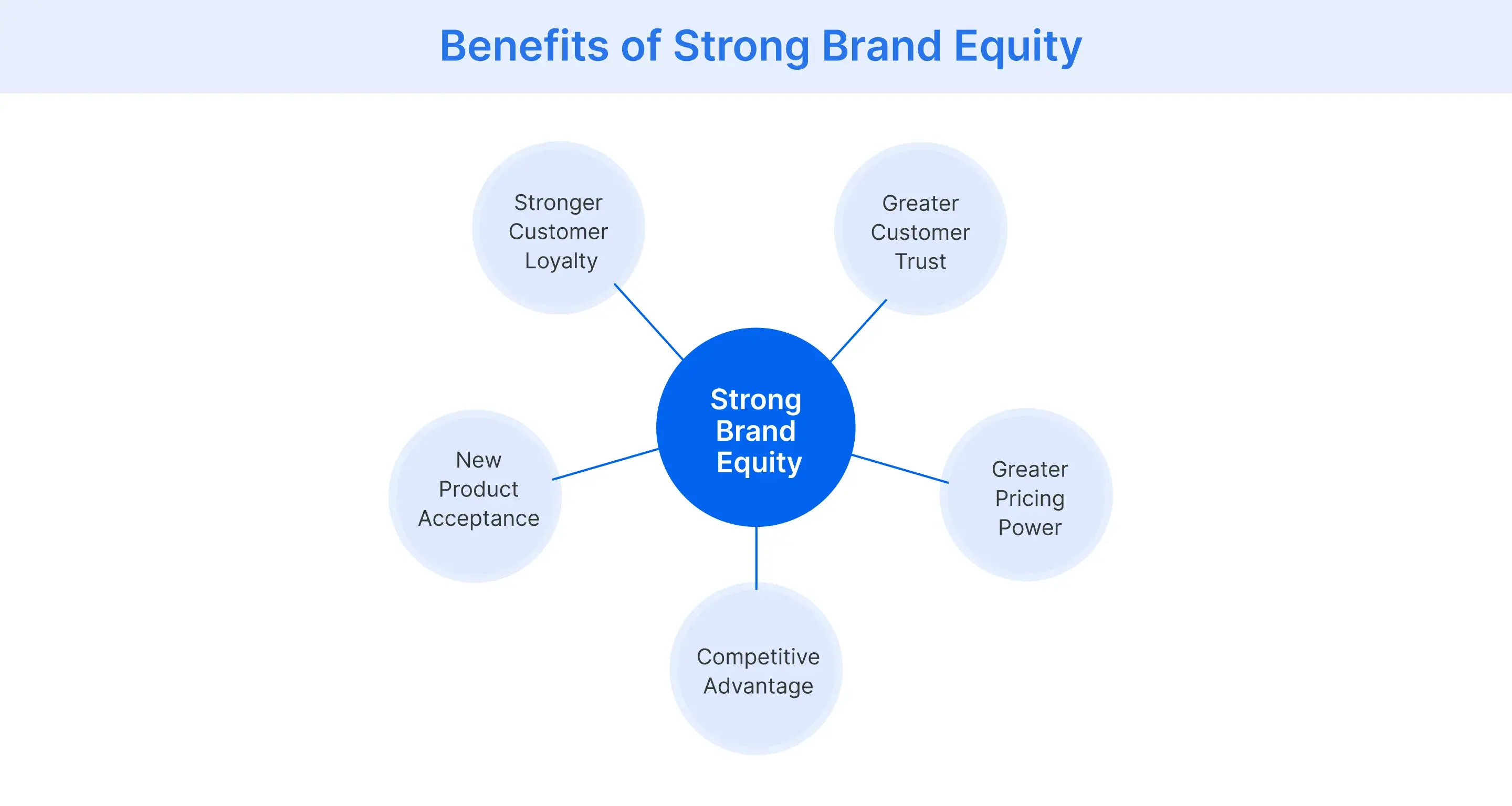
Strong brand equity can influence both customer behaviour and business performance. When customers have positive perceptions of a brand, those perceptions can affect how they evaluate products, make purchasing decisions, and interact with the business over time.
These benefits include:
- Stronger customer loyalty: Positive experiences can encourage customers to return to the brand and make repeat purchases.
- Greater customer trust: Consistent quality and reliable experiences can strengthen confidence in the brand.
- Greater pricing power: Customers may perceive greater value in a trusted brand and be more willing to pay a premium.
- Competitive advantage: Strong brand associations can help a business differentiate itself from competitors offering similar products or services.
- Greater acceptance of new products: Customers who already trust a brand may be more receptive to products introduced under the same brand.
Strong brand equity can therefore create value beyond individual transactions by strengthening customer relationships and the brand’s position in the market.
What Factors Influence Brand Equity?
Brand equity does not develop from a single marketing activity. It is shaped by the different experiences and signals customers encounter throughout their relationship with a brand.
The main factors include:
- Customer experience: Positive and consistent experiences can strengthen loyalty and create favourable brand associations.
- Product and service quality: Consistent quality can influence how customers perceive the reliability and value of a brand.
- Brand identity and positioning: A clear brand strategy, identity and positioning help customers understand what a brand represents and how it differs from competitors.
- Marketing campaigns and communication: Consistent marketing can reinforce the associations and perceptions a business wants customers to develop.
- Customer service: Interactions with customer service can directly influence customer satisfaction and perceptions of the brand.
- Brand consistency: Consistent experiences across different touchpoints can make a brand more recognizable and dependable.
- Social media presence: Social media can shape brand perception by influencing how customers interact with and talk about a brand.
These factors reinforce one another. Marketing can create expectations about a brand, while the actual customer experience determines whether those expectations are strengthened or weakened.
How Can Businesses Build Brand Equity?
Building brand equity requires businesses to consistently reinforce the qualities and experiences they want customers to associate with their brand. This means looking beyond visibility and focusing on the complete customer experience, from product quality and communication to customer relationships and feedback.
Businesses can strengthen brand equity by:
Delivering Consistent Customer Experiences
Every interaction can contribute to how customers perceive a brand. Businesses should aim to provide consistent experiences across their marketing, shopping, purchasing, and customer service touchpoints.
Building Strong Brand Associations
Businesses can strengthen their positioning by consistently connecting the brand with qualities that matter to their target audience. These associations should be reflected in the products, services, messaging, and experiences customers receive.
Maintaining Product Quality
Product quality directly influences customer perceptions. Consistently meeting customer expectations can help build trust, encourage positive associations, and support repeat purchases.
Strengthening Customer Relationships
Businesses can use customer service, loyalty programs, relevant communication, and personalised experiences to build deeper connections with their customers. Stronger relationships can contribute to long-term loyalty.
Using Marketing Content Strategically
Marketing campaigns and content can reinforce brand positioning and communicate the qualities a business wants customers to remember. Consistency across these communications helps strengthen existing brand associations.
Monitoring Customer Feedback
Customer feedback can help businesses understand how customers perceive their products, services, and overall brand experience. Surveys, reviews, and other forms of feedback can reveal areas where the brand is performing well and where improvements may be needed.
How Can Businesses Measure Brand Equity?
Because brand equity reflects both customer perceptions and business outcomes, businesses should not rely on a single metric to evaluate it. Instead, they can combine measures that show how customers perceive the brand with indicators that reveal how those perceptions translate into business performance.
Key indicators include:
- Brand awareness and recognition: Measures how familiar customers are with the brand.
- Customer loyalty: Repeat purchases and retention can indicate the strength of the relationship between customers and the brand.
- Customer satisfaction: Satisfaction levels can reveal how customers evaluate their experiences.
- Brand perception: Surveys, reviews, and customer feedback can help businesses understand the associations customers have with the brand.
- Market share: Changes in market share can provide insight into a brand’s position relative to competitors.
- Price premium: The ability to maintain a higher price can indicate that customers perceive additional value in the brand.
- Customer feedback: Direct feedback can reveal positive and negative perceptions that may not appear in sales data alone.
- Financial performance: Revenue, profitability, and other financial indicators can provide a broader view of the commercial value associated with a strong brand.
Brand perception surveys can measure areas such as awareness, loyalty, perceived quality, brand associations, and purchase intent. A Brand Equity Index can also combine several brand metrics into a broader measure of brand health and competitiveness.
What Is the Difference Between Positive and Negative Brand Equity?
Positive brand equity exists when customers have favourable perceptions and associations with a brand. They may recognize the brand easily, trust its products or services, choose it over competitors, and remain loyal to it.
Negative brand equity occurs when customers develop unfavourable perceptions or associations with a brand. Poor experiences, inconsistent quality, weak customer service, or unmet expectations can reduce trust and make customers more likely to consider competing brands.
The difference ultimately comes down to the value customers associate with the brand and how those perceptions influence their behaviour.
Positive vs. Negative Brand Equity |
|
|---|---|
|
Positive Brand Equity |
Negative Brand Equity |
|
Favourable customer perceptions |
Unfavourable customer perceptions |
|
Strong trust and positive associations |
Reduced trust and negative associations |
|
Greater likelihood of choosing the brand |
Greater likelihood of considering competitors |
|
Supports loyalty and repeat purchases |
Can reduce loyalty and repeat purchases |
|
May support greater perceived value |
May reduce perceived value |
The difference ultimately comes down to the value customers associate with the brand and how those perceptions influence their behaviour.
Why Does Brand Equity Matter in Retail?
For retailers, brand equity can influence how customers discover products, evaluate their options, and decide where to make a purchase. A retailer with strong brand equity may have an easier time building trust, encouraging repeat purchases, and differentiating itself in a competitive market.
Brand equity can also influence how customers respond to pricing. When customers associate a brand with quality and value, they may be more willing to choose it even when cheaper alternatives are available. Strong brand equity can also support customer satisfaction and create a more stable customer base.
As retail becomes increasingly connected across physical and digital touchpoints, maintaining consistent experiences becomes even more important. Every interaction, from product discovery and marketing to checkout and customer service, can contribute to the way customers perceive the brand.
Conclusion
Brand equity is built through the perceptions, associations, and experiences that customers develop around a brand over time. Strong awareness, perceived quality, positive associations, and customer loyalty can help businesses create relationships that extend beyond individual purchases.
For retailers, investing in consistent customer experiences and understanding how customers perceive the brand can create stronger loyalty, greater differentiation, and long-term business value.
Flipkart Commerce Cloud helps retailers build connected commerce experiences that support more consistent customer journeys across digital touchpoints. Book a demo to explore how Flipkart Commerce Cloud can help your business create stronger customer experiences and relationships.

FAQ
The difference between brand equity and brand value lies in consumer perception versus financial metrics. While brand value measures the financial worth of a company on a balance sheet, brand equity reflects the intangible value, customer trust, and premium price point a branded product commands in the market.
To measure or calculate brand equity, companies analyze primary key performance indicators including brand awareness, favorable brand associations, and customer retention. Advanced solutions like Flipkart Commerce Cloud FCC help merchants track these shifting consumer behaviors, giving businesses a distinct competitive edge in evaluating overall brand strength.
Real-world examples of brands with high brand equity, such as Apple and Nike, demonstrate how cultivating an emotional connection commands consumer loyalty. Apple customers willingly pay premium prices for ecosystem integration, while Nike leverages powerful storytelling to foster positive feelings and maintain a massive, dedicated buyer base.
Yes, brand equity can turn negative if public perception shifts unfavorably due to product recalls, poor customer service, or failed marketing efforts. When damaged consumer trust causes shoppers to actively avoid a company, businesses experience declining sales, reduced market share, and impaired success for future new product launches.
A comprehensive survey on the concept of brand equity should include questions assessing brand recognition, perceived quality, and customer trust. Asking respondents how they view your products compared to competitors helps marketing teams gather valuable feedback to optimize future marketing decisions and strengthen long-term customer relationships.
Building strong brand equity matters for small businesses because it builds immediate credibility in competitive markets. Fostering positive customer perceptions allows smaller companies to retain a loyal customer base, charge sustainable prices, lower acquisition costs for new customers, and support successful brand extension into fresh product categories.