
April 20, 2026
Promotional Codes
Promotional codes are alphanumeric strings that shoppers enter at checkout to unlock a discount or special offer on an ecommerce store. Retailers use them to drive sales, reward loyalty and track campaign performance.
Drishti, Manager - Digital Marketing

Table of Contents
- How Do Promotional Codes Work?
- What Are the Different Types of Promotional Codes?
- What Is the Difference Between Promotional Codes and Coupons?
- Why Do Retailers Use Promotional Codes?
- What Rules and Restrictions Apply to Promotional Codes?
- Optimize Your Promotional Strategy with Flipkart Commerce Cloud
Promotional Codes
Promotional codes have become a core tool for online retailers looking to influence buying decisions at the checkout stage. They shape how shoppers perceive value and make the final purchase feel worthwhile.
Every code carries rules set by the retailer around who can redeem it and which products or categories qualify for the offer. These rules decide the final discount applied to the shopping cart.
- Retailers share promotional codes through targeted email campaigns and active social media posts.
- Shoppers enter the code in a dedicated field during the online checkout process.
- The system validates each code against expiry dates and product eligibility rules.
- Valid codes apply the discount instantly and update the order total before payment.
What Are Promotional Codes?
A promotional code is an alphanumeric string of letters and numbers that customers enter at checkout to receive a discount or special offer on their online purchase from a retailer.
These are also referred to as promo codes, discount codes or coupon codes across different online stores. Businesses create them as part of marketing campaigns to encourage purchases and reward customer loyalty.
A typical promotional code looks like SAVE20 or WELCOME10 and unlocks benefits such as free shipping or direct wallet credits. Retailers generate these codes in bulk or one at a time based on specific campaign goals.
How Do Promotional Codes Work?
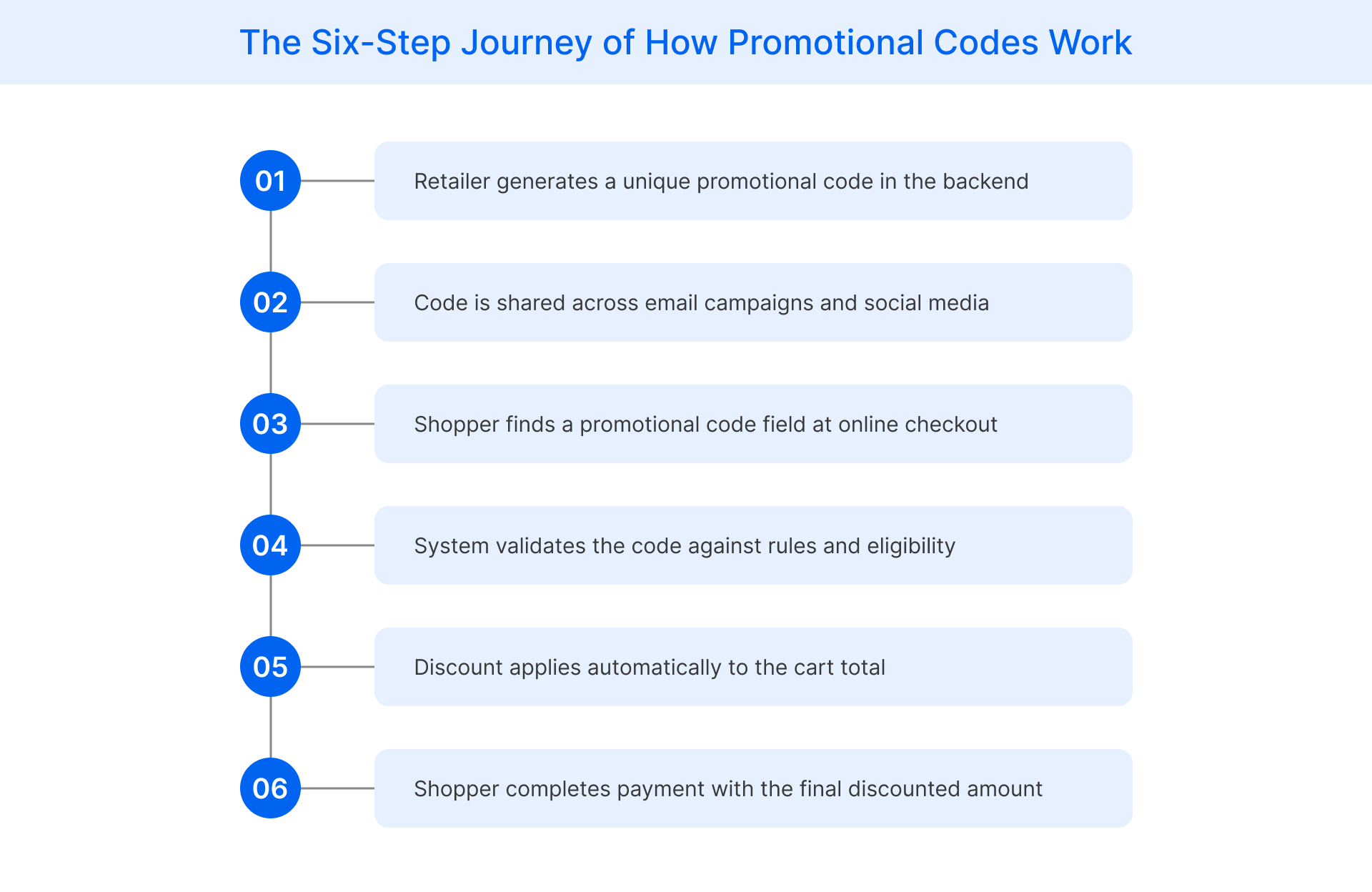
The retailer creates a unique promotional code inside a promotion management software and assigns specific discount terms such as 20% off or free delivery. Each code links to a campaign inside the ecommerce store backend. The retailer distributes it through email campaigns and social media posts.
Customers find a promotional code field during the checkout process on the retailer website or mobile app. They enter the code and click apply to activate the discount. The system then validates the code and checks if all conditions are met.
Conditions include the minimum purchase amount, eligible products or a first-time shopper flag. If valid, the discount is automatically applied to the total order amount before payment. If invalid, the system shows an error message explaining the reason to the shopper.
What Are the Different Types of Promotional Codes?
Retailers design several types of discount codes to match different marketing goals and customer segments across the entire product catalog.
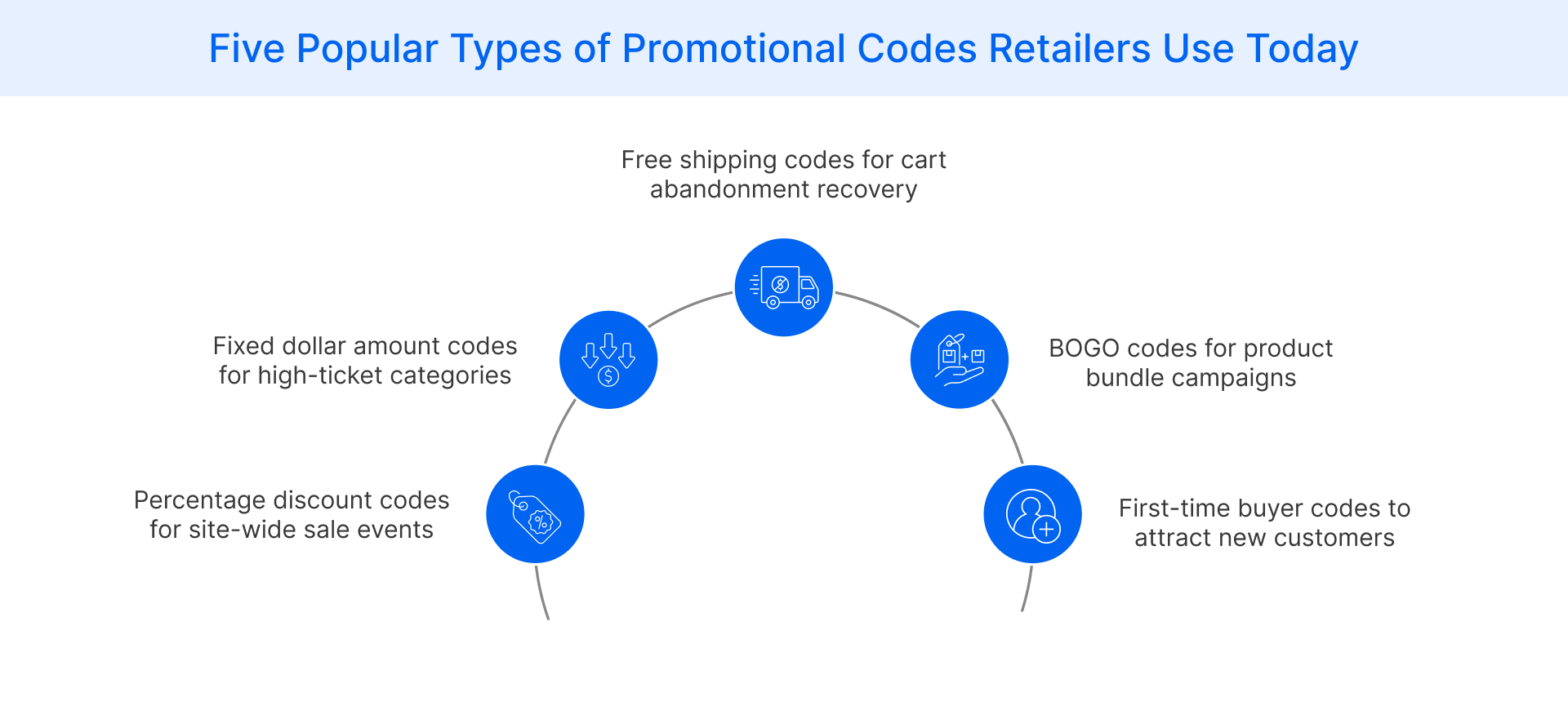
- Percentage Discount Codes: These offer a set percentage off the total purchase value, such as 15% off sneakers or 25% off the entire order. Shoppers pay a lower price during seasonal sales and site-wide events.
- Fixed Amount Discount Codes: These provide a specific dollar value off the cart, such as 10 dollars off any purchase or 25 dollars off orders above 100. They work well for high-ticket retail categories.
- Free Shipping Codes: These waive delivery charges at checkout and remove a common barrier to completing online purchases. Examples include SHIPFREE or FREEDELIVERY, which help brands compete with giants like Amazon on logistics.
- Buy One Get One (BOGO) Codes: These offer a free product when customers buy a specific item at full price. A fashion brand might run BOGOTEES to give shoppers a second shirt free with every qualifying purchase.
- First-Time Customer Codes: These target new customers with welcome offers such as WELCOME10 for 10% off the first order. These codes help online retailers reduce the risk of trial and turn browsers into paying buyers.
What Is the Difference Between Promotional Codes and Coupons?
Promotional codes and coupons both deliver savings to shoppers, though they differ in format and how they reach the customer. A promotional code lives as digital text entered at checkout, while coupons often exist as printed vouchers or visual images.
The table here captures the key distinctions between the two:
|
Basis of Difference |
Promotional Codes |
Coupons |
|
Format |
Alphanumeric codes entered during online checkout on retailer websites or apps |
Visual vouchers printed or digital, sometimes bearing an alphanumeric code |
|
Distribution |
Shared via email and social media as part of digital campaigns |
Distributed as physical prints or downloadable images across offline channels |
|
Tracking Capability |
Easily tracked and attributed to specific campaigns or marketing channels |
Limited tracking ability; attribution is often indirect or handled manually |
|
Usage Flexibility |
Can be reused or personalized per user with set redemption limits |
Typically single-use or limited-use per customer account |
|
Primary Use Case |
Designed for digital commerce and performance marketing on the ecommerce store |
Used for both offline retail promotions and mixed digital campaigns |
Why Do Retailers Use Promotional Codes?
Promotional codes serve several strategic goals for retailers beyond the obvious discount applied at checkout.
- Attract New Customers: First-time buyer codes reduce the risk of trying a new brand and help expand the customer base. They invite shoppers to sample the product without full financial commitment from the start.
- Reward Loyal Customers: Exclusive codes sent to repeat buyers strengthen relationships and encourage their next purchase across product categories. Retailers pair these with loyalty programs to make members feel genuinely valued over time.
- Track Marketing Performance: Unique promotional codes assigned to different marketing campaigns reveal which channels generate the most conversions and sales. This data inside a retail analytics dashboard helps retailers reallocate budgets toward the strongest channels.
- Clear Excess Inventory: Targeted promotional codes on slow-moving products free up warehouse space and recover costs before items lose their value. Retailers often use this tactic at the end of a fashion or festive season.
- Reduce Cart Abandonment: Time-sensitive codes delivered through email help recover sales from shoppers who left items in their cart. An extra discount is often the best way to bring them back and finish the shopping trip at checkout.
What Rules and Restrictions Apply to Promotional Codes?
Every promotional code carries rules that define its use and protect retailer margins from unintended losses.
- Expiration Dates: Most promotional codes carry time limits, such as valid until December 31 or expires in 24 hours, to create urgency. This approach moves shoppers from browsing to buying faster.
- Minimum Purchase Requirements: Some codes only activate when orders exceed a set amount, such as a $50 minimum purchase. This rule protects average order value and steers shoppers toward larger basket sizes.
- Product Exclusions: Codes may exclude sale items or specific brand categories from the discount calculation at checkout. A retailer might block designer sneakers or newly launched electronics to protect their healthy profit margins.
- Usage Limits: Retailers can restrict codes to one use per customer or cap total redemptions across all shoppers. For example, the first 500 shoppers to use SAVE20 receive the benefit while others do not.
- First-Time Customer Only: Some codes are reserved for first-time buyers and will fail for accounts with previous orders. These rules check personal information, such as email address or phone number, to confirm new shopper status.
- Non-Stackable Codes: Many retailers prohibit combining multiple promotional codes in a single transaction to avoid excessive discounting. A shopper may apply either FREESHIP or SAVE15, though rarely both on the same purchase.
Optimize Your Promotional Strategy with Flipkart Commerce Cloud
Flipkart Commerce Cloud gives retailers advanced promotional code management tools built for scale. The platform lets you create and track unlimited codes across every marketing channel. You can connect promotions directly to a unified promotion management platform for end-to-end control.
FCC uses machine learning to recommend optimal discount levels based on customer behavior and purchase history. You can segment audiences and deliver personalized codes that lift conversion rates for each group. Pair this with smart dynamic pricing for stronger margin protection.
The real-time analytics dashboard tracks promotional code performance across all campaigns and marketing channels. You can measure redemption rates and revenue impact with precision and ease. Explore the FCC price optimization software to refine your next promotional push.

FAQ
Most online retailers allow only one promotional code per order at checkout. A few platforms permit stacking specific codes such as a free shipping code with a percentage discount. Check the individual terms before attempting any combined redemption.
If a code fails at checkout, the system usually displays an error message about the reason. Common issues include expired dates or store issues on the platform itself. Contact customer support if the problem persists after basic troubleshooting.
Validity depends on the campaign goal and urgency the retailer wants to create. Flash sale codes last 24 to 72 hours, while welcome codes for new customers may run for 30 days or longer. Seasonal campaigns often align with holiday windows.
Most modern ecommerce platforms accept codes in any case and convert input automatically. Older systems or custom builds may still treat a promo code like SAVE20 differently from save20 at checkout. Always communicate the code in capital letters to avoid shopper confusion.
Yes, most modern retail platforms allow businesses to generate unlimited codes across different campaigns. The practical limit depends on operational bandwidth and the ability to track performance against clear campaign goals. Smart retailers balance volume with strategic focus.