
October 13, 2025
What are Omnichannel Marketing Ads?
Omnichannel Marketing Ads are advertising strategies that integrate multiple digital and physical channels to create seamless customer experiences. These ads ensure consistency across touchpoints, enabling retailers to deliver personalized campaigns that boost engagement and conversions.
Drishti, Manager - Digital Marketing

Table of Contents
- What are Omnichannel Marketing Ads?
- Why is Data Important in Omnichannel Marketing Ads?
- What are the Core Pillars of an Omnichannel Strategy?
- How Do Omnichannel and Multichannel Ads Differ?
- How Can Retailers Build an Omnichannel Marketing Strategy?
- What Challenges Do Businesses Face with Omnichannel Marketing Ads?
- Conclusion
What are Omnichannel Marketing Ads?
Omnichannel marketing ads bring together all marketing channels to create one connected customer experience. Whether a shopper is scrolling through a mobile app, walking into a store, or engaging with a post on social media channels, the journey feels seamless and consistent at every step. For retailers, this means every channel supports the others, guiding customers naturally toward purchase.
This strategy integrates different platforms into a single, unified approach, reflecting the way modern consumers shop. By using connected data, retailers can personalize messages, deliver the right message at the right time, and ensure customers feel valued throughout their journey. This approach increases customer satisfaction, supports customer retention, and nurtures stronger loyalty in a competitive retail environment.
Key aspects of omnichannel marketing ads include:
- Consistent brand identity that customers can recognize across every marketing channel.
- Connect digital marketing platforms and physical store interactions into a single, seamless shopping experience.
- Unified and frictionless omnichannel customer journey that builds trust and long-term engagement.
- Use centralized data insights to tailor messaging and product recommendations to individual customer needs.
- Enhance loyalty through initiatives like a loyalty program, push notifications, and email marketing that drive repeat purchases.
Why is Data Important in Omnichannel Marketing Ads?
Accurate and integrated data forms the backbone of effective omnichannel marketing ads. It captures customer behaviours, preferences, and past interactions across every touchpoint. With this unified profile, retailers can move beyond generic messaging and deliver personalized experiences that resonate more strongly with their customer base.
When data is centralized, ads become timely, relevant, and impactful. Retailers gain the ability to track customer journeys from awareness to purchase, uncovering how different digital channels and offline channels influence decisions. This clarity ensures more engaging experiences while increasing the likelihood of conversion across both digital and physical environments.
Data-driven visibility also strengthens decision-making. By understanding which channels perform best, businesses can allocate budgets more effectively and attribute success accurately. Without clean, centralized data, achieving a truly connected omnichannel experience becomes impossible, limiting opportunities for growth and meaningful customer engagement.
Integrated data enables continuous optimization of marketing efforts. Performance metrics reveal friction points and opportunities for refinement across campaigns. Retailers can test, adapt, and improve in real time, ensuring ads remain effective, retention rates improve steadily, and consumer expectations for seamless experiences are consistently met.
What are the Core Pillars of an Omnichannel Strategy?
A successful omnichannel campaign is built upon several foundational pillars:
- Customer-Centric Focus: The entire strategy revolves around the customer’s needs and journey, prioritizing their experience above channel-specific goals.
- Consistent Brand Experience: Messaging and customer support must remain uniform across different platforms to maintain brand awareness.
- Cross-Channel Integration: All individual channels must connect into a single platform for a frictionless journey.
- Data-Driven Personalization: Unified data enables tailored marketing efforts, such as dynamic product recommendations.
- Seamless User Journey: Customers can start online and finish with curbside pickup or move between digital channels and offline channels without interruption.
How Do Omnichannel and Multichannel Ads Differ?
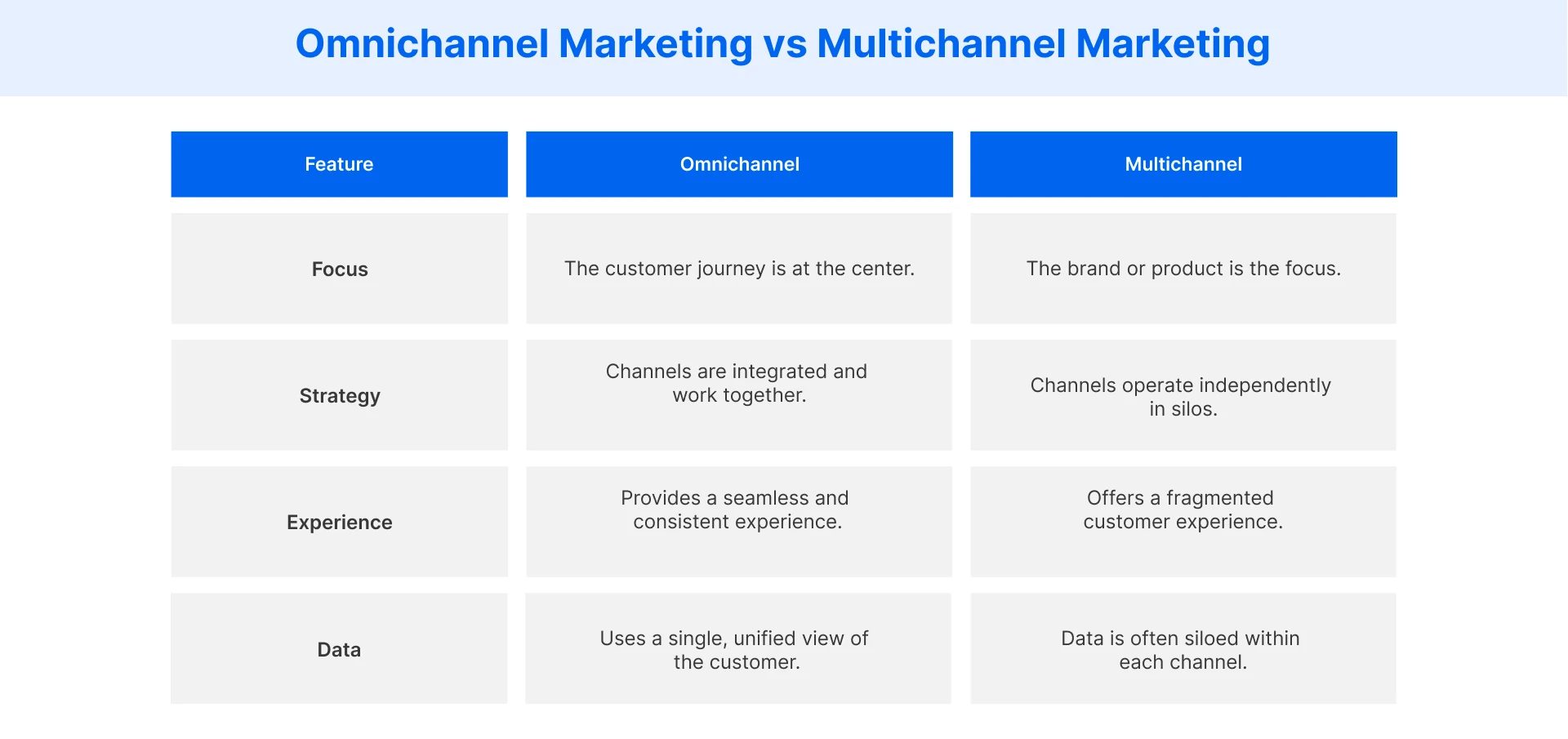
While both strategies utilize multiple platforms to reach customers, their core philosophies are fundamentally different. A multichannel approach focuses on maximizing outreach by being present on various channels, but each channel operates independently. In contrast, omnichannel marketing ads integrate these channels to create a single, unified customer experience.
How Can Retailers Build an Omnichannel Marketing Strategy?
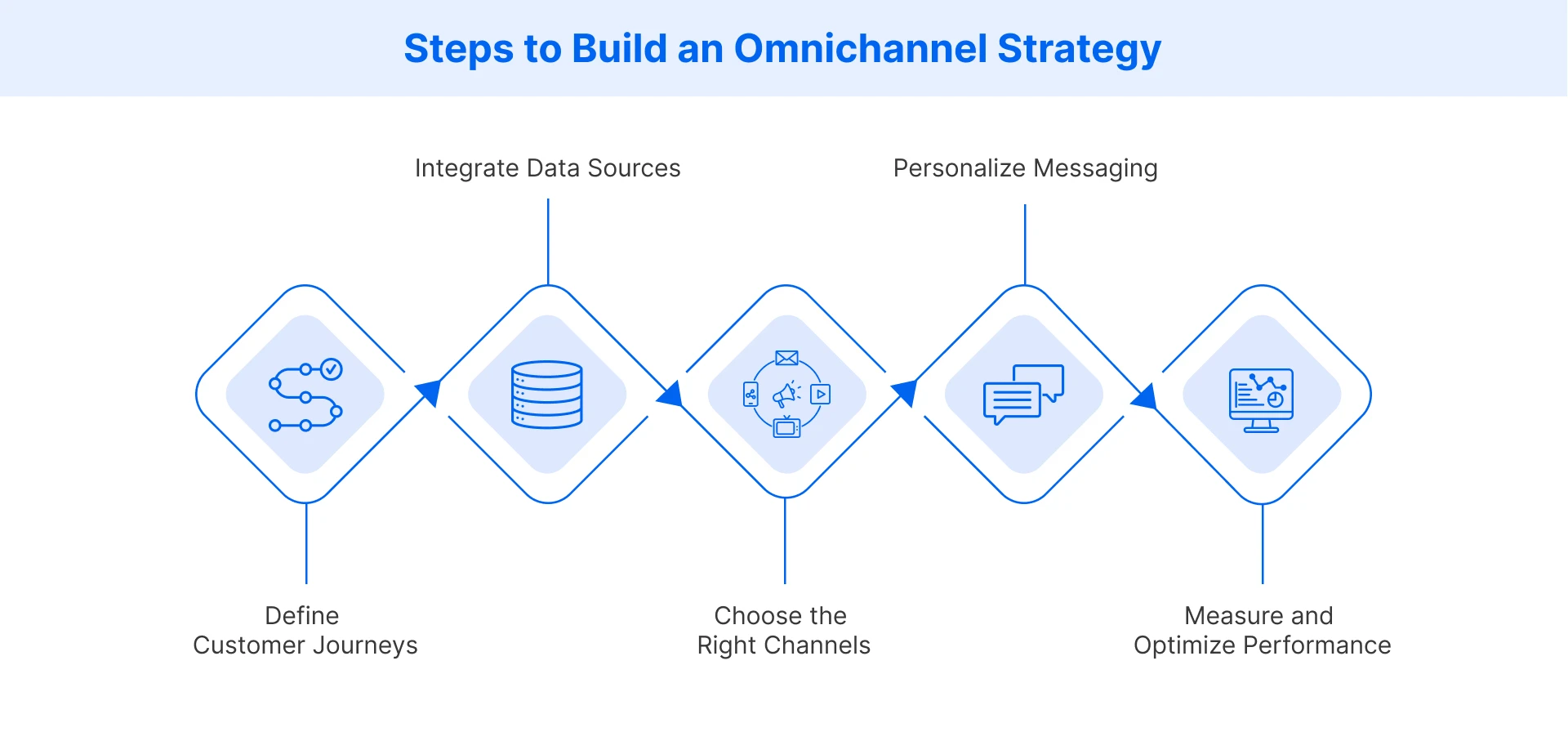
Building an effective omnichannel strategy requires a structured, data-driven approach that aligns technology, processes, and customer insights.
Step 1: Define Customer Journeys
First, you must map every potential customer journey. This involves identifying all digital and physical touchpoints a customer interacts with, from discovering a product on social media to making a purchase in-store. Analyzing these paths helps uncover friction points and moments of opportunity, ensuring your campaigns align with real-world consumer behavior.
Step 2: Integrate Data Sources
A successful strategy depends on a unified view of the customer, which is only possible by breaking down data silos. This requires implementing a system that centralizes data from all channels, including point-of-sale, e-commerce platforms, and marketing tools. At Flipkart Commerce Cloud, our omnichannel CRM solution is designed to connect and synchronize customer data across all touchpoints, creating a single source of truth.
Step 3: Choose the Right Channels
Not every channel is right for every customer or campaign. Use analytics to understand where your target audience spends their time and how they prefer to interact with your brand. Prioritize channels such as search, social, email, and in-store displays based on performance data and customer behavior, enabling more effective resource allocation and optimized ad placements.
Step 4: Personalize Messaging
Leverage your integrated data to deliver tailored messaging at scale. Creative assets, promotional offers, and communications should be dynamically adapted based on a customer's browsing history, past purchases, and expressed preferences. This level of personalization makes customers feel understood and valued, which strengthens brand loyalty in a crowded retail market.
Step 5: Measure and Optimize Performance
Implement a robust analytics framework to track key performance indicators (KPIs) like customer lifetime value, conversion rates by journey, and channel-specific engagement. Use multi-touch attribution models to understand the impact of each touchpoint. Continuously test, learn, and refine your campaigns to maximize engagement and achieve a higher return on ad spend.
What Challenges Do Businesses Face with Omnichannel Marketing Ads?
Implementing a true omnichannel strategy presents several complex challenges that retailers must navigate to achieve a seamless customer experience.
- Data Fragmentation: Customer data is often scattered across separate systems (e.g., e-commerce, POS, CRM), making it challenging to create a single, unified view of the customer journey.
- Channel Silos: Different departments often manage different channels independently, leading to inconsistent messaging, conflicting promotions, and a disjointed customer experience.
- Technological Integration: Connecting disparate legacy systems and modern marketing platforms requires significant technical resources and expertise to ensure data flows seamlessly between all channels.
- Attribution Complexity: Accurately measuring the impact of each touchpoint in a complex customer journey is challenging, making it difficult to optimize ad spend and prove return on investment.

Conclusion
Adopting a holistic approach to advertising is crucial. Omnichannel strategies allow brands to maintain a unified brand identity, deliver the right message at the right time, and improve customer retention. By removing silos, using a customer engagement platform, and aligning the marketing team, retailers can create impactful omnichannel marketing strategies that drive repeat purchases and long-term loyalty.

FAQ
Omnichannel marketing ads create a continuous conversation with customers across their preferred platforms. By recognizing a customer's journey and personalizing interactions at each step, from a social ad to an in-store visit, this approach fosters deeper engagement and builds stronger, more loyal relationships.
Yes, smaller retailers can successfully implement an omnichannel strategy by starting small. They can focus on integrating a few key channels, such as their e-commerce site, social media, and physical store. Utilizing affordable and scalable technology can help create a unified experience without a massive initial investment.
Key metrics include Customer Lifetime Value (CLV), which measures long-term profitability, and conversion rates across different customer journeys. Additionally, tracking channel-specific engagement and using multi-touch attribution models helps identify the most impactful touchpoints and optimize overall campaign performance for better results.
In-store interactions are linked to digital campaigns through technology like QR codes, location-based offers sent to a mobile app, or by sales associates accessing a customer's online wishlist. This integration ensures the physical and digital shopping experiences are connected, consistent, and mutually reinforcing.
Artificial intelligence (AI) is crucial for personalizing experiences at scale. AI algorithms analyze vast amounts of customer data to predict behavior, recommend products, and automate the delivery of targeted ads on the most effective channels, ensuring messaging is always relevant and timely for each individual.