
August 24, 2026
Digital Products and How Businesses Can Create and Scale Them
Digital products are intangible goods that are created, delivered, and accessed digitally rather than as physical products. They include digital content, software, online courses, applications, memberships, and subscriptions that can be distributed through digital platforms.
Drishti, Manager - Digital Marketing

Table of Contents
- What Are Digital Products?
- What Are the Types of Digital Products?
- What Are the Benefits of Selling Digital Products?
- How Do Digital Products Work?
- How Can Businesses Create and Sell Digital Products?
- Where Can Businesses Sell Digital Products?
- How Do Digital Products Differ From Physical Products?
- What Makes a Digital Product Successful?
- Conclusion
Digital Products and How Businesses Can Create and Scale Them
Digital products have become an increasingly important part of how businesses create, sell, and deliver value online. Unlike physical products, they can be created and distributed through digital channels without requiring physical inventory or traditional fulfillment.
For businesses and retailers, digital products can extend an existing product strategy, create new revenue opportunities, and make it possible to serve customers across different markets and digital platforms. However, creating a digital product is only the starting point. Businesses also need to consider the product format, customer need, pricing, distribution, and the experience surrounding the purchase and use of the product.
What Are Digital Products?
A digital product is an intangible product that is created, delivered, and accessed digitally rather than as a physical good. Digital products can include digital content, software, online courses, applications, memberships, subscriptions, and other offerings that customers can access through digital platforms.
The defining characteristic of a digital product is that the product itself does not require a physical form for the customer to receive its value. A customer may download an ebook, access an online course through an account, use a software application, or stream digital content through an online platform.
This makes digital products different from physical products, which require physical production, inventory, storage, and fulfillment. Digital products can instead be distributed electronically, often allowing customers to access them immediately after purchase.
Digital products also extend beyond common examples such as ebooks and online courses. Software, digital services, applications, membership communities, subscription-based products, digital media, and creative resources can all fall within the category.
What Are the Types of Digital Products?
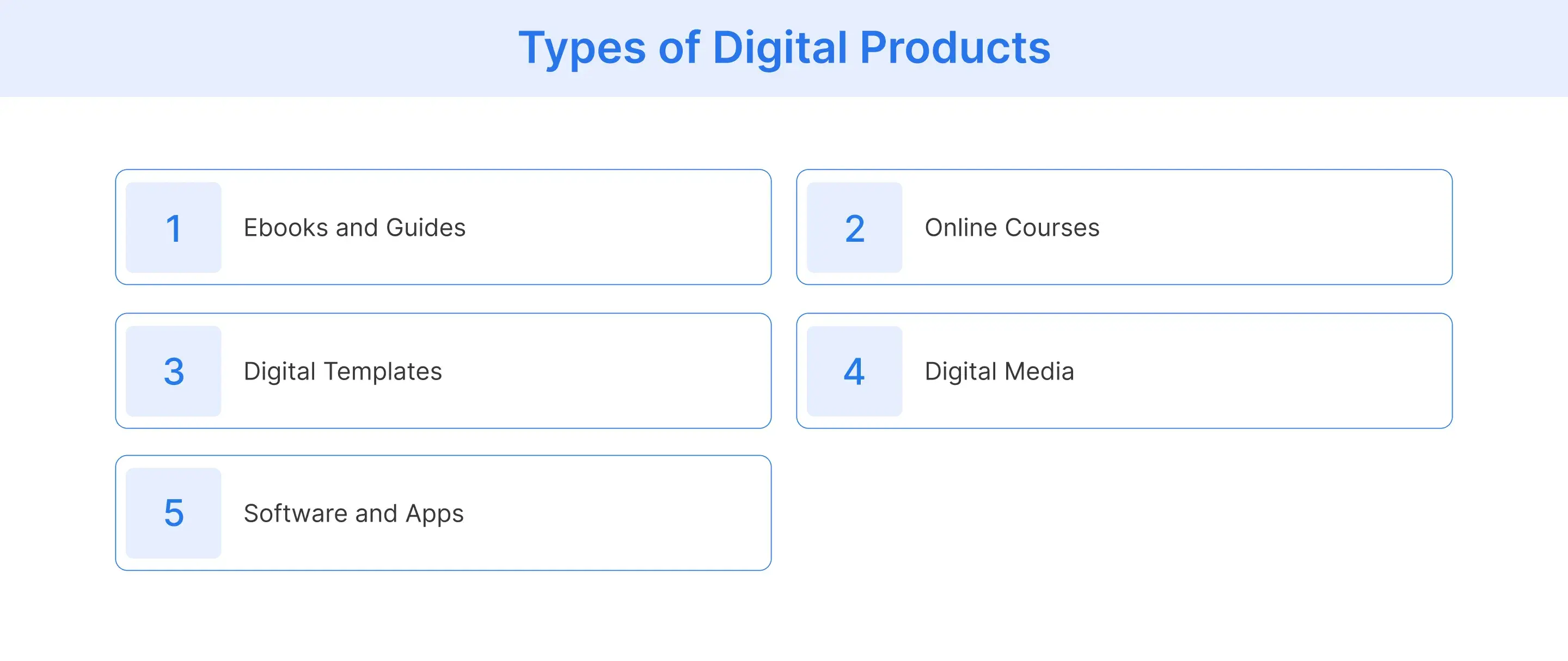
Digital products take different forms depending on the value they provide and how customers use them. The main categories include digital content and media, educational products, software, creative assets, and memberships or digital subscriptions.
Digital Content and Media
Digital content includes products such as ebooks, digital publications, music, videos, photography, and audio files. These products can be created once and distributed through online platforms without requiring a physical copy for every customer.
For example, a business could sell an ebook through its own website, offer downloadable stock photos, or provide digital music and sound effects to customers who need them for creative projects.
Educational and Knowledge Products
Educational products package knowledge or expertise into a format customers can access digitally. Examples include online courses, tutorials, webinars, guides, and other learning resources.
These products can be useful for businesses, educators, consultants, and content creators who want to turn their expertise into a structured digital offering.
Software and Digital Tools
Software is another major category of digital products. This includes applications, SaaS products, plugins, browser extensions, and other digital tools designed to perform a specific function or solve a customer problem.
Unlike a downloadable piece of content, software may require continuous development, customer support, updates, and ongoing management.
Digital Creative Assets
Digital creative assets include design templates, graphics, fonts, illustrations, stock photography, and other resources that customers can use in their own work.
Social media templates, presentation designs, stock photos, and other design assets can help businesses and individual creators save time while producing digital content.
Memberships and Digital Subscriptions
Memberships and subscriptions provide customers with ongoing access rather than a single product transaction. They can include premium content, membership communities, subscription-based tools, or other recurring-access products.
This model can also allow businesses to create recurring revenue while continuing to update the product or content available to subscribers.
What Are the Benefits of Selling Digital Products?
The appeal of digital products comes largely from the way they can be created, distributed, and managed through digital channels. For businesses, the model can reduce some of the operational requirements associated with physical products while creating opportunities to reach a wider audience.
Lower Inventory and Fulfillment Requirements
Digital products do not require physical stock in the same way as physical goods. A business selling an ebook, software product, or online course does not need to maintain a warehouse full of units waiting to be shipped.
This can reduce the inventory and physical fulfillment requirements associated with traditional commerce.
Scalable Distribution
A digital product can generally be distributed to additional customers without producing another physical unit. This makes digital distribution particularly useful for businesses that want to reach a wider audience without increasing physical production at the same rate.
Global Accessibility
Digital products can be made available to customers across different locations through an ecommerce platform, online store, marketplace, or other digital channel.
This gives businesses the opportunity to serve customers beyond the geographical limitations of physical distribution.
Faster Delivery and Updates
Digital products can often be delivered immediately after purchase. Depending on the product type, businesses can also make updates without producing and distributing a completely new physical version.
This is particularly relevant for software, online courses, memberships, and other products that can evolve over time.
Recurring Revenue Opportunities
Memberships and subscription models allow businesses to provide ongoing access to digital products or content. Instead of relying entirely on individual purchases, businesses can create recurring revenue through continued customer access.
Complement Existing Products and Services
Digital products do not necessarily have to replace physical products. A business can use them alongside an existing offering.
For example, a retailer could provide a digital guide alongside a physical product, while a service business could offer an online course, downloadable resource, or subscription as an additional product.
How Do Digital Products Work?
The process behind a digital product typically moves from creation and packaging through pricing, purchase, delivery, customer access, and ongoing management. Understanding this process helps businesses see how the model operates beyond simply creating a digital file.
Product Creation and Packaging
The process begins with creating the product and preparing it for customers. This could involve developing software, recording an online course, designing digital templates, producing audio files, or creating another form of digital content.
The product must then be packaged in a way that makes its value clear to the target audience.
Pricing and Purchase
Businesses need to determine how the product will be priced and how customers will purchase it. The purchase experience may take place through an ecommerce platform, an online store, a marketplace, or another digital channel.
Digital Distribution and Delivery
After a customer completes a purchase, the product needs to be delivered. Depending on the product, this could involve a download, access to an account, a subscription, or another digital delivery method.
Customer Access and Use
The customer then accesses and uses the product. For a downloadable product, this may be as simple as opening a file. Software, memberships, and online courses may require customers to log in to an account or use a dedicated platform.
Updates and Ongoing Management
Some digital products continue to evolve after purchase. Software may receive new features, online courses may be updated with new material, and subscription products may provide new content on a recurring basis.
This is where ongoing product management and customer support become particularly important.
How Can Businesses Create and Sell Digital Products?
Creating and selling a digital product requires more than choosing an idea and putting it online. Businesses need to identify a customer need, select an appropriate product format, develop and validate the product, determine pricing, and build the sales and delivery experience.
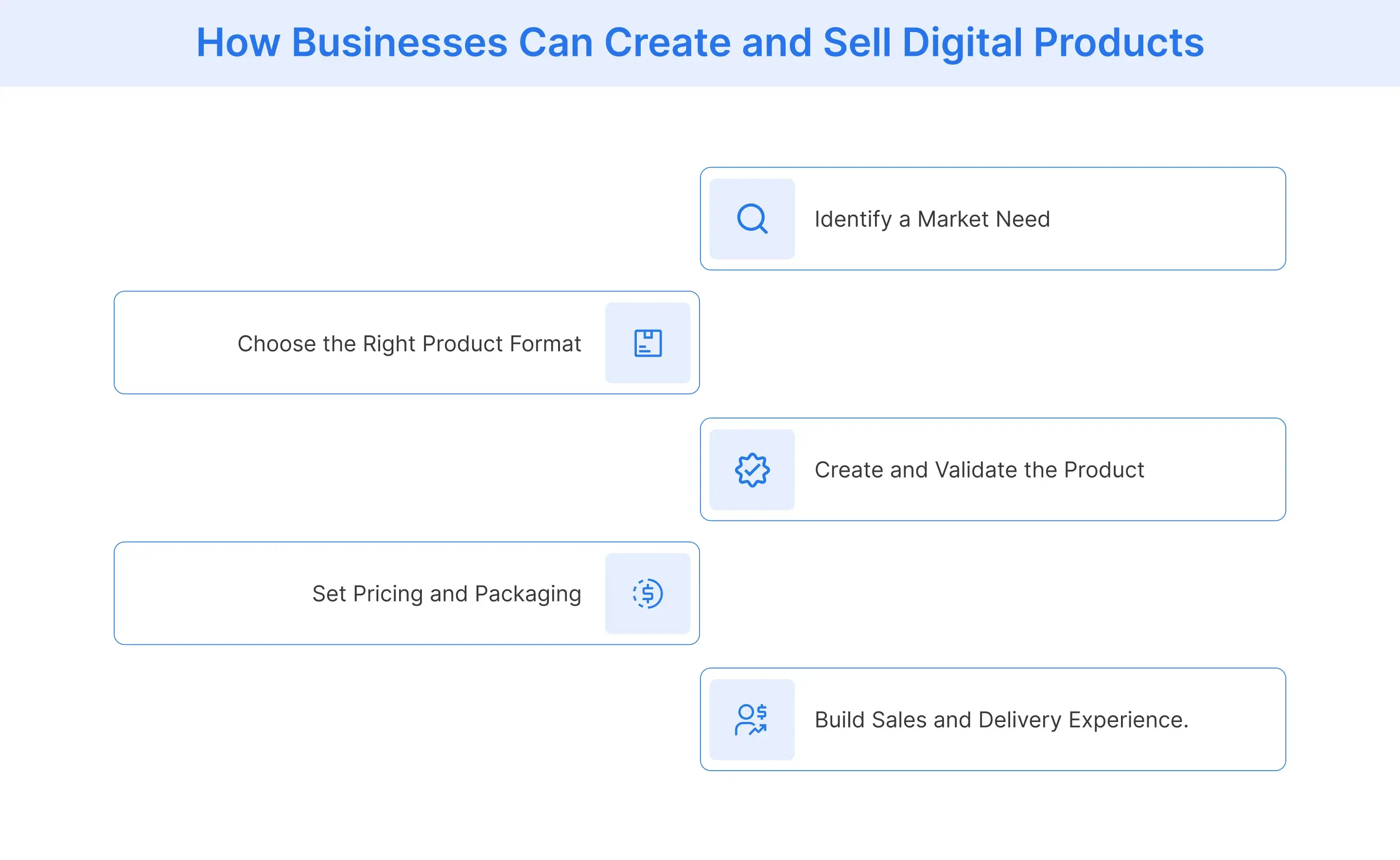
Identify a Market Need
A strong digital product starts with a customer problem or market opportunity. Businesses should first understand what customers need rather than creating a product simply because it is easy to distribute digitally.
Research can help businesses identify the problems, preferences, and requirements of their target audience.
Choose the Right Product Format
Once the opportunity is clear, businesses can determine which format best addresses the need.
The right product could be an ebook, online course, template, software product, membership, subscription, or another type of digital offering. The format should support the value the business intends to provide.
Create and Validate the Product
The next step is to develop the product and determine whether it delivers the intended value. Businesses can use customer feedback, early users, or other forms of validation before investing heavily in scaling the product.
Validation is particularly important for businesses developing a new digital product because digital distribution alone does not guarantee demand.
Set Pricing and Packaging
Pricing should reflect the value of the product and the expectations of the target audience. Businesses can also consider product tiers, bundles, subscriptions, or other packaging approaches.
The objective is to create an offer that is commercially viable while remaining relevant to the customers the product is designed to serve.
Build the Sales and Delivery Experience
Finally, businesses need to connect the product to a complete purchasing experience. This includes the sales page, payment gateways, digital delivery, customer access, and customer support.
A digital product may be valuable on its own, but a confusing purchase or access experience can make it difficult for customers to receive that value.
Where Can Businesses Sell Digital Products?
Businesses can sell digital products through several types of digital channels, depending on the product, audience, and business model.
Ecommerce Websites
An ecommerce website allows a business to sell directly through its own digital storefront. This approach gives businesses greater control over the sales experience, product presentation, and customer relationship.
Digital Marketplaces
Digital marketplaces can give businesses access to an existing audience. They can be useful for products such as digital creative assets, educational products, and downloadable content.
Subscription and Membership Platforms
Subscription and membership platforms are suited to products that provide ongoing access. These can include premium content, communities, software, and other recurring-access products.
Direct and Owned Channels
Businesses can also sell digital products through their own website and other owned digital channels. This approach allows businesses to build the sales experience around their own audience and customer relationships.
How Do Digital Products Differ From Physical Products?
Digital and physical products differ mainly in how they are produced, stored, distributed, and accessed. A digital product can generally be delivered electronically, while a physical product requires physical stock and fulfillment.
|
Digital Products vs. Physical Products |
||
|---|---|---|
|
Factor |
Digital Products |
Physical Products |
|
Inventory |
Digital storage or access |
Physical stock |
|
Fulfillment |
Digital delivery |
Physical fulfillment |
|
Distribution |
Delivered electronically |
Requires logistics and shipping |
|
Scalability |
Can generally be distributed without producing another physical unit |
Production and inventory capacity affect scale |
|
Customer access |
Often immediate or account-based |
Requires delivery or collection |
|
Updates |
Can often be updated digitally |
May require new production |
The difference does not mean digital products are automatically easier to operate. Software, subscriptions, and other digital products can require continuous development, customer support, infrastructure, and product management.
What Makes a Digital Product Successful?
Creating a digital product does not automatically create demand. A successful product needs to address a clear customer need, provide sufficient value, offer a usable experience, and remain relevant as customer expectations change.
A Clear Customer Need
A digital product should solve a defined problem or meet a recognizable customer need. Understanding the target audience helps businesses determine whether an idea addresses a problem customers actually care about.
Strong Product Value
Customers need a clear reason to choose a product. The perceived value should justify the price and distinguish the product from competing options.
Usability and Customer Experience
The product should be straightforward to purchase, access, and use. A strong digital product experience extends beyond the product itself to include the sales page, payment process, delivery, access, and customer support.
Positioning and Marketing
Customers need to understand what the product does, who it is for, and why it is relevant to them. Businesses can use channels such as content marketing, email marketing, social media, and other marketing tools to communicate the product’s value.
Continuous Improvement
Digital products can be improved over time using customer feedback, behaviour, and performance data. This is particularly important for software, memberships, subscriptions, and other products that continue to evolve after purchase.
Conclusion
Digital products give businesses another way to create, package, deliver, and scale value through digital channels. They can range from ebooks and online courses to software, digital creative assets, memberships, and subscription products.
However, creating a digital product is only one part of building a successful digital commerce offering. Businesses still need to understand customer needs, choose the right product format, establish appropriate pricing, create a reliable sales and delivery experience, and continuously improve the product based on customer feedback.
For businesses looking to expand their digital commerce capabilities, the surrounding commerce experience matters just as much as the digital product itself. Flipkart Commerce Cloud helps businesses build and manage the technology and commerce infrastructure needed to support digital-first experiences at scale.

FAQ
Digital products currently seeing high demand include online courses, e-books, software templates, and assets like digital art created by graphic designers. Educational media and stock audio for social media content are also popular, offering business owners a great way to monetize specialized knowledge without physical manufacturing overhead.
Yes, profitable digital products yield exceptionally strong profit margins for any online business. Because these virtual items require low production costs and negligible initial investment after creation, selling digital goods repeatedly allows a small business to scale revenues rapidly while entirely bypassing traditional inventory management challenges.
Popular business models for selling digital assets include direct pay-per-download sales, recurring subscription plans, and a membership model offering access to exclusive content. Leveraging an effective ecommerce marketing strategy helps brands convert potential customers visiting a dedicated landing page into long-term subscribers for their digital business.
Businesses deliver digital offerings instantly via automated email downloads, cloud access portals, or app stores like Google Play. Enterprise technology, such as Flipkart Commerce Cloud, enables an ecommerce business to manage digital distribution seamlessly, helping merchants process transactions securely and build direct digital product sales through their own site.
To identify the right digital products to sell, retailers should analyze customer behavior, market trends, and online demand. Evaluating what target audiences need allows businesses to create relevant offerings like e-books or software, ensuring high customer engagement and driving sustainable revenue growth across digital channels.
Retailers should price digital products by evaluating their perceived value, market competition, and target customer purchasing power. Since these items carry minimal overhead costs, merchants can test dynamic pricing models or tiered subscription rates to maximize profit margins without alienating budget-conscious online shoppers.
To sell digital products efficiently, businesses need secure e-commerce hosting, automated delivery systems, and reliable payment gateways. Enterprise solutions like Flipkart Commerce Cloud FCC provide the robust infrastructure required to manage digital inventory, process transactions, and automate download fulfillment seamlessly for online customers.
Yes, retailers can easily sell digital and physical products together through a combined storefront. Bundling physical items with complementary digital downloads, such as selling a kitchen appliance alongside an exclusive recipe e-book, enhances customer value, increases average order values, and expands overall brand appeal.