
September 5, 2026
What Are Splash Pages and How Do They Work?
Splash pages are standalone introductory web pages that appear before visitors access a website’s main content. They typically present a focused message, offer, or required action before directing visitors to the main site.
Drishti, Manager - Digital Marketing

Table of Contents
- What Are Splash Pages?
- How Do Splash Pages Work?
- What Are Splash Pages Used For?
- What Is the Difference Between a Splash Page and a Landing Page?
- What Are the Benefits of Splash Pages?
- How Can Retailers Create Effective Splash Pages?
- What Are Some Examples of Splash Pages?
- Conclusion
What Are Splash Pages and How Do They Work?
A splash page is a standalone page that appears before visitors enter the main website. Unlike a traditional landing page designed around a specific marketing or conversion goal, a splash page typically delivers a single message or asks visitors to take a specific action. In digital commerce, retailers can use splash pages to introduce a product launch, present a promotion, verify a visitor’s age, or direct attention to important information before they continue browsing.
The effectiveness of a splash page depends on how well it supports the visitor’s user experience while achieving its intended goal. The sections below explore the different types of splash pages, their key elements, how they differ from landing pages, and when businesses should use them.
What Are Splash Pages?
A splash page is a web page that appears before visitors access a website’s main content. It creates an introductory experience by presenting a focused message, visual, or choice before visitors enter the main site.
Splash pages can appear at different points in the user journey and typically include visuals, messaging, buttons, or simple navigation. For example, a retailer may use a splash page to present important information, highlight an offer, or give visitors an option to select before continuing.
For retailers, this provides a way to introduce visitors to relevant information before they begin exploring the main website.
How Do Splash Pages Work?
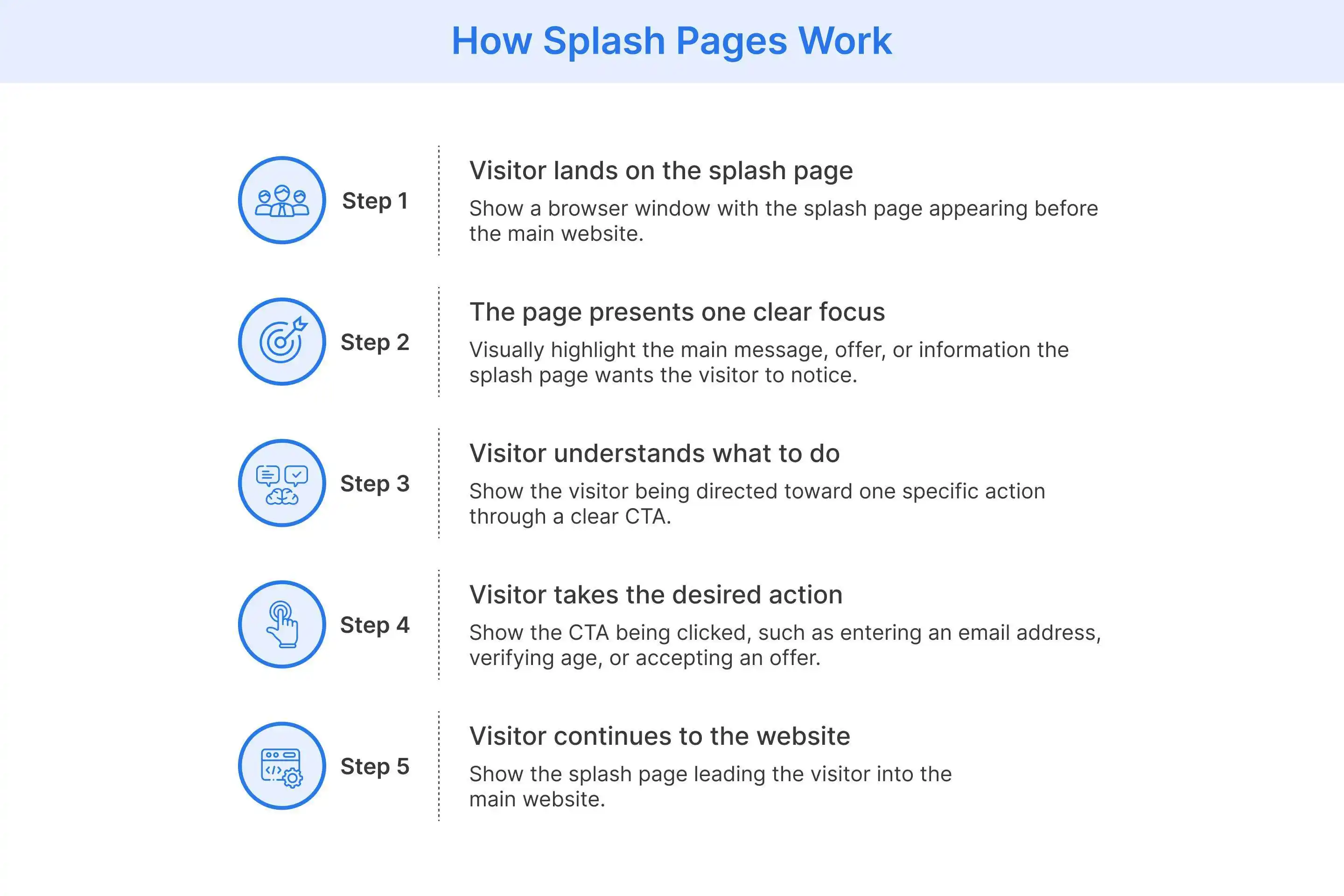
A splash page appears before visitors access the main website content. It provides a controlled entry point where site visitors can take a specific action before continuing to the site. Depending on its purpose, visitors may use the page to continue to the website, select an option, register, log in, or confirm access. The page then guides them toward the desired action.
This allows retailers to create different entry experiences for different visitor needs while keeping the main website experience separate. A focused splash page design can also limit distractions, using simple navigation menus and relevant messaging to support the website’s user experience.
How Do Splash Pages Guide Visitor Actions?
Splash pages guide visitors by presenting a clear next step, usually through buttons, text options, or simple navigation choices. Depending on the purpose of the page, visitors may be prompted to continue to the website, select an option, register, log in, or access specific content.
The next action should be easy to understand so visitors know exactly what to do without unnecessary friction. A focused choice helps the splash page serve as a controlled entry point while keeping the visitor experience straightforward.
When Do Splash Pages Appear Before Website Content?
Splash pages can appear before visitors access the main site when a retailer needs to present important information or guide visitors toward a specific choice. They may be used for promotional messages, informational notices, regional or language selection, and access-related requirements.
This allows retailers to address a specific visitor need before the visitor continues to the main website.
What Are Splash Pages Used For?
Splash pages can help retailers communicate with visitors before they enter the main website. Common uses include:
- Promoting products, services, or offers as part of broader marketing efforts.
- Highlighting events and announcements that visitors need to see before continuing.
- Communicating important information that visitors should understand before accessing the website.
- Supporting registration or login by directing visitors to the appropriate action.
- Managing age or access requirements when visitors need to meet specific conditions before proceeding.
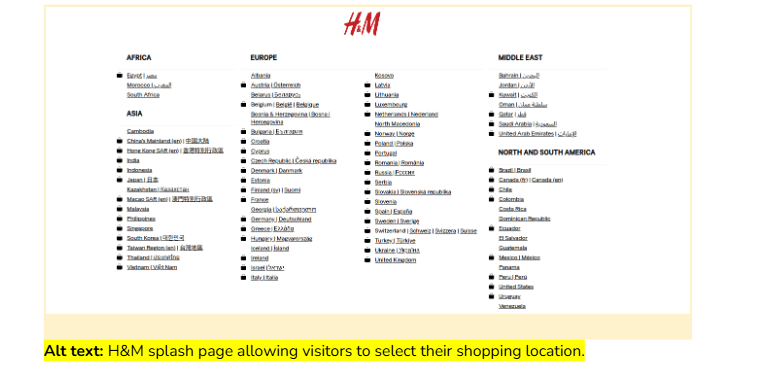
- Helping visitors select a relevant location or language so they can access an experience suited to their needs.
What Is the Difference Between a Splash Page and a Landing Page?
Splash pages, landing pages, and homepages can all serve as entry points to a website, but their key differences lie in their purpose, audience, and the action they are designed to support.
A splash page introduces visitors to a specific message or choice before they enter the main site, while a landing page focuses on a specific campaign or conversion goal. A homepage serves as the main entry point to the website and provides broader navigation.
Splash Page vs. Landing Page vs. Homepage |
||
|---|---|---|
|
Splash Page |
Landing Page |
Homepage |
|
Appears before visitors access the main site |
Created for a specific campaign or conversion goal |
Serves as the main page of a website |
|
Focuses on a specific message or action |
Designed to drive a particular action |
Provides broader website navigation |
|
Usually has a distinct URL |
Usually has a distinct URL |
Serves as the main website entry point |
|
Often functions as an introductory entry experience |
Focuses visitors on a specific goal |
Provides access to different areas of the website |
What Are the Benefits of Splash Pages?
Splash pages can help retailers create a more focused entry experience for website visitors. When designed with a clear purpose, they can support communication, improve the user experience, and guide visitors toward the right action.
- Create a consistent first interaction: A splash page gives retailers control over the first impression visitors receive when they enter the website. A clear message and focused page design can create a consistent experience across visitors.
- Highlight important messages and promotions: Retailers can use splash pages to communicate relevant content, promotional offers, product launches, or other messages that need a visitor’s attention before they continue to the main site.
- Support regional and language targeting: Splash pages can help visitors select their location or language before accessing the website, making the experience more relevant to different audiences.
- Communicate legal or access requirements: Retailers can use splash pages for requirements such as age verification or access notices, allowing visitors to confirm eligibility before entering the website.
- Strengthen brand presentation: A well-designed splash page can introduce visitors to a brand’s personality through its messaging, visuals, and other design elements.
- Direct visitor attention toward a specific action: By presenting a clear message and call to action, a splash page can guide visitors toward a specific action without overwhelming them with the navigation and content of the main site.
How Can Retailers Create Effective Splash Pages?
Retailers can create effective splash pages by keeping the experience focused, useful, and easy to navigate. The page should communicate one clear message, use visuals that support it, and make the next step obvious without creating unnecessary friction for visitors.
- Keep the message simple and focused: Use concise copy to communicate the purpose of the splash page, whether it is promoting an offer, sharing an announcement, or helping visitors select a location or language.
- Make the next action clear: Use a straightforward CTA or navigation option to show visitors what to do next. The action should be easy to understand at a glance.
- Use relevant visuals: High-quality, on-brand visuals can reinforce the message and create a stronger first impression without overwhelming the page.
- Make it easy to exit or continue: Give visitors a clearly visible way to close, skip, or move past the splash page. This prevents the introductory experience from becoming a barrier to the main website.
- Optimize the experience for mobile: Make sure text, buttons, images, and navigation remain clear and easy to use across different screen sizes.
- Make the page add value: A splash page should serve a meaningful purpose, such as communicating an important announcement, presenting a relevant offer, or helping visitors access the right version of the website. If it does not add value, it can unnecessarily interrupt the visitor journey.
What Are Some Examples of Splash Pages?
Splash pages can serve different purposes depending on what a retailer wants visitors to see or do before entering the main website. Common examples include:
- Promotional offers and discounts: A retailer can use a splash page to highlight a limited-time sale, discount code, or special offer before visitors begin browsing.
- Product or service announcements: A splash page can introduce a new product, service, or major update with a focused message and a clear next step.
- Location and language selection: Global retailers can ask visitors to select their country or preferred language before directing them to the appropriate version of the website. Zara, for example, uses this approach to help visitors access the relevant language and regional experience.
- Age verification: Retailers selling age-restricted products can use an age verification splash page to confirm that visitors meet the required age before accessing the website.
- Event announcements: A splash page can bring attention to an upcoming event, registration period, or other time-sensitive announcement before visitors continue to the main site.
- Brand-focused introductory experiences: Retailers can also use a splash page to create a distinctive first interaction through strong visuals, concise messaging, and brand elements that introduce visitors to the experience.
Conclusion
Splash pages can help retailers create a focused first interaction with website visitors, whether they are promoting an offer, communicating important information, or directing visitors toward a specific action. Their effectiveness depends on keeping the experience clear, relevant, and easy to navigate.
For retailers, creating these digital experiences also requires the right technology and commerce infrastructure to support the wider customer journey. Flipkart Commerce Cloud provides a digital commerce platform that supports retailers across their broader digital commerce needs.
With the right approach, splash pages can complement a broader digital commerce strategy without becoming an unnecessary interruption for visitors.

FAQ
The difference between a splash page and a homepage comes down to focus and intent. While a homepage serves as the main entry hub with broad site navigation, a splash screen acts as a temporary gateway designed to deliver a single value proposition, age verification, language selector, or high-priority announcement before visitors enter.
No, splash pages are not outdated, but their execution in modern web design has evolved to prioritize user experience. When used strategically for sensitive content warnings, region selection, or a major marketing campaign, well-designed splash screens remain effective tools for guiding user intent without creating unnecessary friction or harming your conversion rate.
A well-designed splash page should include clear visual branding, a concise headline, minimal supporting copy, and a clear call to action. Including a visible exit link or entry button ensures visitors can quickly navigate past the introductory screen to access the main site content without frustrating your target audience.
To create a splash page, select a lightweight layout that aligns with your overall marketing strategy and brand identity. Modern e-commerce platforms like Flipkart Commerce Cloud enable merchants to build responsive splash screens easily, integrating customized interactive elements and targeting rules without negatively impacting search engine indexing or site speed.
A good splash page design relies on visual simplicity, fast loading speeds, and responsive layouts for mobile devices. Combining striking visuals with a high-quality background image and minimal text allows the page to showcase strong brand personality, capture immediate visitor attention, and direct users seamlessly toward the main site.
Common examples of a splash page include age verification screens frequently used by major alcohol brands before granting catalog access. Visitors enter their birth date or click an entry button to verify eligibility, ensuring compliance before proceeding smoothly to the main e-commerce storefront.