
June 18, 2026
What Is a Discount Code?
A discount code is a promotional code that customers apply during checkout to receive a price reduction or special offer. Retailers use discount codes to increase conversions, reward loyalty, and drive e-commerce sales without permanently reducing product prices.
Drishti, Manager - Digital Marketing

Table of Contents
- What Is a Discount Code?
- How Do Discount Codes Work?
- What Are the Different Types of Discount Codes?
- What Rules and Restrictions Apply to Discount Codes?
- What Are the Benefits of Discount Codes?
- How Can Retailers Implement Discount Codes Successfully?
- Conclusion
What Is a Discount Code?
A discount code is a promotional code customers enter during checkout to receive a discount or special offer on an order. Retailers use discount codes to increase conversions, encourage purchases, and improve customer retention without permanently reducing product prices.
Discount codes can offer percentage discounts, fixed-price reductions, free shipping, or exclusive offers. Businesses commonly distribute them through email, SMS, paid ads, loyalty programs, and social media campaigns.
How Do Discount Codes Work?
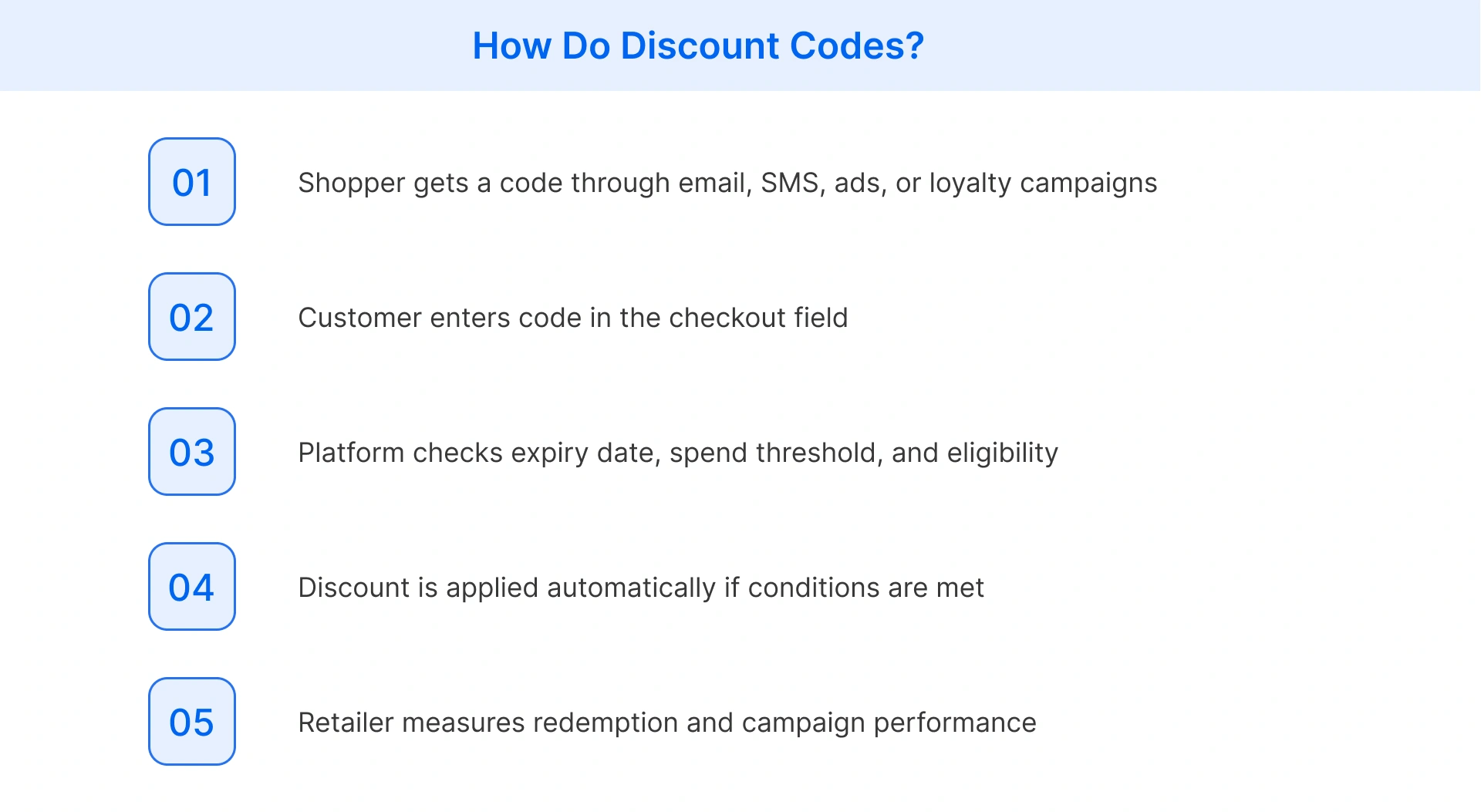
Discount codes follow a simple process that helps retailers offer targeted promotions while maintaining pricing control. Customers apply a code at checkout, and the system validates whether the offer meets the required conditions.
Discount codes typically work through these steps:
- Customer Receives the Code: Through email, SMS, loyalty programs, social media, or paid campaigns.
- Customer Applies the Code: The shopper enters the code during checkout.
- System Validates Eligibility: The platform checks conditions such as expiry dates, minimum spend, or product eligibility.
- Discount Is Applied: The offer is reflected in the final order total.
What Are the Different Types of Discount Codes?
Retailers use different types of discount codes depending on their campaign goals, customer segments, and promotional strategy. Some codes are designed to increase conversions, while others encourage higher order values, repeat purchases, or customer loyalty.
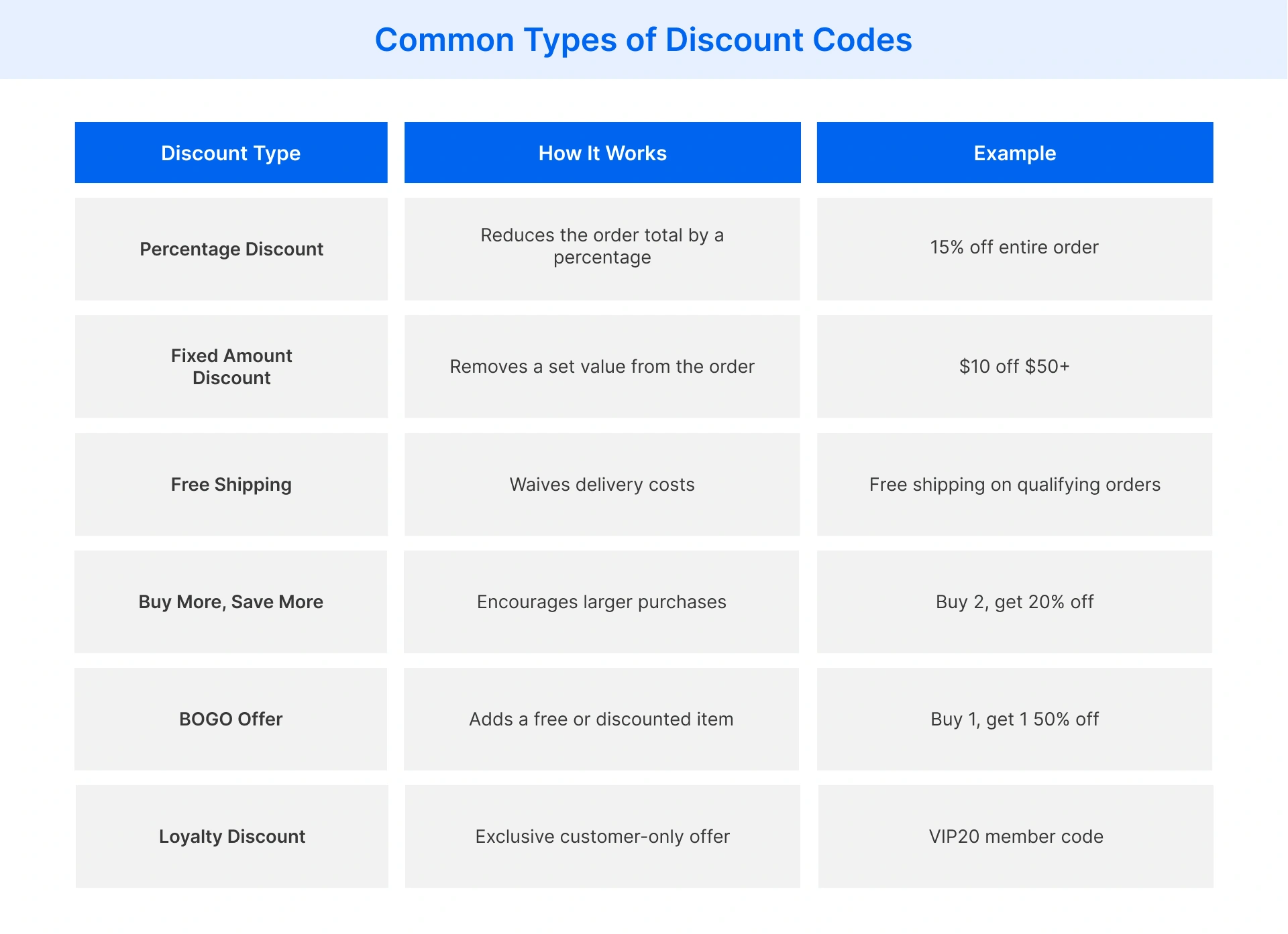
The most common types of discount codes include:
Percentage Discounts:
Retailers offer a percentage reduction on the total order value, making this one of the most widely used discount strategies in e-commerce. Percentage discounts are commonly used for seasonal campaigns, welcome offers, and promotional events.
Example: A customer receives 15% off their entire order during a holiday sale.
Fixed Amount Discounts:
This type of discount removes a specific amount from the order total, often tied to a minimum purchase threshold to protect margins and increase basket size.
Example: A shopper receives $10 off orders above $50.
Free Shipping Codes:
Retailers use free shipping offers to reduce checkout friction and address one of the most common causes of cart abandonment: delivery costs.
Example: A customer applies a code for free standard shipping on purchases above a certain value.
Buy More, Save More Discounts:
These discounts encourage customers to purchase larger quantities or increase basket value in exchange for savings.
Example: A retailer offers 20% off when customers buy two or more products from the same category.
BOGO (Buy One, Get One) Offers:
Buy one, get one promotions reward customers with a free or discounted product after purchasing a qualifying item. Retailers often use these campaigns to increase volume or move slower inventory.
Example: A shopper buys one skincare product and receives a second item at 50% off.
Exclusive or Loyalty Discount Codes:
Some retailers limit discount codes to specific customer groups, such as loyalty members, first-time buyers, email subscribers, or VIP customers.
Example: A loyalty member receives an exclusive VIP20 code for early access savings.
What Rules and Restrictions Apply to Discount Codes?
Retailers apply rules and restrictions to control how discount codes are redeemed, protect margins, and ensure offers reach the intended audience.
Common discount code restrictions include:
- Expiration Dates: Codes are valid for a limited period.
- Minimum Spend Requirements: A minimum order value may apply.
- Product Restrictions: Some products or categories may be excluded.
- Customer Eligibility: Offers may apply to specific customer groups only.
- Single-Use Conditions: Codes may be limited to one use per customer.
- Location Restrictions: Some discounts apply only in selected regions.
- Stacking Restrictions: Codes may not combine with other offers.
What Are the Benefits of Discount Codes?
Discount codes help retailers attract customers, increase conversions, and encourage repeat purchases without permanently lowering prices.
Key benefits of discount codes include:
- Higher Conversion Rates: Encourages shoppers to complete purchases.
- Reduced Cart Abandonment: Helps lower checkout drop-offs.
- Improved Customer Loyalty: Rewards repeat customers and subscribers.
- Higher Average Order Value: Encourages customers to spend more.
- Better Campaign Tracking: Helps retailers measure promotion performance.

How Can Retailers Implement Discount Codes Successfully?
Retailers can maximize the effectiveness of discount codes by aligning promotions with clear business goals, customer behavior, and purchasing patterns. A structured approach helps ensure discount campaigns drive measurable results without negatively affecting margins or long-term pricing strategy.
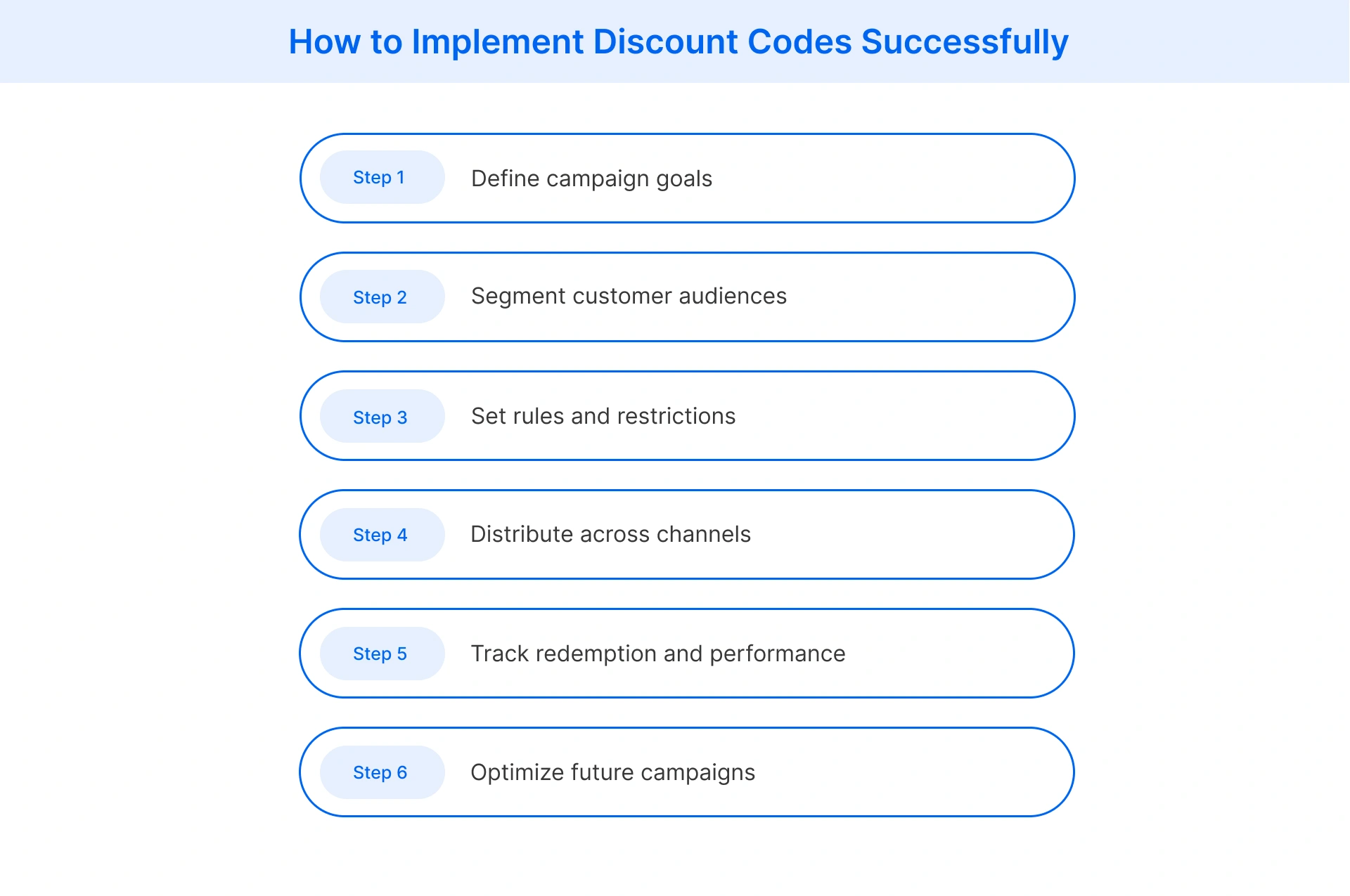
Retailers can implement discount codes successfully through the following steps:
- Step 1: Define the Goal of the Promotion: E.g., increasing conversions, reducing cart abandonment, driving first-time purchases, clearing inventory, or improving customer retention. This way, retailers choose the right discount structure and audience.
- Step 2: Segment Customer Audiences: Personalize discount codes for first-time buyers, loyalty members, inactive customers, or high-value shoppers to improve performance and relevance.
- Step 3: Set Clear Rules and Restrictions: Define expiration dates, usage caps, minimum order values, product eligibility, and customer restrictions before launching campaigns. This helps protect margins while keeping promotions controlled and measurable.
- Step 4: Deliver Discounts Across Channels: Retailers can distribute discount codes through email campaigns, SMS, loyalty programs, paid advertisements, social media, and website banners to reach customers at different stages of the buying journey.
- Step 5: Track Redemption and Performance: Monitoring code usage, conversion rates, revenue impact, and customer behavior helps retailers understand which campaigns perform best and where optimizations are needed.
- Step 6: Optimize Future Campaigns: Retailers can use campaign insights to refine targeting, personalize future offers, and improve promotional performance over time.
Conclusion
Discount codes help retailers increase conversions, improve customer retention, and drive sales through targeted promotions. When managed effectively, they support sustainable growth while maintaining pricing control. Flipkart Commerce Cloud helps retailers streamline discount strategies through centralized promotion management, customer segmentation, and personalized campaign execution for better e-commerce performance.

FAQ
If you are wondering what a discount code is, it is simply a unique string of letters and numbers that shoppers use to get a price reduction at checkout. Platforms like Flipkart Commerce Cloud help retailers create and manage these codes seamlessly to incentivize purchases and boost customer loyalty.
Discount codes work by triggering automated rules within an e-commerce platform when submitted by a buyer. Enterprise systems, such as the advanced promotions engine from Flipkart Commerce Cloud, validate the code's active dates, minimum order thresholds, and category eligibility to instantly subtract a fixed amount or percentage from the cart.
To use a discount code, simply add your desired items to your digital shopping cart and proceed to the checkout page. Locate the specific input box labeled "Promo Code" or "Discount Code," type the alphanumeric string exactly as written, and apply it to dynamically recalculate your grand total.
Whether discount codes work on sale items depends entirely on the specific store policies and promotional configurations set by the merchant. While some brands allow coupon stacking, many restrict codes to full-priced items. A robust platform like Flipkart Commerce Cloud lets businesses easily manage these eligibility exclusions.
Discount codes can often be region-specific to accommodate localized marketing campaigns, differing inventory availability, or regional currency values. Retailers use advanced multi-channel rule engines to restrict certain promotions to specific countries or geographic territories to manage profit margins and ensure compliance with local advertising regulations.
Customers can get discount codes by subscribing to a brand’s email newsletter, joining loyalty reward programs, or following company social media pages. Additionally, e-commerce storefronts built on solutions like Flipkart Commerce Cloud can push personalized promotional codes directly to users based on shopping behavior and segmentation.