
October 24, 2026
Sentiment Analysis in Retail: Understanding Customer Feedback
Sentiment analysis in retail is the process of analyzing customer feedback to identify positive, negative, or neutral opinions about products, services, and shopping experiences. Using techniques such as natural language processing (NLP) and machine learning, retailers can identify patterns in customer reviews, surveys, and other feedback sources to inform business decisions.
Drishti, Manager - Digital Marketing

Table of Contents
- What Is Sentiment Analysis in Retail?
- How Does Sentiment Analysis Work?
- What Are the Different Types of Sentiment Analysis?
- What Customer Data Can Retailers Use for Sentiment Analysis?
- What Are Some Examples of Sentiment Analysis in Retail?
- What Are the Benefits of Sentiment Analysis for Retailers?
- What Are the Challenges of Sentiment Analysis in Retail?
- How Can Retailers Implement Sentiment Analysis Effectively?
- Conclusion
Sentiment Analysis in Retail: Understanding Customer Feedback
Retailers receive customer feedback through product reviews, surveys, social media comments, and support interactions. These opinions can reveal what shoppers appreciate about a product, where they encounter difficulties, and how they perceive a retailer’s services. However, identifying recurring concerns and changes in customer opinions can be challenging when feedback comes from multiple sources.
Understanding these opinions can help retailers identify areas that need attention and make more informed business decisions. Sentiment analysis provides a way to examine customer feedback systematically. This article explains how it works, the different types of analysis, its applications in retail, potential benefits, challenges, and practical implementation considerations.
What Is Sentiment Analysis in Retail?
Sentiment analysis in retail, also known as opinion mining, is the process of analyzing customer feedback to identify positive, negative, or neutral opinions about products, services, brands, and shopping experiences. Unlike sales figures or purchasing behavior, sentiment analysis focuses on the opinions customers express through their feedback.
Retailers can use natural language processing (NLP), machine learning (ML), and other artificial intelligence (AI) techniques to analyze customer reviews, surveys, and support messages. These methods help classify customer sentiment and identify recurring patterns across large volumes of feedback, providing insights into how customers perceive different aspects of a retail business.
How Does Sentiment Analysis Work?
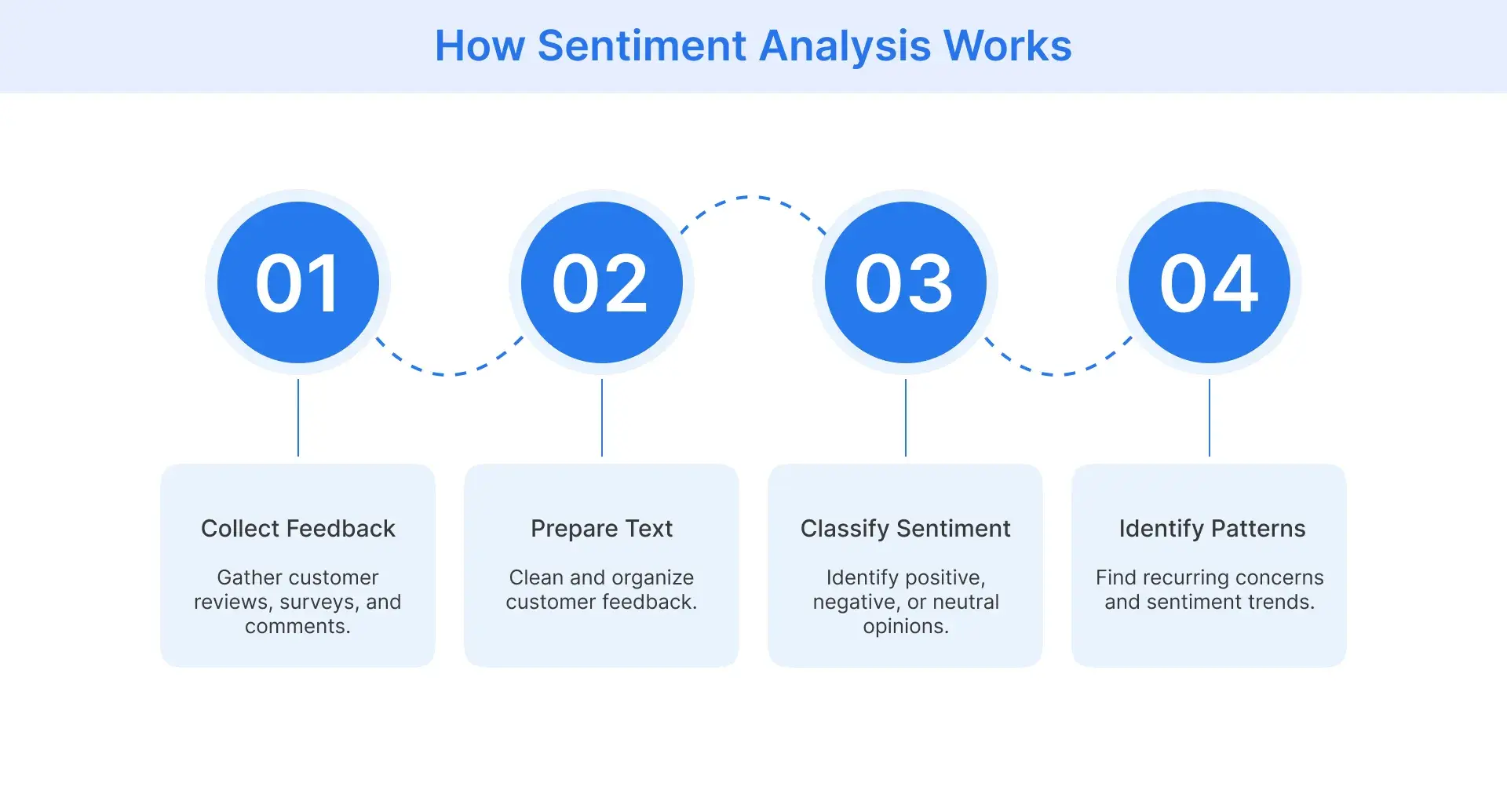
Sentiment analysis works by examining written customer feedback to determine the opinions expressed and identify recurring sentiment patterns. Retailers can collect feedback from product reviews, surveys, social media comments, and customer support interactions, then use natural language processing (NLP) and machine learning techniques to analyze the text.
The process begins with preparing the collected feedback by removing irrelevant content and standardizing text where appropriate. Sentiment analysis tools then examine words, phrases, and their context to classify opinions as positive, negative, or neutral. Some tools also assign sentiment scores to indicate the strength of an expressed opinion.
Different approaches can be used to perform this analysis:
- Rule-based analysis: Uses predefined dictionaries and linguistic rules to identify words or expressions associated with particular sentiments.
- Machine learning analysis: Uses models trained on examples of customer feedback to recognize patterns and classify sentiment in new text.
- Hybrid analysis: Combines predefined rules with machine learning techniques to interpret customer opinions.
For example, a retailer analyzing product reviews might identify repeated complaints such as “delivery took longer than expected.” Individual reviews can be classified as expressing negative sentiment, while the combined results may reveal a recurring concern about delivery times.
Retailers can aggregate these classifications across products, services, or time periods to identify trends in customer sentiment. The findings can help them investigate recurring issues and determine where improvements may be needed.
What Are the Different Types of Sentiment Analysis?
Sentiment analysis can examine customer opinions at different levels of detail. Basic sentiment classification identifies whether feedback expresses positive, negative, or neutral sentiment. These categories describe the overall tone of an opinion, while more detailed approaches help retailers understand its intensity, specific subjects, or underlying emotions.
The main types of sentiment analysis include:
- Fine-grained sentiment analysis: Classifies opinions using more detailed categories, such as very positive, positive, neutral, negative, and very negative. This helps retailers distinguish between mildly unfavorable feedback and strong customer dissatisfaction.
- Aspect-based sentiment analysis: Identifies opinions about specific features of a product or service. For example, a review stating, “The shoes are comfortable, but delivery was late,” expresses positive sentiment about product comfort and negative sentiment about delivery. This allows retailers to examine feedback about individual aspects rather than assigning one overall classification.
- Emotion-based sentiment analysis: Attempts to identify specific emotions expressed in customer feedback, such as happiness, frustration, disappointment, or anger. Retailers can use these findings to better understand emotional responses to products, services, or shopping experiences.
Each approach provides a different perspective on customer sentiment. Retailers can select the level of analysis that best supports their objectives, whether they need to monitor overall customer opinions, identify recurring product concerns, or understand specific emotional reactions.
What Customer Data Can Retailers Use for Sentiment Analysis?
Retailers can perform sentiment analysis using customer feedback collected across different sales and communication channels. These sources provide insights into how shoppers perceive products, services, pricing, and their overall shopping experiences.
Common sources of customer feedback include:
- Ecommerce product reviews: Written reviews can reveal customer opinions about product quality, performance, packaging, and whether purchased items meet expectations. Retailers can analyze these comments to identify recurring praise or complaints about specific products.
- Marketplace feedback: Reviews and seller feedback on online marketplaces can provide insights into product satisfaction, delivery experiences, and seller service. This helps retailers understand how customers perceive their offerings on third-party platforms.
- Customer surveys: Open-ended survey responses allow shoppers to describe their experiences with products, pricing, store visits, and customer service. These responses can help retailers identify concerns that may not appear in public reviews.
- Social media comments: Customer posts, comments, and brand mentions can reveal opinions about products, promotional campaigns, and brand reputation. Monitoring these conversations may help retailers identify emerging concerns or changes in public sentiment.
- Customer support tickets: Complaints, inquiries, and written support interactions can highlight problems involving deliveries, refunds, returns, or product issues. Analyzing the opinions expressed in these records can help retailers identify recurring service concerns.
- Chatbot conversations: Customer messages exchanged with support chatbots may contain feedback about shopping difficulties, order problems, or service experiences. Retailers can analyze relevant portions of these conversations to identify common frustrations and unmet customer needs.
Each source provides a different perspective on customer sentiment. For example, shoppers who leave product reviews may have different concerns from those contacting customer support. Retailers should consider these differences when interpreting results and avoid treating feedback from one source as representative of their entire customer base.
Sentiment analysis relies on expressed opinions. Transactional records, purchase histories, or browsing activity may provide useful context, but they do not independently establish whether customers feel positively or negatively about an experience.
What Are Some Examples of Sentiment Analysis in Retail?
Retailers can use sentiment analysis to understand customer opinions about products, services, brand reputation, and promotional activities. By examining feedback from different sources, businesses can identify recurring concerns and determine which areas may require attention.
The following examples illustrate how sentiment analysis can be applied in retail:
- Product review analysis: A clothing retailer receives reviews stating, “The fabric feels great, but the sizing runs small.” Aspect-based sentiment analysis can identify positive opinions about material quality and negative feedback about sizing. If similar complaints appear frequently, the retailer can review its size guides and product descriptions.
- Customer service complaints: Customers submit support messages such as, “I’ve contacted support twice, but my refund is still pending.” Sentiment analysis can classify these messages as negative and identify recurring frustration about refund delays. The retailer can investigate its refund process and determine whether changes are needed.
- Brand sentiment monitoring: A retailer analyzes social media comments, including statements such as “I love their product selection, but popular items are always unavailable.” The analysis may reveal positive brand perceptions alongside repeated dissatisfaction with product availability. These findings can help the retailer investigate stock management issues.
- Promotional campaign feedback: Following a seasonal sale, customers leave comments such as “The discounts were good, but checkout kept failing.” Sentiment analysis can identify positive reactions to promotional pricing and negative experiences with the checkout process. The retailer can review technical issues before launching another campaign.
These examples show how sentiment analysis helps retailers move beyond individual comments to identify patterns in customer feedback. The findings can guide further investigation and support decisions about product information, customer service, inventory, and shopping experiences.
What Are the Benefits of Sentiment Analysis for Retailers?
Sentiment analysis helps retailers understand how customers perceive their products, services, and shopping experiences. By examining opinions across different feedback sources, businesses can identify recurring issues, recognize positive responses, and use these findings to guide improvements.
The key benefits include:
- Identifying recurring customer concerns: Analyzing large volumes of feedback can reveal frequently mentioned problems, such as delivery delays, product defects, or confusing return policies. Retailers can use these patterns to identify issues that require further investigation.
- Supporting product improvements: Customer reviews can reveal which product features shoppers appreciate and which cause dissatisfaction. These insights can help retailers prioritize improvements to product quality, descriptions, sizing information, or other aspects of their offerings.
- Monitoring brand reputation: Social media monitoring and review analysis allow retailers to track positive and negative opinions about their brands. Changes in sentiment can highlight emerging concerns or shifts in customer perceptions.
- Evaluating marketing campaign reactions: Retailers can examine customer responses to promotions, product launches, and advertising campaigns. Sentiment patterns may reveal whether shoppers appreciate an offer, find its messaging confusing, or have concerns about the purchasing experience.
- Improving customer service: Analyzing support conversations and complaints can help businesses identify recurring service problems, such as delayed refunds or unresolved inquiries. Customer service teams can use these findings to review processes and prioritize areas needing attention.
- Supporting informed business decisions: Combining sentiment findings across feedback sources can help retailers determine which issues deserve attention and share relevant insights with product, marketing, and service teams. This provides additional context for decisions that might otherwise rely primarily on operational data.
These benefits depend on the quality of the feedback and how accurately customer opinions are interpreted. Sentiment analysis provides insights to support decisions, but it does not automatically improve sales, customer satisfaction, or loyalty.
What Are the Challenges of Sentiment Analysis in Retail?
Sentiment analysis can help retailers understand customer opinions, but interpreting feedback accurately is not always straightforward. Differences in language, context, and data quality can affect how sentiment analysis tools classify customer responses and the reliability of the insights they produce.
Common challenges include:
- Sarcasm and negation: Automated tools may struggle to interpret emotional context when customers use sarcasm or negation. For example, a comment such as “Great, another delayed delivery” may appear positive because of the word “great,” even though the customer is expressing frustration.
- Slang and multilingual feedback: Customers may use informal expressions, regional dialects, abbreviations, or different languages when describing their experiences. Sentiment analysis models may misinterpret these expressions, particularly when they have limited training data for certain languages or regional variations.
- Mixed opinions and context: A single review may contain both positive and negative feedback. For example, a customer might praise a product’s quality while criticizing its price or delivery. Tools that assign only one overall sentiment classification may overlook these differences.
- Incomplete or unrepresentative data: Customer reviews, surveys, and social media comments do not necessarily reflect the opinions of every shopper. Customers with particularly positive or negative experiences may be more likely to leave feedback, creating an incomplete picture of overall customer sentiment.
- Model accuracy and bias: Sentiment analysis tools can produce incorrect classifications when models fail to recognize context or perform poorly on unfamiliar expressions. Biases in training data may also affect how accurately certain customer groups or communication styles are represented.
- Customer privacy and data protection: Analyzing support conversations, survey responses, and other customer communications may involve personal information. Retailers need appropriate data handling practices, access controls, and safeguards to protect customer privacy when collecting and processing feedback.
Retailers should review sentiment analysis results alongside actual customer comments and other relevant business information. Human validation can help identify misclassifications, while regular evaluation of data quality and model performance supports more reliable interpretations of customer feedback.
How Can Retailers Implement Sentiment Analysis Effectively?
Implementing sentiment analysis requires retailers to establish clear objectives, select reliable feedback sources, and determine how the findings will inform business decisions. Retailers can begin with existing analysis tools and a manageable volume of customer feedback rather than developing their own machine learning models.
The following steps can guide implementation:
-
Define clear objectives. Identify what the business needs to understand, such as recurring delivery complaints, customer perceptions of a new product, or reactions to a promotional campaign. Establish specific questions that the analysis should help answer.
-
Select relevant feedback sources. Choose sources that align with these objectives, including product reviews, customer surveys, support tickets, and social media comments. Consider whether the available feedback adequately represents the customers or experiences being examined.
-
Choose suitable sentiment analysis tools. Evaluate tools based on their classification capabilities, language support, accuracy, ease of use, and data privacy features. Retailers should also consider whether they need basic sentiment classifications or more detailed analysis of specific product and service attributes.
-
Collect and prepare customer feedback. Establish a consistent process for gathering feedback, removing duplicate or irrelevant content, and protecting personal information. Analyze the prepared text to classify customer opinions and organize the results by relevant products, services, or topics.
-
Validate results and identify recurring patterns. Review samples of automated classifications against the original customer comments to identify errors or misinterpretations. Examine the results across products, channels, or time periods to recognize recurring concerns and changes in customer sentiment.
-
Turn findings into actions and monitor outcomes. Share relevant insights with product development, marketing, and customer service teams. Use the findings to investigate reported problems, prioritize improvements, and evaluate subsequent feedback to determine whether customer perceptions have changed.
Retailers should regularly review the accuracy of their analysis and adjust their approach as feedback patterns and business needs evolve. Combining automated classification with human judgment helps ensure that decisions reflect the context behind customer opinions.
Conclusion
Sentiment analysis helps retailers understand customer opinions, identify recurring concerns, and make informed decisions about products, marketing, and customer experiences.
Putting sentiment analysis into practice involves three priorities:
- Gather feedback relevant to specific business objectives.
- Check automated classifications against actual customer comments.
- Use recurring concerns to prioritize improvements.
Customer sentiment can also reveal how shoppers perceive a retailer’s products compared with competing brands. Flipkart Commerce Cloud supports these comparisons through AI-led analysis of customer ratings and reviews.
Explore Competitive Intelligence to compare customer perceptions across brands and identify product concerns worth investigating.

FAQ
Yes, ChatGPT is a generative AI tool that can analyze written customer feedback, including online reviews and survey responses, to identify positive, negative, or neutral opinions. It can also summarize recurring concerns and emotions expressed in the text. However, retailers should review its classifications for accuracy, particularly when feedback contains sarcasm or mixed opinions.
Retailers can use sentiment analysis tools such as Amazon Comprehend and Google Cloud Natural Language to classify written customer feedback. Customer review analytics and social listening platforms may also offer sentiment analysis features. The right tool depends on language support, data sources, accuracy, and the level of analysis required.
Social listening tracks brand mentions, conversations, and emerging topics across social media platforms. Sentiment analysis examines the opinions expressed in customer reviews, social media posts, surveys, and other feedback. The two often work together, as social listening can include sentiment analysis to understand whether conversations express positive, negative, or neutral opinions.
Yes, sentiment analysis tools can analyze feedback in multiple languages when the selected models support them. However, accuracy may vary when interpreting regional expressions, slang, sarcasm, or mixed-language messages. Retailers should check language support and validate results before comparing customer sentiment across different regions.
No, star ratings provide a general indication of customer satisfaction but rarely explain the reasons behind a score. A customer might rate a product three stars because its quality was good but shipping times were long. Written reviews provide the context needed to identify these separate opinions.