
November 24, 2025
What is Drop Shipping and How Does the Process Work?
Drop shipping is a streamlined retail fulfillment method where a store does not keep the products it sells in stock. Instead, the store purchases the item from a third-party supplier who then ships it directly to the customer.
Drishti, Manager - Digital Marketing

Table of Contents
- What Is Drop Shipping And How Does the Process Work?
- Drop Shipping Process
- Pros and Cons of Drop Shipping
- How to Start a Drop Shipping Business?
- Why Your E-commerce Platform Is the 'Brain' of Your Operation
What is Drop Shipping and How Does the Process Work?
Drop shipping is a streamlined retail fulfilment method in which you do not keep goods in stock. Instead of warehousing inventory, your store acts as a storefront, purchasing the item from a third-party supplier, which then ships the product directly to the final customer.
The drop shipping process works by transferring customer orders and shipment details to a manufacturer, another retailer, or a wholesaler, who then ships the goods directly to the customer. You effectively act as a middleman between the product source and the buyer without handling logistics.
Here is why dropshipping is emerging as a crucial concept driving modern ecommerce:
- It allows you to launch an e-commerce business quickly without significant upfront capital investment in physical inventory or warehouse space.
- You can operate your business from anywhere with an internet connection since you do not need to manage a physical location.
- This model enables you to offer a vast array of products to your customers without the risk of unsold stock.
- You can scale your business operations rapidly because order fulfillment work does not increase linearly with your sales volume.
What is the Drop Shipping Process?
Here are the crucial stages involved in the process of drop shipping:
Step 1: The Customer Places an Order
The process begins when a customer visits your online store and purchases a product at the retail price you have set. They pay you directly through your payment gateway, and you receive an order confirmation along with the funds and the necessary shipping details to fulfill the request.
Step 2: You Forward the Order
Once the transaction is confirmed, you can forward the order details to your drop-ship supplier automatically or manually. You pay the supplier the wholesale price for the product, and the difference between the retail price and this cost represents your gross profit margin on the sale.
Step 3: The Supplier Ships the Product
The supplier processes the order, packages the item, and ships it directly to your customer’s address. Ideally, the package arrives with your branding or no return address to maintain the illusion that the product came directly from your store, completing the fulfillment cycle seamlessly.
What are the Pros and Cons of Drop Shipping?
Drop shipping offers a unique mix of accessibility and challenges that every retailer must weigh before adopting this fulfillment model.
Advantages of drop shipping
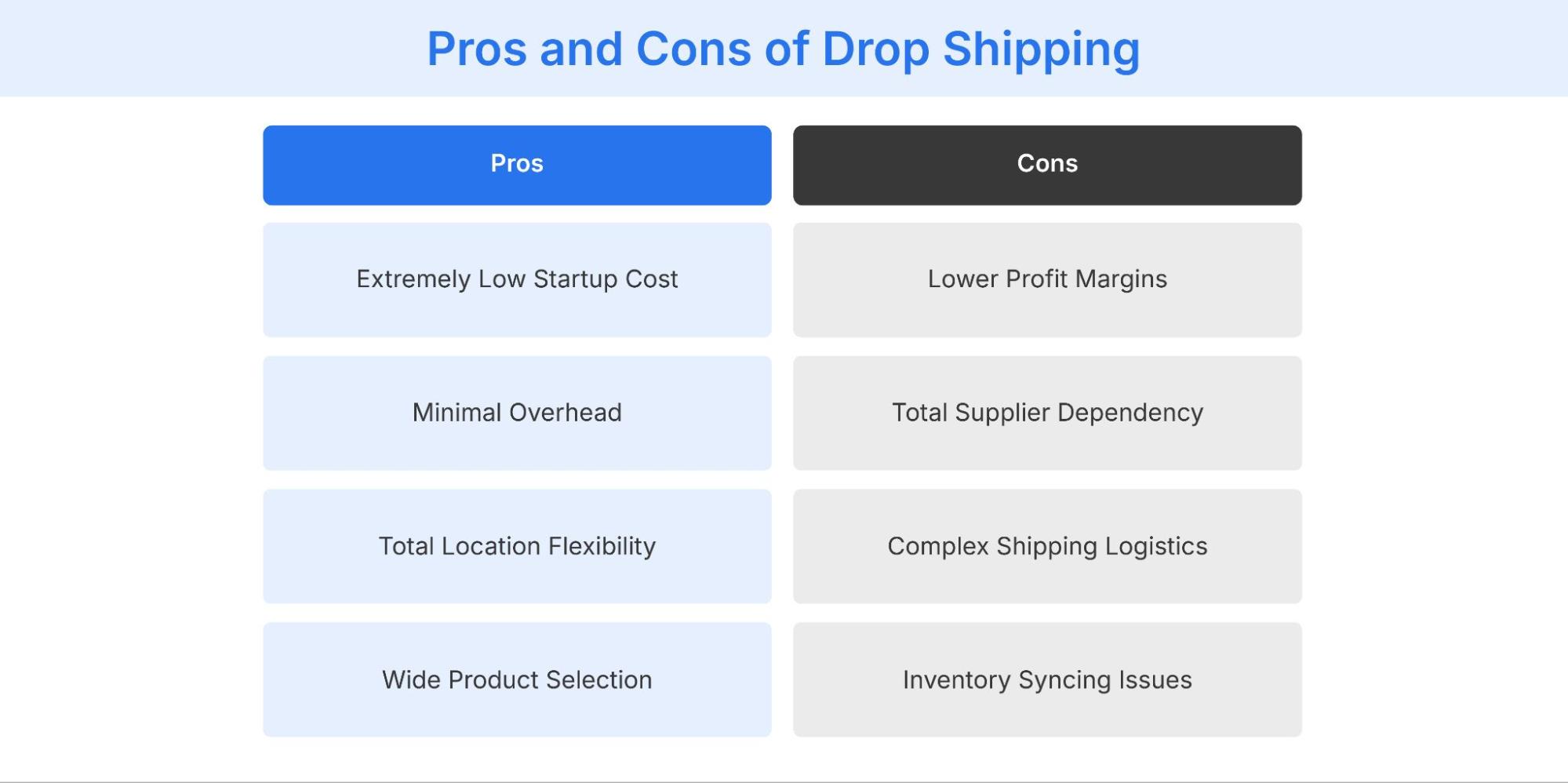
- Extremely Low Startup Cost: You can launch a business without investing hundreds of thousands in inventory, which is typically the biggest barrier to entry in retail. This allows you to test different business ideas and products with virtually zero financial risk if they do not sell.
- Minimal Overhead: You do not need to worry about managing a warehouse, paying for utilities, or hiring staff to track and pack inventory. Your fixed expenses are limited to website hosting and basic software tools, keeping your monthly burn rate incredibly low.
- Total Location Flexibility: You can run your drop shipping business from anywhere in the world as long as you have a reliable internet connection. This freedom allows you to communicate with suppliers and customers without being tied to a specific office or facility.
- Wide Product Selection: You can easily list new items in your store without pre-purchasing them, allowing you to follow trends instantly. This enables you to test new markets and expand your catalog without the fear of poor inventory turnover from obsolete stock.
Disadvantages of drop shipping
- Lower Profit Margins: You will likely face lower margins because you are not buying in bulk, and the supplier takes a cut for fulfillment. To remain profitable, you must focus on high-volume sales or find niche products where you can command a higher price.
- Total Supplier Dependency: You rely entirely on your suppliers for stock availability, product quality, and shipping speeds, which puts your reputation in their hands. If a supplier makes a mistake or runs out of stock, you are the one who must apologize to the customer.
- Complex Shipping Logistics: You may encounter complications when a customer orders three items from three different suppliers, each with a separate shipping charge. This can either eat into your profits or force you to charge high shipping fees that might deter customers from completing the purchase.
- Inventory Syncing Issues: You might struggle to keep your store inventory up to date in real time because you do not control the stock levels yourself. This can lead to situations where customers order products that are actually out of stock with the supplier, resulting in cancellations.

How to Start a Drop Shipping Business?
Starting a drop shipping business requires careful planning and execution to ensure you build a sustainable and profitable brand.
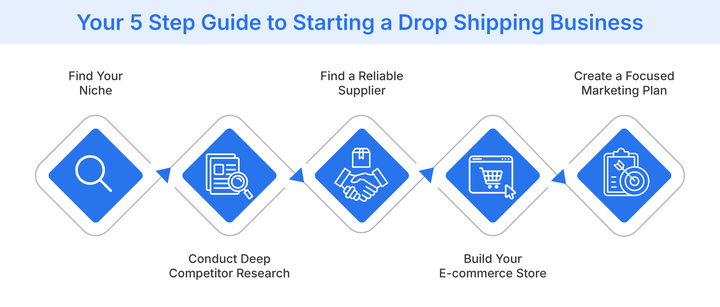
- Find Your Niche: Select a specific market segment that is not overly saturated but still has sufficient demand to support your business. Focusing on a niche allows you to target a particular audience effectively and build a brand that resonates with their unique needs and interests.
- Conduct Deep Competitor Research: Use ecommerce analytics to analyze what competitors sell, how they price, and what marketing strategies they use. This research helps you identify market gaps and opportunities to differentiate your store by offering better value or a superior customer experience.
- Find a Reliable Supplier: Vet potential suppliers thoroughly by ordering samples to test product quality and shipping times before listing them. Building a strong relationship with a dependable supplier is critical because their performance directly impacts your customer satisfaction and your brand reputation in the long run.
- Build Your E-commerce Store: Choose a robust e-commerce platform that integrates seamlessly with your chosen suppliers and offers a smooth user experience. Your store should be visually appealing, mobile-responsive, and easy to navigate to ensure that visitors can find what they need and convert into paying customers.
- Create a Focused Marketing Plan: Develop a comprehensive strategy to drive traffic to your store through social media, search engine optimization, and paid advertising. Since you do not have a physical location, your digital marketing efforts are the primary engine for generating sales and growing your business.
Why Your E-commerce Platform Is the 'Brain' of Your Operation?
Your e-commerce platform serves as the command center for your entire retail operation. It serves as the essential bridge connecting your front-end customer interface with the complex backend systems required to process daily transactions.
You need to rely on this technology to synchronize inventory data from various suppliers while maintaining a consistent shopping experience. As you scale, you need a system that adapts to increased demand and manages fulfillment logistics efficiently.
At Flipkart Commerce Cloud, we provide the intelligent infrastructure required to streamline these critical workflows. Our Commerce Engine empowers you to organize diverse product catalogs, ensuring the right data flows seamlessly to your customers.
Our Pricing Solutions utilize AI-driven intelligence to help you stay competitive in a market where margins are tight. We enable you to monitor competitor pricing in real-time and adjust your own prices dynamically, ensuring you maximize profitability while maintaining the sales volume needed for drop shipping success.
FAQ
Drop shipping requires you to set product prices and handle customer service, while the supplier handles fulfillment. In affiliate marketing, you simply refer customers to another merchant's site for a commission. You do not process transactions or manage support in affiliate marketing, whereas drop shipping makes you the merchant of record.
Drop shipping can be highly profitable if you choose the right niche and manage your margins carefully. Success depends on finding reliable suppliers and implementing effective marketing strategies to drive volume. While margins per unit are lower than traditional retail, the low overhead allows for significant scalability and net profit potential.
You can start a drop shipping business with very little capital, often less than $500, since you do not need to buy inventory. Your primary costs will be website hosting, a domain name, and an initial marketing budget. This low financial barrier makes it an accessible option for new entrepreneurs.
Drop shipping is really profitable when you target the right niche and protect your margins carefully. Profitability depends on product selection, supplier reliability, and consistent marketing execution. While per-unit margins are generally lower than traditional retail, the minimal overhead and low startup costs create strong net profit potential for disciplined dropshipping businesses.
To succeed in dropshipping, you need strong digital marketing skills to drive traffic, solid product research ability to identify winning items, and reliable customer service skills to handle complaints. Basic financial literacy helps you protect margins, while familiarity with e-commerce platforms and SEO gives you a measurable competitive advantage from the start.
Good items for dropshipping are lightweight, non-fragile, and in consistent demand within a defined niche. Popular categories include phone accessories, home decor, fitness equipment, pet supplies, and beauty products. Products priced between $15 and $70 typically balance customer affordability with profit margins sufficient to build a sustainable dropshipping business.
Common dropshipping mistakes include choosing an oversaturated niche, skipping supplier vetting before listing products, and underestimating marketing costs. Many beginners also set prices too low to cover expenses or neglect customer service after purchase. Building a vetted supplier network and a clear, funded marketing strategy from day one helps you avoid these costly errors.