
December 29, 2025
What is a Pricing Ladder?
A pricing ladder is a strategic arrangement of products aimed at guiding customers toward higher price points. This method utilizes psychology to increase average order value while offering distinct value across different tiers.
Drishti, Manager - Digital Marketing

Table of Contents
- What Is a Pricing Ladder?
- The Psychology Behind Price Laddering: Why Your Brain Loves the ‘Middle’ Option
- Key Benefits of a Pricing Ladder Strategy in E-commerce
- How to Build an Effective Pricing Ladder Step-by-Step
- Common Pricing Ladder Mistakes That Kill Conversions
- Real-World Examples of Pricing Ladders Done Right
- Optimize Your Pricing Strategy with Flipkart Commerce Cloud
You have likely walked into a cinema wanting small popcorn and left holding a massive tub instead. The larger option seemed like a better deal because the price gap was incredibly small between the sizes.
This situation was not an accident because the theater designed that specific offer to influence your final decision. You experienced a pricing ladder in action designed to maximize revenue from that single transaction.
- The good news is that you do not need a cinema to utilize this powerful tool today.
- Retailers selling software or sneakers can use this strategy to stop leaving money on the table immediately.
- This approach helps you guide the buyer toward a specific choice or the product you prefer selling.
- You will see better profit margins by arranging your inventory effectively to encourage customers to upgrade themselves.
What Is a Pricing Ladder?
A pricing ladder is the strategy of arranging your products or services in a calculated sequence. You organize items from good to better and best to guide the buyer toward a specific choice. This method ensures you capture maximum value from diverse customer segments visiting your online store.
Every rung on the ladder represents a clear step up in perceived value and the asking price. The goal is to offer choice while making the upgrade feel like an obvious decision for shoppers. You want the higher tiers to provide greater value that justifies the additional cost involved.
The Psychology Behind Price Laddering: Why Your Brain Loves the ‘Middle’ Option
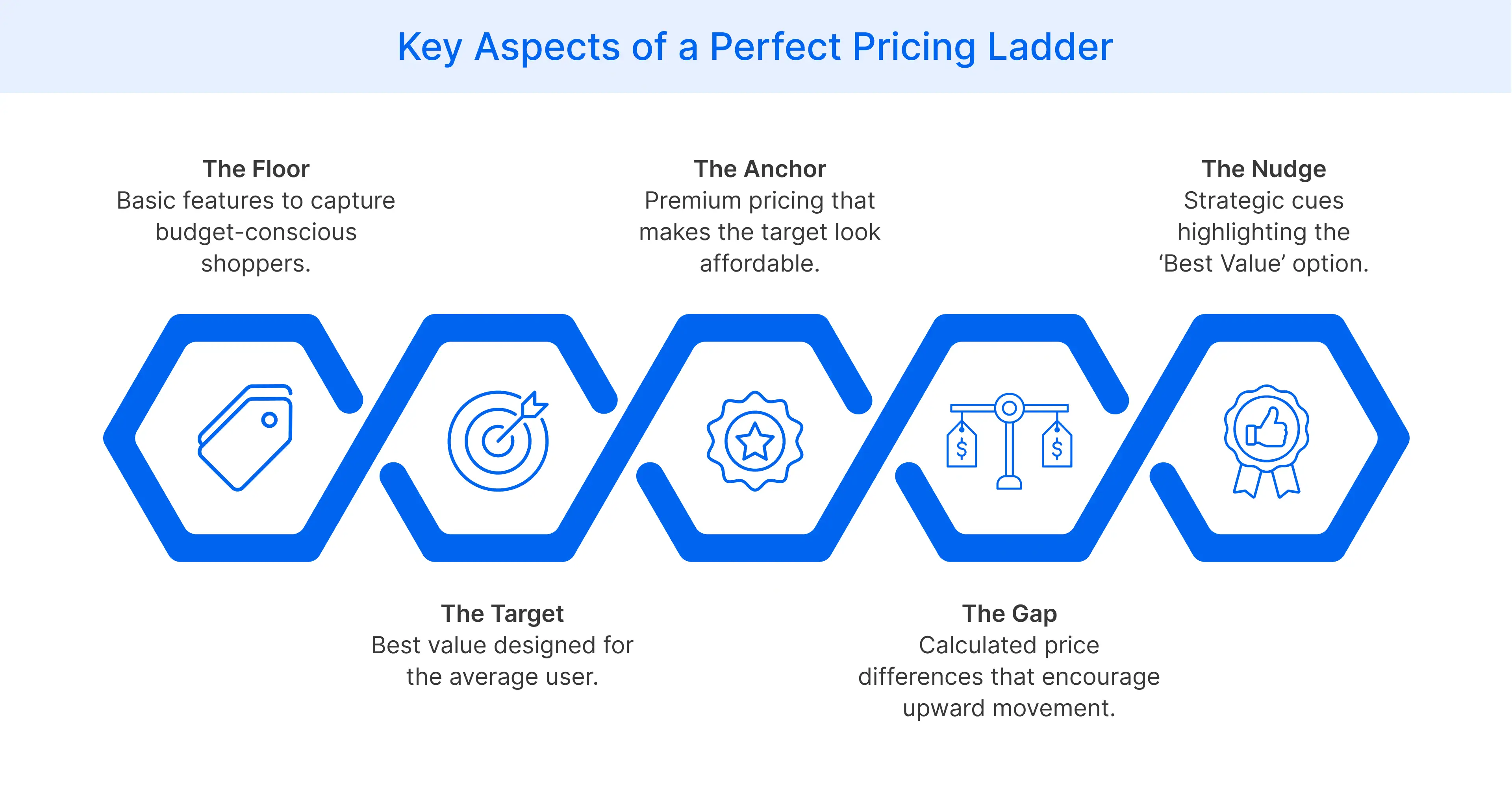
Humans generally dislike the cheapest option because they fear low quality or poor durability from that purchase. You also likely avoid the highest price point because of the fear overspending on unnecessary features or luxury add-ons. Most shoppers naturally move toward the middle option because it feels like the safest and smartest choice.
The highest price on your ladder exists primarily to make the middle option look like a complete steal. That expensive enterprise plan makes the standard professional plan look cheap and highly attractive by comparison. This is known as anchoring, and it heavily influences customer behavior during the critical decision-making process.
You leverage behavioral economics to influence how customers perceive value across different price points in your store. The brain seeks a reference point, and the middle option typically satisfies customer expectations for fair pricing.
Key Benefits of a Pricing Ladder Strategy in E-commerce
Implementing a strong pricing ladder strategy offers several tangible benefits for your retail business and your bottom line.
- Boosts Average Order Value (AOV): You are not forcing people to spend more money against their will or initial budget constraints. You are simply tempting them to upgrade themselves by showing them greater value for a small price increase. This subtle nudge effectively boosts your average order value without requiring aggressive sales tactics or discounts.
- Captures the ‘Whales’: Some people always want to pay the most to feel premium or enjoy exclusivity in their purchase. A pricing ladder gives these high-spending customers a place to go and maximizes revenue from that segment. You ensure that you capture the most money possible from those willing to spend significantly.
- Reduces Decision Paralysis: The question shifts from whether they should buy the item to which level of item they need. You reduce decision paralysis by simplifying the comparison between tiers and highlighting the clear benefits of each. This clarity helps customers move through the sales funnel faster and increases overall conversion rates.
How to Build an Effective Pricing Ladder Step-by-Step
Follow these steps to create a pricing ladder that drives sales and enhances customer satisfaction levels:
- Step 1 - Identify Your ‘Anchor’: Start by creating your premium version that serves as the high-value anchor for your entire product category. This tier establishes the highest price point and defines the upper limit of quality for your customers.
- Step 2 - Build the ‘Target’ (Middle) Option: This is your bestseller and it should possess the absolute best value-to-cost ratio for your average customer. You must design this middle option to be the most attractive choice among the different price points.
- Step 3 - Create the ‘Floor’ (Entry) Option: The entry option should be functional but slightly painful to encourage users to look at higher tiers. You might include the core software or product but remove priority support or advanced features to motivate upgrades.
- Step 4 - Mind the Gaps: You must warn the reader about pricing gaps because a large jump will discourage them from climbing. If the price difference is too high then the customer will settle for the cheaper entry-level option.
Common Pricing Ladder Mistakes That Kill Conversions
You must avoid these common errors to ensure your pricing ladder strategy works effectively for your business.
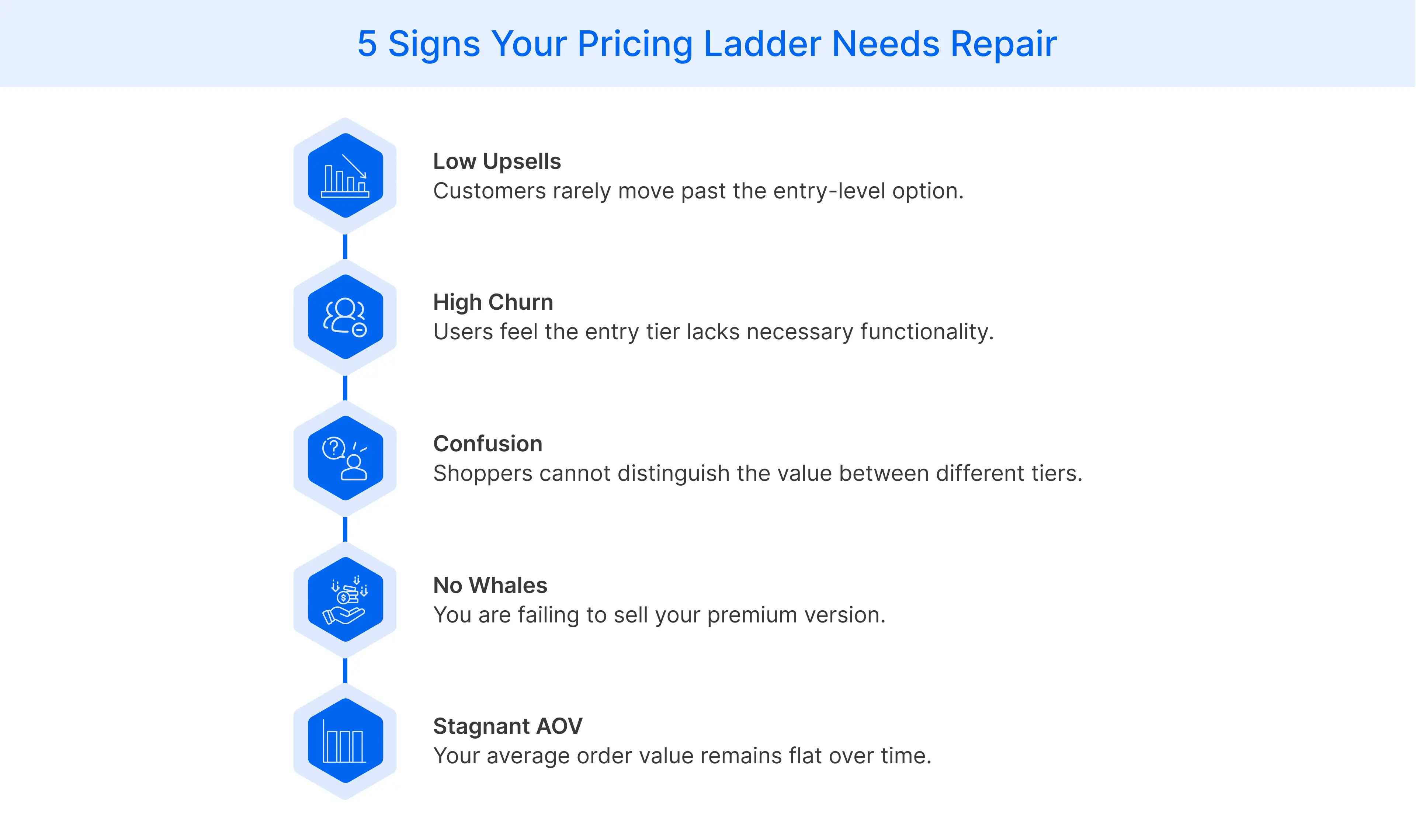
- Too Many Rungs: Offering too many options will overwhelm the shopper and likely result in them buying nothing at all. You should stick to three or four tiers to keep the decision process simple and very direct.
- Cannibalization: When the cheap option provides too much value then nobody will feel the need to upgrade themselves. You must balance the features carefully to ensure the entry-level product does not steal sales from higher tiers.
- Confusing Differentiation: If the user cannot instantly see why the next tier costs more then they will not pay. You need to make the added value or exclusivity obvious to justify the higher prices on the ladder.
Real-World Examples of Pricing Ladders Done Right
Analyzing successful implementations in different scenarios helps you understand how to apply these concepts to your own retail pricing strategy.
- SaaS Example: Software companies often use a free version as a hook to attract users into their ecosystem initially. The professional tier serves as the target option while the business plan acts as the premium anchor. This structure allows them to monetize different types of customers based on their specific needs and budgets.
- Retail Example: Electronic retailers frequently use storage capacity to create effective ladders for smartphones and other consumer tech devices. The medium storage option usually offers the best balance of utility and price for the average user. This setup encourages shoppers to skip the base model because they fear running out of storage space.
Optimize Your Pricing Strategy with Flipkart Commerce Cloud
Building the ladder is one thing but keeping it optimized is another challenge for modern retail businesses. You cannot just set your rungs in stone and hope the market does not shift beneath you. Competitors get sneaky and demand wobbles which means your perfect middle option might stop converting like before.
That is where Flipkart Commerce Cloud and our Pricing Manager step in to solve these complex problems. We eliminate the need for you to manually guess which price points will stick with your audience. Our advanced AI and analytics analyze competitor moves and demand elasticity for you in real time.
We utilize dynamic pricing to automatically adjust your rungs based on live market data and current trends. This ensures you never lose your competitive edge or your profit margins due to outdated pricing structures. You can trust our machine learning algorithms to maintain the optimal balance for your pricing ladder execution.
FAQ
Experts generally recommend having three distinct tiers because it leverages the psychological power of the middle option. Three choices allow for an entry point plus a target option and a premium anchor price. Adding more than four tiers can cause decision fatigue and lower your overall conversion rates significantly.
You determine the gaps by analyzing the perceived value and cost associated with the features in each tier. The jump in price must feel proportional to the additional benefits or durability the customer receives. Testing different gaps helps you find the sweet spot that maximizes upgrades without scaring away shoppers.
Price anchoring is the practice of establishing a high reference price to make other options seem affordable. The top rung of your ladder serves as this anchor and influences how customers view the middle. It makes the target option feel like a bargain even if it carries a significant cost.
A pricing ladder strategy is suitable for almost all businesses that offer variations of a specific product. It works exceptionally well for SaaS companies and retailers selling electronics or subscription-based services to consumers. However, it requires careful planning to ensure the tiers effectively segment your diverse customer segments correctly.