
July 30, 2026
Pay What You Want Pricing: Benefits, Risks and Examples
Pay What You Want (PWYW) pricing lets customers choose how much they pay for a product or service. It helps businesses attract new customers, build brand loyalty, support charitable causes, and estimate the perceived value of a product.
Drishti, Manager - Digital Marketing

Table of Contents
- What Is Pay What You Want Pricing?
- Why Does Pay What You Want Pricing Work?
- When to Use and When to Avoid Pay What You Want Pricing
- What Are Some Examples of Pay What You Want Pricing?
- What Are The Risks of Pay What You Want Pricing?
- Conclusion
Pay What You Want Pricing: Benefits, Risks and Examples
Most pricing strategies require businesses to set a fixed price that customers either accept or reject. Pay What You Want (PWYW) pricing takes a different approach by allowing buyers to decide how much they want to pay for a product or service.
PWYW pricing is a participative pricing model that shifts pricing decisions from the seller to the buyer. Instead of paying a fixed or standard price, customers determine the final amount based on the value they perceive. Businesses may display a reference or anchor price to guide expectations, but the final payment remains the customer’s choice.
Unlike promotional pricing or discounting, PWYW pricing helps businesses understand customers' willingness to pay, strengthen customer relationships, and gather valuable pricing insights.
This glossary covers the fundamentals of Pay What You Want pricing: what it is, its benefits and risks, how to implement it, and how to know whether it is the right pricing model for your business.
What Is Pay What You Want Pricing?
Pay What You Want (PWYW) pricing is a buyer-driven strategy where the customer, rather than the seller, determines the final price of a product or service. Buyers are free to pay whatever amount they feel is fair, which can sometimes be zero. Businesses typically use this approach to attract new customers, build brand loyalty, support charitable causes, or gauge the market's perceived value of a product.
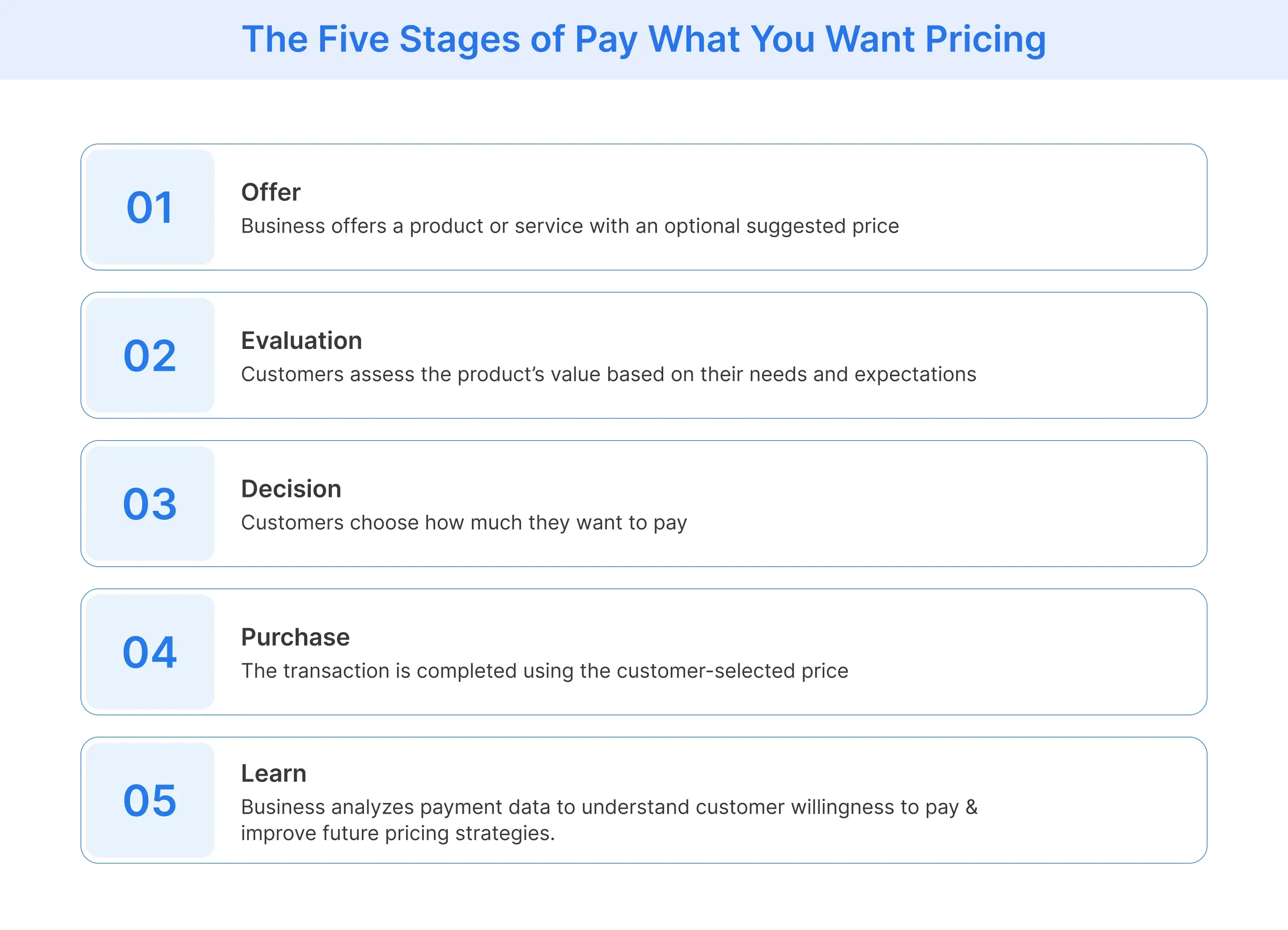
The Pay What You Want pricing mechanism is implemented in two ways. In an ex ante model, customers decide how much to pay before receiving the product or service. In an ex post model, they choose the price after experiencing the value offered.
Why Does Pay What You Want Pricing Work?
PWYW works because it relies on consumer psychology rather than fixed pricing. Instead of telling customers what they must pay, businesses give them the freedom to decide what they believe a product or service is worth. This creates a sense of trust, fairness, and reciprocity that often encourages customers to pay a fair price rather than the lowest possible amount.
- Perceived value: Customers are more willing to pay when they believe a product or service delivers meaningful value.
- Customer trust: Established brands and businesses with strong customer relationships are more likely to receive fair payments because buyers trust the quality of their offerings.
- Fairness and reciprocity: When businesses demonstrate confidence by allowing customers to choose the price, many customers feel a social responsibility to return that trust by paying fairly.
- Reference pricing: Displaying a suggested or standard price provides an anchor that helps customers decide what constitutes a reasonable payment. This reduces uncertainty during the purchasing process.
- Emotional connection: Customers who identify with a brand’s mission, values, or community are often willing to pay more because they want to support the business beyond the transaction.
When combined with trust and a strong value proposition, PWYW can become an effective pricing strategy rather than simply an open-ended discount.
Also read: What is Psychological Pricing?
When to Use and When to Avoid Pay What You Want Pricing?
Pay What You Want pricing is best used by businesses that offer digital products with low marginal costs, possess a highly loyal customer base, or want to drive rapid market penetration and brand awareness. It is also highly effective for charity-driven campaigns and testing the perceived value of new product launches.
Conversely, businesses should strictly avoid Pay What You Want pricing if they sell physical goods with high production and inventory costs, operate on thin profit margins, rely on predictable cash flow, or have a highly transactional customer base lacking strong brand affinity.
|
Business Factor |
When to Use PWYW |
When NOT to Use PWYW |
|
Cost Structure |
Products have low or zero marginal costs (e.g., software, ebooks, digital media). |
Products have high production, manufacturing, fulfillment, or shipping costs. |
|
Product Type |
Digital goods, creative content, consulting services, or virtual events. |
Physical inventory, luxury goods, or commodities with strict wholesale minimums. |
|
Customer Base |
Highly loyal, community-driven, and actively supports the brand's mission. |
Transactional, highly price-sensitive, or lacks a strong relationship with the brand. |
|
Business Objective |
Rapid market penetration, lead generation, charity fundraising, testing perceived value, or other limited-time campaigns. |
Immediate profitability, protecting a premium brand image, or strict margin control. |
|
Financial Stability |
The business has alternative revenue streams and can safely absorb income fluctuations. |
The business relies entirely on predictable, guaranteed cash flow to cover fixed overhead expenses. |
What Are Some Examples of Pay What You Want Pricing?
- Radiohead: In 2007, the band released its album In Rainbows using a PWYW pricing model, allowing fans to choose how much they wanted to pay. The campaign became one of the most recognized PWYW pricing examples.
- Humble Bundle: The digital storefront allows customers to decide how much they want to pay for bundles of games, software, and eBooks. Buyers who pay above the average price often unlock additional content, encouraging higher contributions while supporting charitable causes.

Credits: Humble Bumble
- Panera Cares Cafés: Panera Bread experimented with community cafés where customers could pay what they were able to afford for their meals. Although the initiative eventually ended, it demonstrated how PWYW pricing could support social responsibility while improving access to food.
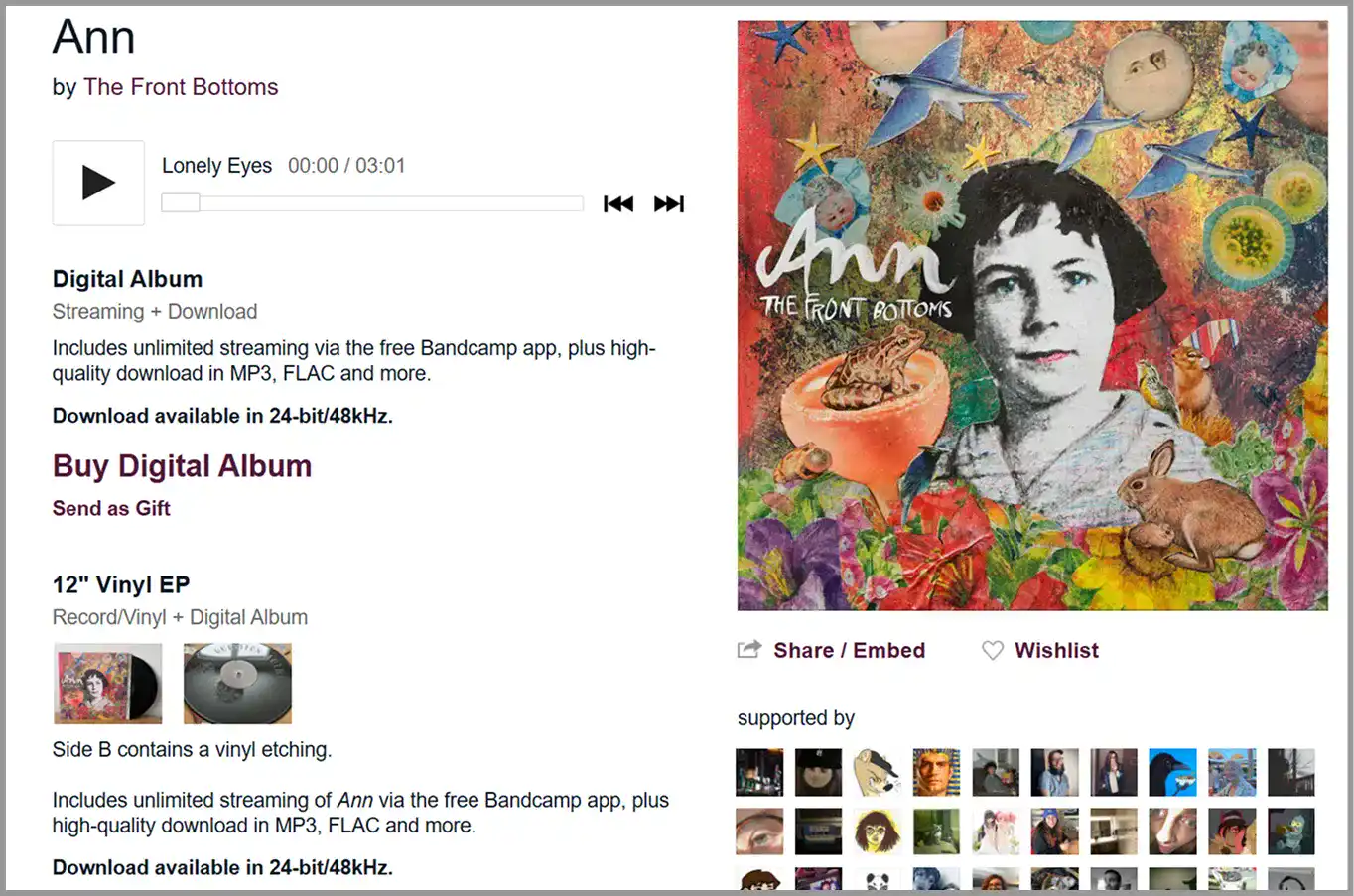
- Independent creators: Musicians, podcasters, newsletter publishers, and digital creators frequently use PWYW pricing for downloads, subscriptions, and exclusive content. This business model helps attract potential customers while giving loyal supporters the opportunity to contribute more than the minimum amount.
Credits: Bandcamp
-
Museums and art galleries: Many museums around the world operate on a Pay What You Want or suggested donation basis, giving visitors the flexibility to contribute according to their budget while helping institutions remain accessible to the public.
Related read: Customer value-based Pricing: Definition & Retail Strategy
What Are The Risks of Pay What You Want Pricing?
The main risks of Pay What You Want (PWYW) pricing are severe revenue uncertainty and the constant risk of underpayment, which are especially harmful to businesses with high production costs. Furthermore, letting customers dictate the price is difficult to scale and can unintentionally signal low product value. To succeed, businesses must offset these financial risks with strong brand trust, transparent communication, and hybrid pricing strategies.
- Revenue uncertainty: Because customers determine the final price, businesses cannot accurately predict how much revenue each sale will generate. This makes financial planning more difficult, especially for businesses with fixed operating costs.
- Underpayment: Some customers may choose to pay significantly less than the product’s perceived value or even nothing at all. Without a suggested price or strong customer trust, average payments may fall below sustainable levels.
- High cost of goods: PWYW pricing is less effective for businesses with high production or inventory costs. Selling physical products at below-cost prices can quickly erode margins and undermine long-term sustainability.
- Difficult to scale: As a business grows, relying solely on voluntary pricing can become challenging. Many companies eventually combine PWYW with standard pricing or reserve it for specific campaigns rather than their entire business model.
- Perceived product value: Allowing customers to choose their own price may unintentionally signal that a product has little value. Businesses must clearly communicate quality, benefits, and differentiation to avoid lowering perceived value.
Conclusion
The success of Pay What You Want (PWYW) pricing depends on your product type, cost structure, and customer base. Rather than replacing traditional pricing, many businesses find the most success using PWYW as a complementary approach for specific products, campaigns, or promotions.
Ultimately, the PWYW model is less about giving products away and more about understanding customer value. Like any pricing strategy, its success depends on choosing the right approach for your business goals and continuously evaluating customer behavior and payment patterns.
If you’re looking to implement flexible pricing strategies or deliver personalized shopping experiences that increase customer engagement and conversions, Flipkart Commerce Cloud provides the tools retailers need to optimize pricing, personalize experiences, and grow sustainably.
Book a demo to discover how FCC can help you build smarter commerce experiences.

FAQ
The pay what you want (PWYW) scheme is a pricing strategy where buyers choose their own price for a product or service instead of the business setting a traditional fixed price tag. This strategy is frequently used to reduce buyer hesitation, generate brand awareness, attract new customers, and clear inventory while trusting customer goodwill and willingness to pay to support business goals.
Yes, a pay what you want strategy can be profitable, but its success relies heavily on high transaction volumes, strong customer loyalty, and a compelling value proposition. While some consumers inevitably pay nothing, many contribute fair amounts that exceed minimum product costs; businesses can use flexible retail analytics tools, like those within Flipkart Commerce Cloud, to evaluate these margins and ensure long-term profitability.
The industries that work best for PWYW models are those with low marginal costs and digital delivery frameworks, such as digital media, software, hospitality, and charities. These sectors thrive with this pricing strategy because the financial cost of serving an additional customer is negligible.
The primary difference is that a pay what you want strategy grants buyers access to the full, complete product for any price they choose, whereas freemium pricing only offers a basic version of the product for free while locking advanced or premium features behind a fixed, non-negotiable price tag.
A business can set up a pay what you want strategy by defining its financial goals, identifying suitable products or services, and displaying a suggested or minimum price to guide customer expectations. After launching, the business must continuously monitor customer payments, gather pricing insights, and refine the strategy over time to balance customer satisfaction with long-term profitability.
Research on Pay What You Want pricing indicates that while it drives higher transaction volume and market penetration, the average price paid by consumers typically falls below traditional fixed prices. However, behavioral economics studies show that PWYW can become very effective—and sometimes even more profitable than fixed pricing—when paired with a charitable component, as social norms and the desire for a positive self-image compel customers to pay significantly more. Furthermore, researchers emphasize that the model is most sustainable for digital goods with low marginal costs, in scenarios driven by strong brand loyalty, and when a suggested reference price is provided to psychologically anchor consumer expectations.