
September 30, 2026
Customer Reward Programs and Their Role in Customer Engagement
A customer reward program is a structured program that gives customers incentives or benefits in exchange for purchases, referrals, engagement, or other predefined actions.
Drishti, Manager - Digital Marketing

Table of Contents
- What Is a Customer Reward Program?
- How Does a Customer Reward Program Work?
- What Are the Different Types of Customer Reward Programs?
- What Is the Difference Between a Customer Reward Program and a Loyalty Program?
- What Are the Benefits of Customer Reward Programs for Retailers?
- What Are Examples of Customer Reward Programs?
- How Can Retailers Create an Effective Customer Reward Program?
- How Can Retailers Measure the Performance of a Customer Reward Program?
- Conclusion
Customer Reward Programs and Their Role in Customer Engagement
Retailers use different incentives to encourage customers to purchase, engage with their brands, refer others, and return for future interactions. These customer rewards can range from discounts and points to exclusive benefits and special offers.
Beyond encouraging immediate actions, rewards can also support customer engagement, repeat purchases, and longer-term customer loyalty. In this article, we discuss how customer reward programs work, the different types retailers can use, their benefits, and how retailers can create and measure an effective program.
What Is a Customer Reward Program?
A customer reward program is a structured system that gives customers incentives or benefits in exchange for specific actions, such as making purchases, referring others, leaving reviews, or engaging with a retailer.
Depending on the program, customers may receive loyalty points, discounts, cashback, free products, exclusive benefits, or access to special offers. Retailers can use these rewards to encourage specific customer behaviors while giving customers more reasons to continue engaging with the brand.
How Does a Customer Reward Program Work?
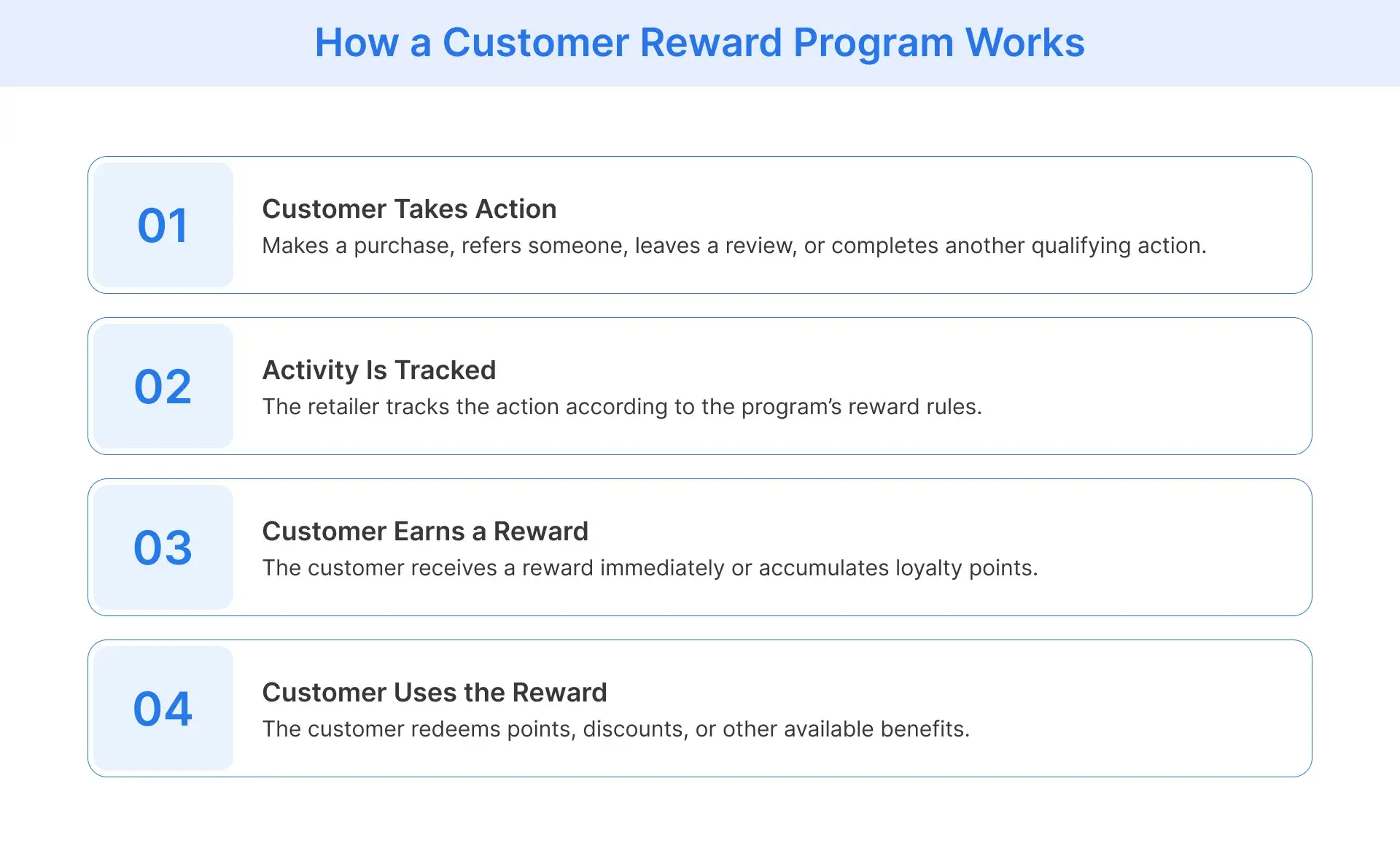
A customer reward program works by defining the actions customers need to take to earn rewards. Retailers set the qualifying actions, establish the reward rules, and track customer activity to determine when a reward has been earned. These actions can include making purchases, referring new customers, leaving reviews, or other forms of engagement.
Depending on the program, customers may receive an immediate reward or accumulate loyalty points over time. Some programs also allow customers to progress through different levels of membership, with additional benefits becoming available as they meet specific requirements.
What Are the Different Types of Customer Reward Programs?
Customer reward programs can take different forms depending on the retailer’s objectives and the customer behaviors they want to encourage. Common types include:
- Points based programs: Customers earn loyalty points for purchases or other qualifying actions and redeem them for rewards.
- Tiered programs: Customers move through different membership levels and unlock additional benefits as they progress.
- Cashback and instant reward programs: Customers receive cashback, discounts, or other immediate rewards after qualifying transactions.
- Referral programs: Existing customers earn rewards for referring new customers to the retailer.
- Spend based programs: Customers receive rewards based on how much they spend within a specified period.
- Subscription or paid reward programs: Customers pay a recurring or one time fee to access exclusive benefits, discounts, or other perks.
- Personalized and gamified reward programs: Retailers tailor rewards to customer preferences or use challenges, milestones, and other interactive elements to encourage participation.
What Is the Difference Between a Customer Reward Program and a Loyalty Program?
Customer reward programs and loyalty programs are closely related, and the terms are often used interchangeably. The main difference is their scope. A customer reward program focuses on providing incentives for defined customer actions, while a loyalty program can be part of a broader strategy for improving customer retention and building longer term customer relationships.
Customer Reward Program vs. Loyalty Program |
||
|---|---|---|
|
Customer reward program |
Loyalty program |
|
|
Primary focus |
Rewarding specific customer actions |
Building longer term customer loyalty |
|
How it works |
Provides incentives for purchases, referrals, engagement, or other defined actions |
Uses rewards and other strategies to encourage an ongoing customer relationship |
|
Scope |
Can focus on specific behaviors or actions |
Can support a broader customer retention strategy |
|
Relationship |
Can operate independently or form part of a loyalty program |
May include customer rewards as one part of the overall program |
Customer rewards can therefore form part of a wider loyalty program rather than always operating as a completely separate strategy.
What Are the Benefits of Customer Reward Programs for Retailers?
Customer reward programs can help retailers encourage valuable customer behaviors while giving customers additional reasons to continue engaging with the brand. Key benefits include:
- Improved customer retention: Relevant rewards can encourage customers to return rather than treating each purchase as a one time interaction.
- More repeat purchases: Rewards can motivate customers to shop more frequently, particularly when continued purchases help them earn additional benefits.
- Higher customer engagement: Retailers can reward actions beyond purchases, such as referrals, reviews, or other forms of brand engagement.
- Increased average order value: Spend based rewards or thresholds can encourage customers to add more to their purchases to qualify for a reward.
- More customer referrals: Referral rewards can encourage existing customers to introduce new customers to the retailer.
- Stronger customer relationships: Providing relevant benefits can make continued interactions more valuable for customers and support longer term brand loyalty.
What Are Examples of Customer Reward Programs?
Customer reward programs can be applied in different ways depending on the actions a retailer wants to encourage. Examples include:
- A retailer awarding loyalty points for each purchase, which customers can later redeem for discounts or free products.
- An ecommerce retailer offering cashback after customers complete qualifying purchases.
- A customer unlocking exclusive benefits after reaching a higher reward tier based on their spending.
- A referral program that gives existing customers rewards when they successfully refer new customers.
- A paid membership program that provides members with ongoing perks, such as exclusive discounts or special offers.
How Can Retailers Create an Effective Customer Reward Program?
Creating an effective customer reward program starts with understanding what the retailer wants to achieve and what customers value. Retailers can consider the following:
- Set clear objectives: Define the customer behaviors and business outcomes the program should encourage, such as repeat purchases, referrals, or increased engagement.
- Understand customer preferences: Use customer data and feedback to identify rewards that are relevant to the people participating in the program.
- Choose the right reward structure: Select a program model that aligns with the retailer’s objectives and customer preferences.
- Set clear earning and redemption rules: Make it easy for customers to understand how they earn rewards, track their progress, and redeem available benefits.
- Personalize rewards: Use customer insights to provide more relevant rewards based on individual preferences and interactions.
- Keep participation simple: Customers should be able to join and use the program without unnecessary steps or complicated requirements.
- Connect customer touchpoints: Make the program accessible across the channels customers use to interact and shop with the retailer.
- Review and adjust the program: Monitor customer participation and program performance to identify where rewards, rules, or experiences may need to change.
How Can Retailers Measure the Performance of a Customer Reward Program?
Retailers should measure a customer reward program against the objectives it was designed to achieve. Depending on those objectives, useful performance indicators can include:
- Enrollment and participation: Track how many eligible customers join the program and continue to participate.
- Reward redemption: Measure how frequently customers redeem the rewards they earn.
- Repeat purchase behavior: Assess whether participating customers return and make purchases more frequently.
- Customer retention: Monitor whether the program helps retain customers over time.
- Average order value: Compare how much participating customers spend and whether this changes over time.
- Referral activity: Track successful referrals when referrals are one of the behaviors the program rewards.
- Customer feedback: Use feedback to understand how customers perceive the rewards and identify areas that may need improvement.
Retail technology can also help retailers build and manage customer reward programs more effectively. Software can centralize customer data, track qualifying actions and reward redemptions, support personalized rewards, and provide performance data that helps retailers understand what is working and where the program needs adjustment.
Conclusion
Customer reward programs give retailers a structured way to reward valuable customer actions while giving customers meaningful reasons to keep engaging with the brand. When rewards reflect customer expectations and support clear business objectives, they can contribute to stronger engagement, retention, and longer term customer relationships.
Flipkart Commerce Cloud helps retailers use customer insights to create more relevant shopping experiences. Retailers can use its Personalization Engine and machine learning capabilities to tailor promotions and interactions based on customer behavior, supporting stronger customer engagement and retention.

FAQ
A customer reward program is a structured marketing strategy designed to incentivize repeat business by offering loyal customers points, product discounts, or exclusive offers. By providing additional value for continued patronage, retailers enhance the overall customer experience, increase retention, and build a highly engaged customer base.
Customer reward programs work when loyalty members earn incentives through purchases, tracking progress via a loyalty card or dedicated mobile app. Once buyers accumulate sufficient bonus points, they redeem them for perks like free shipping, converting routine shopper activity into long-term brand engagement and driving overall total revenue.
The difference between a customer reward program and a broader customer loyalty program lies in transaction incentives versus emotional connection. Reward schemes focus primarily on transactional perks like a points program, whereas tiered loyalty programs foster an emotional connection by offering higher tiers exclusive access and early entry to new products.
Yes, rewards programs are worth it for retailers because retaining existing shoppers significantly impacts the financial bottom line. Enterprise solutions like Flipkart Commerce Cloud empower ecommerce businesses to launch a successful loyalty program, driving a significant increase in customer lifetime value while lowering customer acquisition expenses
The benefits of customer loyalty programs for shoppers include immediate savings, tailored perks, and exclusive products. Members receive tangible monetary value through store credits, enjoy VIP perks like early access to sales, and experience elevated customer service, making routine brand interactions feel consistently appreciated and rewarding.
Retailers can measure the success of an effective loyalty program by tracking key metrics like member retention, redemption activity, and net promoter score. Analyzing the spending behavior of active repeat customers compared to non-members helps merchants calculate program ROI and ensure incentives reliably convert casual shoppers into passionate brand advocates.