
March 11, 2026
Cross-Device Advertising
Cross-device advertising allows marketers to reach users consistently across smartphones, tablets and desktop computers. This strategy unifies the customer journey to deliver relevant messages based on user behavior on different screens.
Drishti, Manager - Digital Marketing

Table of Contents
- What is Cross-device Advertising?
- How Does Cross-device Advertising Work?
- What are the Methods of Cross-device Tracking?
- Why is Cross-device Advertising Important for Marketing?
- What is Cross-device Attribution?
- How is Cross-device Different from Cross-channel Marketing?
- What are the Challenges of Cross-device Advertising?
- How Do Privacy Regulations Affect Cross-device Targeting?
- Build Your Retail Media Platform with Flipkart Commerce Cloud
Cross-Device Advertising
Modern consumers constantly switch between various screens throughout the day to browse products and consume content. Marketers must adapt by implementing strategies that recognize the same individual regardless of the hardware they currently use.
This approach ensures that a brand narrative remains consistent and persuasive as users move from mobile to desktop. It eliminates fragmented messaging and provides a unified experience that guides the potential customer toward a final purchase.
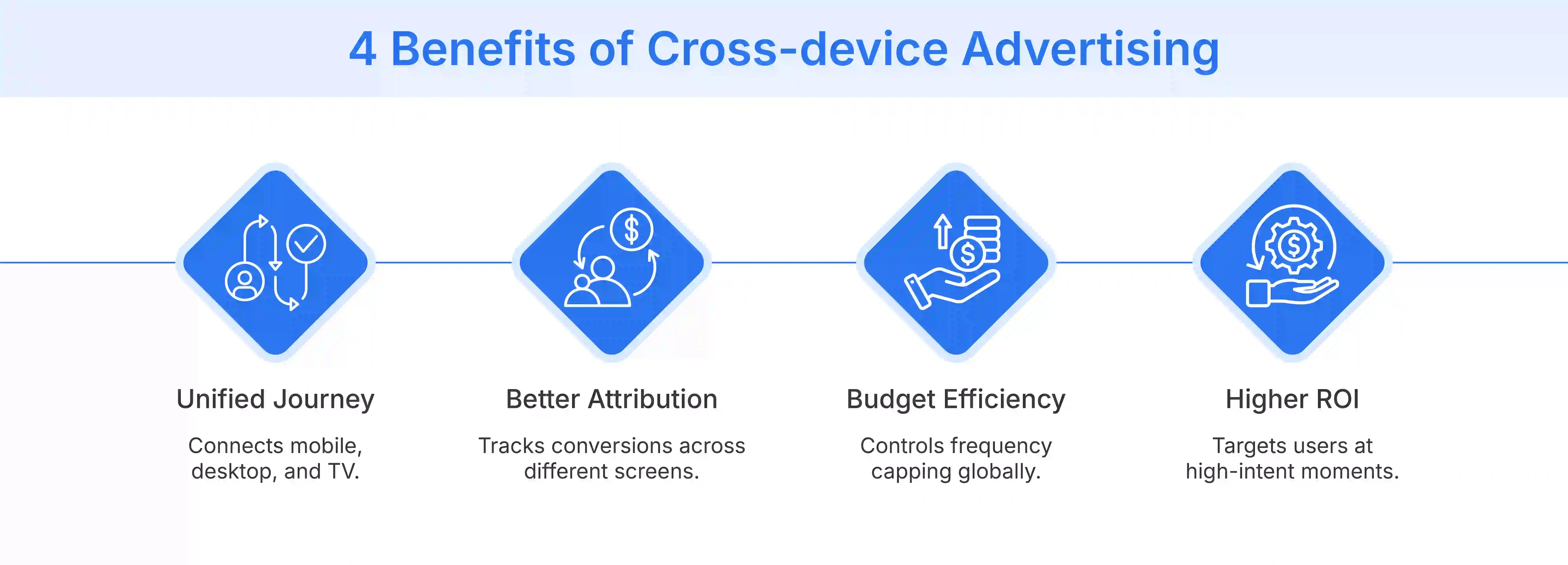
- It enables brands to deliver a seamless experience by connecting unrelated user interactions into a cohesive journey.
- Marketers can control frequency capping to prevent ad fatigue and avoid wasting budget on repetitive impressions.
- The strategy allows you to attribute conversions accurately even if the purchase happens on a different device.
- Under this method, retailers use ad retargeting to reach users on desktops who previously viewed specific products on their smartphones.
What is Cross-device Advertising?
Cross-device advertising is a specialized strategy that identifies and targets users across multiple devices to deliver cohesive messages. It ensures that a consumer sees relevant ads on their smartphone or tablet based on their previous desktop activity.
It connects smartphones, tablets, desktop computers, and connected TVs to a single user profile for unified marketing. This connection allows advertisers to treat a person as a single entity rather than separate users across different platforms.
How Does Cross-device Advertising Work?
You use specific technology to link multiple devices to the same individual using advanced data-matching techniques. This process involves collecting signals from various touchpoints to establish that a mobile phone and a laptop belong to one person.
The system analyzes user data to create a unified view of the customer journey across all digital environments. You can leverage insights from data providers or your own first-party data to build a comprehensive identity graph.
It delivers ads sequentially or relevantly based on the user's previous interactions on other devices they own. You can show an awareness ad on a mobile device and follow up with a conversion ad on a desktop computer.
What are the Methods of Cross-device Tracking?
Advertisers rely on two primary methodologies to bridge the gap between devices and establish accurate user identities.
- Deterministic Tracking: This method uses specific login data, such as email addresses, to link devices with high accuracy and precision. You can connect a user's mobile and desktop activity when they sign in to the same app on both.
- Probabilistic Tracking: This method analyzes anonymous data points, such as IP addresses and locations, to infer whether devices belong to the same person. You use complex algorithms to infer connections between devices that share similar usage patterns and Wi-Fi networks.
- Device Graph: This is a map that links various identifiers to create a cohesive picture of a single user across channels. It aggregates deterministic data and probabilistic matching to provide a comprehensive view of the user's devices and habits.
Why is Cross-device Advertising Important for Marketing?
Implementing a cross-device strategy is essential for retailers who want to capture the full value of their digital audience.
- Seamless Customer Journey: It allows brands to tell a continuous story as users switch between screens throughout the day and week. You can guide the user from initial discovery on a phone to a final purchase on a laptop.
- Improved Conversion Rates: Advertisers can reach users on the device where they are most likely to make a purchase or convert. You can deliver the right message at the right time to influence the decision when high intent is present.
- Better Budget Efficiency: It prevents wasting money by showing the same ad too many times to the same person on different devices. You reduce ad waste by setting global frequency limits that apply across all the screens a user views.
- Accurate Attribution: It enables marketers to track the true impact of marketing campaigns by linking mobile views to desktop purchases or vice versa. You gain a more accurate picture of how your upper-funnel mobile ads contribute to lower-funnel desktop revenue.
What is Cross-device Attribution?
Cross-device attribution is the process of assigning credit to the marketing touchpoints that led to a conversion across screens. It solves the problem of disjointed measurement, where mobile clicks and desktop purchases appear as separate, unrelated events in analytics.
It tracks if a user clicked an ad on a mobile phone but completed the purchase later on a laptop. You can see the full conversion path and understand how each device contributes to the final sale.
This data helps marketers understand which channels truly drive sales and ROI by revealing the hidden value of mobile. You can optimize your marketing efforts by investing in devices that assist conversions, even if they are not the final touchpoint.
How is Cross-device Different from Cross-channel Marketing?
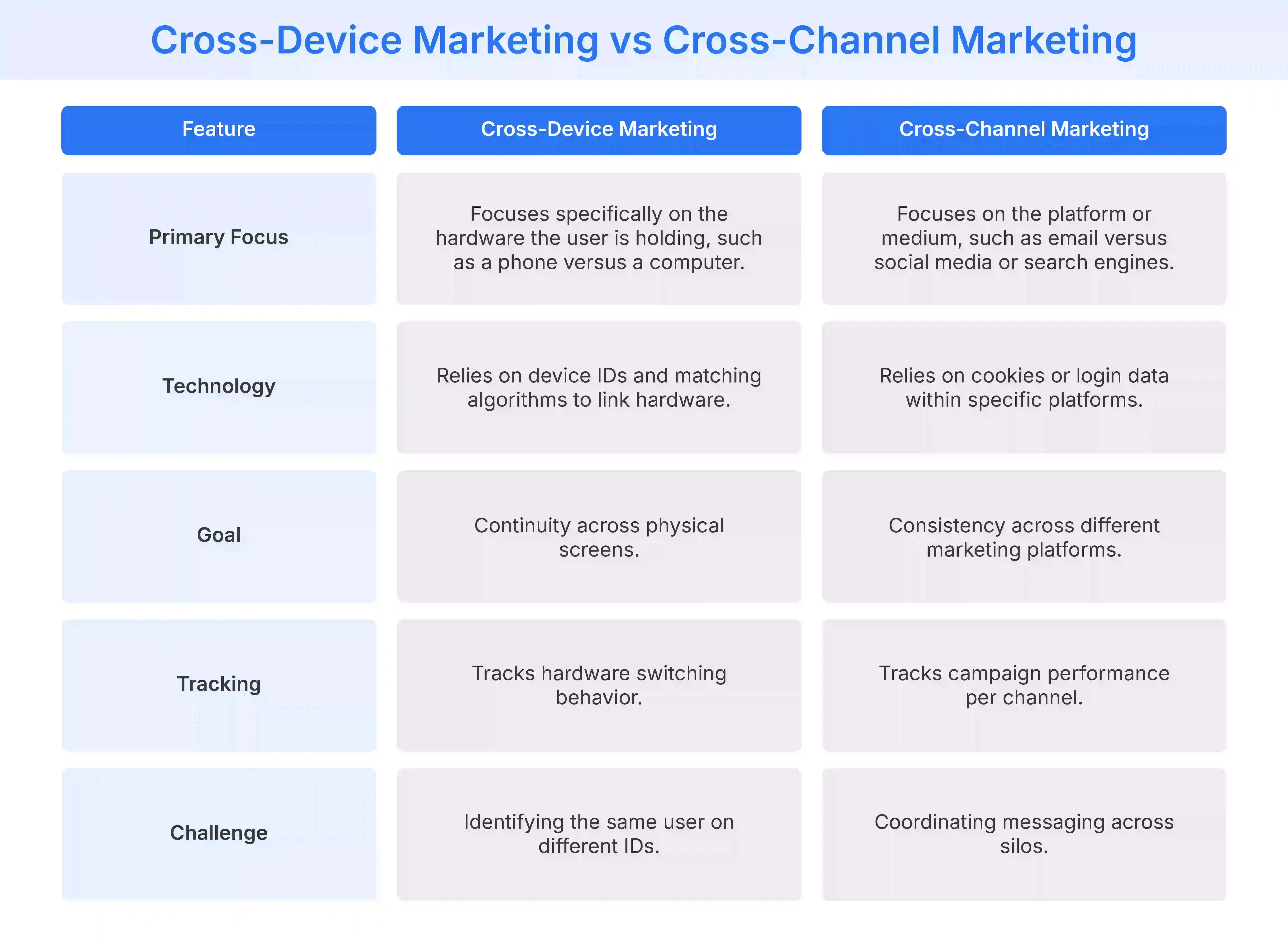
Cross-device marketing focuses on identifying the same user across devices like smartphones and desktop computers to maintain continuity. In contrast, cross-channel marketing orchestrates campaigns across different communication platforms, such as email or social media, regardless of the device accessing them.
The following table outlines the key distinctions you need to understand to plan your campaigns effectively.
What are the Challenges of Cross-device Advertising?
Retailers face several hurdles when attempting to unify user identities across the fragmented digital landscape and various screens.
- Data Privacy: Stricter laws and the removal of cookies make it harder to track users without explicit consent or logins. You must navigate regulations such as GDPR while maintaining visibility into user behavior across different browsers.
- Walled Gardens: Large platforms like Google and Facebook keep their user data private and do not share it easily with outsiders. You often lack access to the granular identity data needed to build a complete customer view.
- Fragmented Data: Combining data from different sources into a single user ID is technically difficult and complex for most teams. You might struggle to integrate Zeotap data or other third-party signals with your own CRM records effectively.
- Technical Complexity: Matching devices accurately requires advanced algorithms to avoid errors in attribution or targeting the wrong person entirely. You need sophisticated identity solutions to distinguish between family members sharing a Smart TV or a tablet device.
How Do Privacy Regulations Affect Cross-device Targeting?
The shift toward privacy-first advertising has fundamentally changed how marketers can collect and utilize cross-device data.
Laws like GDPR require businesses to get clear permission from users before tracking them across devices or collecting identifiers. You must implement robust consent management platforms to ensure your data collection practices comply with regional standards.
Advertisers must rely more on first-party data that they collect directly from their own customers to build addressable audiences. You cannot depend solely on third-party cookies or the world's largest programmatic data providers to supply all your identity needs anymore.
Transparency is essential to build trust and ensure that tracking practices remain legal and ethical in the eyes of consumers. You need to clearly explain how user interactions are monitored and give customers control over their data privacy settings.

Build Your Retail Media Platform with Flipkart Commerce Cloud
You need a unified view of your customer to succeed in the fragmented digital landscape of modern retail. A disjointed approach leads to inefficient spending and a frustrating user experience, driving potential shoppers to your competitors.
Flipkart Commerce Cloud provides the retail media technology you need to bridge the gap between devices and channels. We offer advanced identity resolution capabilities that allow you to recognize and serve your customers wherever they are.
Our platform leverages robust first-party data to identify high-intent shoppers with precision across mobile and desktop environments. You can leverage solutions like Zeotap's or our native graph to ensure your targeting is always accurate and relevant.
You can deliver personalized ad experiences that drive conversions while maintaining strict privacy compliance and data security standards.
Schedule a demo today to see how we can help you master cross-device advertising.

FAQ
For example, a user might see a video ad for a sneaker on their Smart TV while watching a show. Later, they see a display ad for the same sneaker on their smartphone news app. This sequence connects TV viewers to mobile action using cross-device targeting.
Yes, cross-device tracking is legal as long as it complies with privacy regulations like GDPR and CCPA. You must obtain proper consent from users before collecting device IDs or linking their profiles. Transparency about data usage is critical for legal compliance.
It improves ROI by ensuring you address the target audience with the right frequency across all screens. You avoid wasting budget on users who have already converted and can focus spend on high-value prospects. Accurate attribution also helps you invest in the most effective channels.
Yes, you can track users on Connected TV using IP addresses and device graphs that link the TV to other household devices. This allows for second-screen strategies that target users on mobile devices while they watch specific TV content.