
May 6, 2026
Voice Commerce
Voice commerce is the technology that allows customers to search for, browse and purchase products using voice commands instead of typing or clicking on a screen. Also known as v-commerce, it uses AI-powered voice assistants such as Amazon Alexa, Google Assistant and Apple Siri to interpret natural speech and complete shopping tasks.
Drishti, Manager - Digital Marketing

Table of Contents
- What Is Voice Commerce?
- How Does Voice Commerce Work?
- What Are Common Voice Commerce Use Cases?
- What Are Examples of Voice Commerce Platforms?
- What Are the Benefits and Challenges of Voice Commerce?
- What Is the Difference Between Voice Commerce and Conversational Commerce?
- How Can Retailers Implement Voice Commerce Successfully?
- Enable Smart Shopping Experiences with Flipkart Commerce Cloud
Voice Commerce
Voice commerce has grown rapidly in recent years as AI and voice recognition technology have made voice assistants accurate enough for everyday shopping tasks. Retailers across grocery, fashion and electronics categories now treat voice commerce adoption as a serious channel investment.
TL;DR
- Voice commerce lets customers place orders, track shipments and reorder products entirely hands-free.
- It uses automatic speech recognition and natural language processing to interpret each customer query accurately.
- Retailers benefit from voice commerce through faster repeat purchases and reduced support costs over time.
- The adoption of voice commerce is accelerating across smartphone, smart speaker and connected device categories globally.
What Is Voice Commerce?
Voice commerce is technology that allows customers to search for, browse and purchase products using voice commands instead of typing or clicking through menus. It eliminates the need for a keyboard or touchscreen, offering a convenient way to shop across smart speakers, smartphones and connected devices.
Customers speak naturally to their devices to find products, compare options, add items to a shopping cart and complete checkout using a pre-authorized payment method.
Also known as v-commerce, this shopping method uses voice assistants like Google Assistant and Apple Siri to interpret spoken queries, return relevant product information, or complete transactions. The virtual assistant platforms rely on natural language processing and voice recognition technology to understand user intent in real time.
How Does Voice Commerce Work?
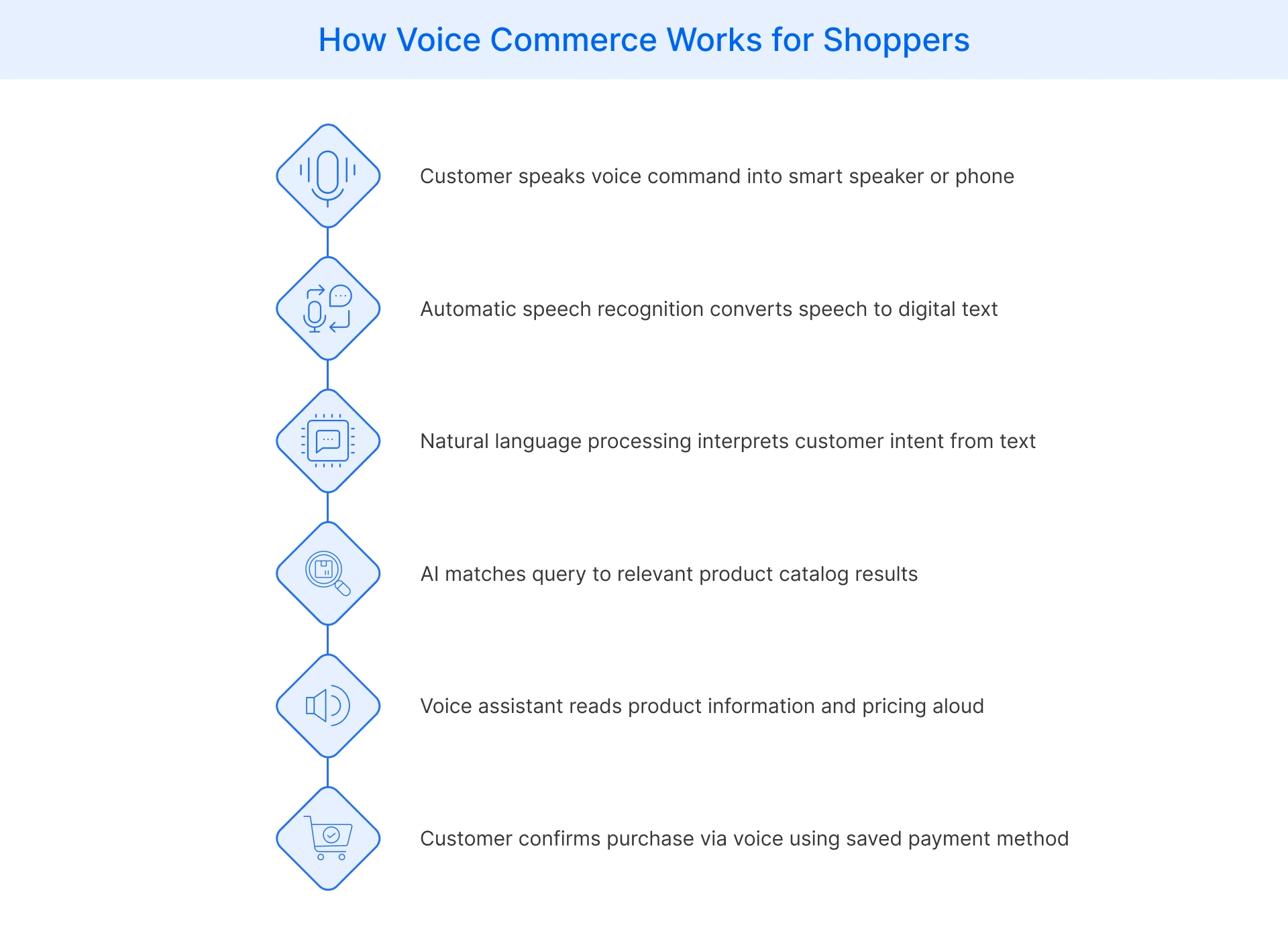
Here are the steps involved in completing a shopping transaction through voice commerce:
- Step 1 - Voice Input: The customer speaks a command into a voice-enabled device such as a smartphone, smart speaker or Amazon Echo smart display.
- Step 2 - Speech Recognition: Automatic speech recognition technology converts the spoken words into digital text that the system can process and analyze further.
- Step 3 - Intent Interpretation: Natural language processing interprets the text to understand customer intent and extract the key product requirements from the query.
- Step 4 - Product Matching: The system searches the product catalog and uses AI to match the customer request with the most relevant results available.
- Step 5 - Audio Response: The voice assistant presents results by reading product information, prices and availability through an audio response on the device.
- Step 6 - Order Completion: The customer confirms their selection through a voice command and the system processes payment using a pre-authorized payment method securely.
What Are Common Voice Commerce Use Cases?
Voice commerce supports a wide range of shopping tasks that customers can complete hands-free across connected devices and voice platforms.
- Product Search: Customers use voice commands to find specific items or browse product categories without touching a screen or typing a search query. A shopper might ask a voice assistant to find the best-rated wireless earphones under a set budget.
- Reordering: Shoppers quickly reorder frequently purchased items such as groceries or household supplies by speaking product names to their virtual assistant. This use case drives repeat purchases efficiently and reduces the time customers spend navigating an online store for routine items.
- Order Tracking: Customers check order status, shipping updates and delivery times through voice queries directed at a retailer's voice commerce platform. This reduces inbound volume to the support team and improves the overall customer experience without requiring any screen interaction.
- Price Comparison: Voice assistants help customers compare prices across similar products or check availability before committing to a purchase decision. Retailers that optimize product descriptions and pricing data for voice search gain a competitive advantage in this discovery stage.
- Customer Support: Shoppers ask questions about return policies, product specifications and account information through conversational language on voice-enabled devices. Handling these queries through voice commerce capabilities lowers support costs and keeps human agents available for complex issues requiring deeper resolution.
- Shopping Lists: Customers create and manage shopping lists by adding items through voice commands on a smart speaker or mobile app. This use case builds habitual engagement with a retailer's voice platform and increases the likelihood of conversion at the next purchase session.
What Are Examples of Voice Commerce Platforms?
Several major technology platforms power voice commerce capabilities for retailers and online shoppers across devices and operating systems worldwide.
- Google Assistant: Google Assistant powers voice shopping on Google Shopping and integrated retail platforms through Google Home devices and Android smartphones. It offers superior search capabilities and seamless integration with existing Google accounts, making product discovery through voice search highly accessible for online shoppers.
- Apple Siri: Apple Siri supports voice-activated shopping through compatible apps on iPhone, iPad and HomePod devices across the iOS ecosystem. Siri gives retailers access to a loyal base of iOS users who rely on the assistant for everyday tasks and are increasingly open to completing voice commerce transactions.
- Walmart and Flipkart: Both Walmart and Flipkart offer voice assistants within their mobile apps for hands-free product discovery and checkout. Best Buy and other major retailers have also explored voice commerce integration, reflecting broader industry recognition of this channel's role in the evolving shopping experience.
What Are the Benefits and Challenges of Voice Commerce?
Here are the key benefits and challenges posed by voice commerce in the retail sector:
Benefits of Voice Commerce
- Convenience and Speed: Customers can shop while multitasking such as cooking or driving without using their hands, making the buying process faster and more integrated into daily routines. This hands-free capability drives voice commerce adoption among time-pressed shoppers.
- Accessibility: Voice shopping helps people with disabilities or those uncomfortable with typing and screen navigation complete purchases independently and with confidence. This expands the addressable customer base and supports inclusive design principles across the ecommerce platform.
- Natural Interaction: Conversational language feels intuitive than navigating menus or typing search queries, reducing friction in the early stages of the shopping journey. Customers who find voice interaction natural are likelier to engage with product discovery and proceed toward checkout.
- Time Savings: Voice commands reduce shopping time by eliminating manual browsing and data entry across product pages and checkout flows. Faster transactions improve customer satisfaction scores and increase the likelihood of repeat purchases via voice commerce.
Challenges of Voice Commerce
Limited Visual Browsing: Customers cannot easily compare products visually or review detailed images during voice-only shopping sessions on a smart speaker. Retailers must invest in rich product descriptions and strong audio-based product information to compensate for the absence of visual cues.
Privacy Concerns: Users worry about devices listening continuously and how voice data is collected, stored and used by retailers and platform providers. Transparent data protection policies and clear opt-in mechanisms are essential for maintaining customer trust in voice commerce platforms.
Accuracy Issues: Voice recognition struggles with different accents, background noise and multiple speakers, leading to misunderstood queries and poor user feedback. Retailers must test voice commerce capabilities across diverse user demographics to minimize accuracy issues that disrupt the buying process.
What Is the Difference Between Voice Commerce and Conversational Commerce?
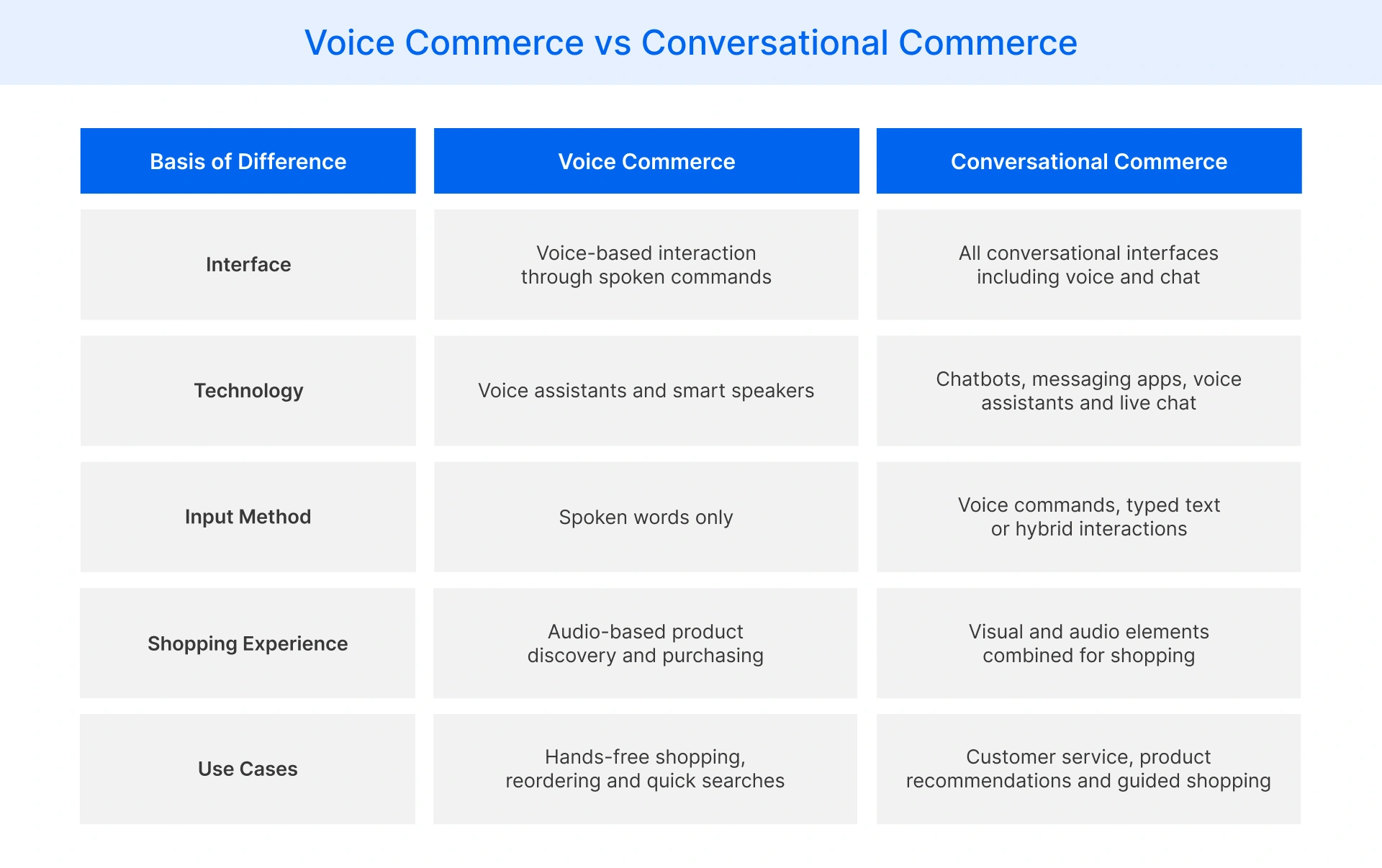
Voice commerce is a specific subset of conversational commerce that operates exclusively through spoken commands and voice assistant technology. Conversational commerce covers all conversational interfaces including voice, text-based chat and messaging apps.
While voice commerce focuses on audio-only product discovery and transactions, conversational commerce combines visual elements and multiple input methods into a broader shopping experience.
Here is a comparative analysis of both technologies:
Enable Smart Shopping Experiences with Flipkart Commerce Cloud
Implementing voice commerce and conversational AI requires robust technology infrastructure that understands customer intent and delivers personalized shopping experiences at scale.
Flipkart Commerce Cloud provides AI-powered conversational commerce capabilities through Smart Chat and Smart Search solutions that enable natural language interactions between retailers and customers across digital touchpoints. These tools interpret user intent in real time and connect shoppers to the right products efficiently.
FCC Smart Chat delivers intelligent 24/7 customer engagement with AI that interprets user intent for precise query resolution. The system offers powerful product discovery, smart recommendations and accurate assistance around the clock, reducing support costs while improving customer satisfaction.
Book a demo to explore FCC's conversational commerce capabilities.

FAQ
A shopper asking Amazon Alexa to reorder laundry detergent and completing the purchase through a saved payment method is a straightforward voice commerce example. Checking order status through Google Assistant or adding items to a cart via Apple Siri are equally common instances.
The voice process in ecommerce refers to the full sequence from a customer speaking a query to a voice assistant completing a product search, recommendation or transaction. It relies on automatic speech recognition, natural language processing and AI to interpret user intent and return accurate results.
Voice commerce is expected to become more accurate and personalized as generative AI and improved natural language processing models continue to develop in recent years. Integration with agentic AI will allow voice assistants to make purchase decisions and complete transactions with minimal input from the customer.
Smart speakers such as Amazon Echo and Google Home, smartphones running iOS or Android, smart displays and connected wearables all support voice commerce today. Most modern devices come with a pre-installed digital assistant capable of handling basic shopping tasks through voice commands. The expansion of IoT devices is steadily increasing the number of voice commerce-capable touchpoints available to shoppers.
Use conversational language and long-tail keywords in product titles and descriptions to match how customers phrase voice queries naturally. Implement structured data markup on your product pages so voice assistants can accurately read and surface your product information in audio responses. Regularly review zero-result voice search queries to identify gaps in your catalog or product description coverage.