
August 29, 2026
Product Categories and How They Shape the Ecommerce Experience
Product categories in ecommerce are usually organized using a hierarchical structure. Broad categories sit at the top, while more specific categories and products appear underneath them.
Drishti, Manager - Digital Marketing

Table of Contents
- What Is a Product Category?
- What Is the Difference Between a Product Category and a Product Type?
- What Are the Different Types of Product Categories?
- How Are Product Categories Structured in Ecommerce?
- How Do Product Categories Improve Website Navigation and Product Discovery?
- How Can Retailers Use Product Categories for Marketing?
- How Do Product Categories Support Ecommerce SEO?
- Conclusion
Product Categories and How They Shape the Ecommerce Experience
Product categories do more than organize an ecommerce catalog. They help retailers group related products, make it easier for shoppers to find what they need, and create a more structured shopping experience.
A well-organized category structure can also support product discovery, search visibility, and marketing. When products are grouped according to their purpose, characteristics, and how customers shop for them, retailers can create a clearer path from product discovery to purchase.
This makes product categorization an important part of how an online store presents its products and helps customers find the right product at the right moment.
What Is a Product Category?
A product category is a group of related products that share common characteristics, purposes, or uses. Categories help retailers organize their product catalog so that shoppers can browse products based on what they are looking for.
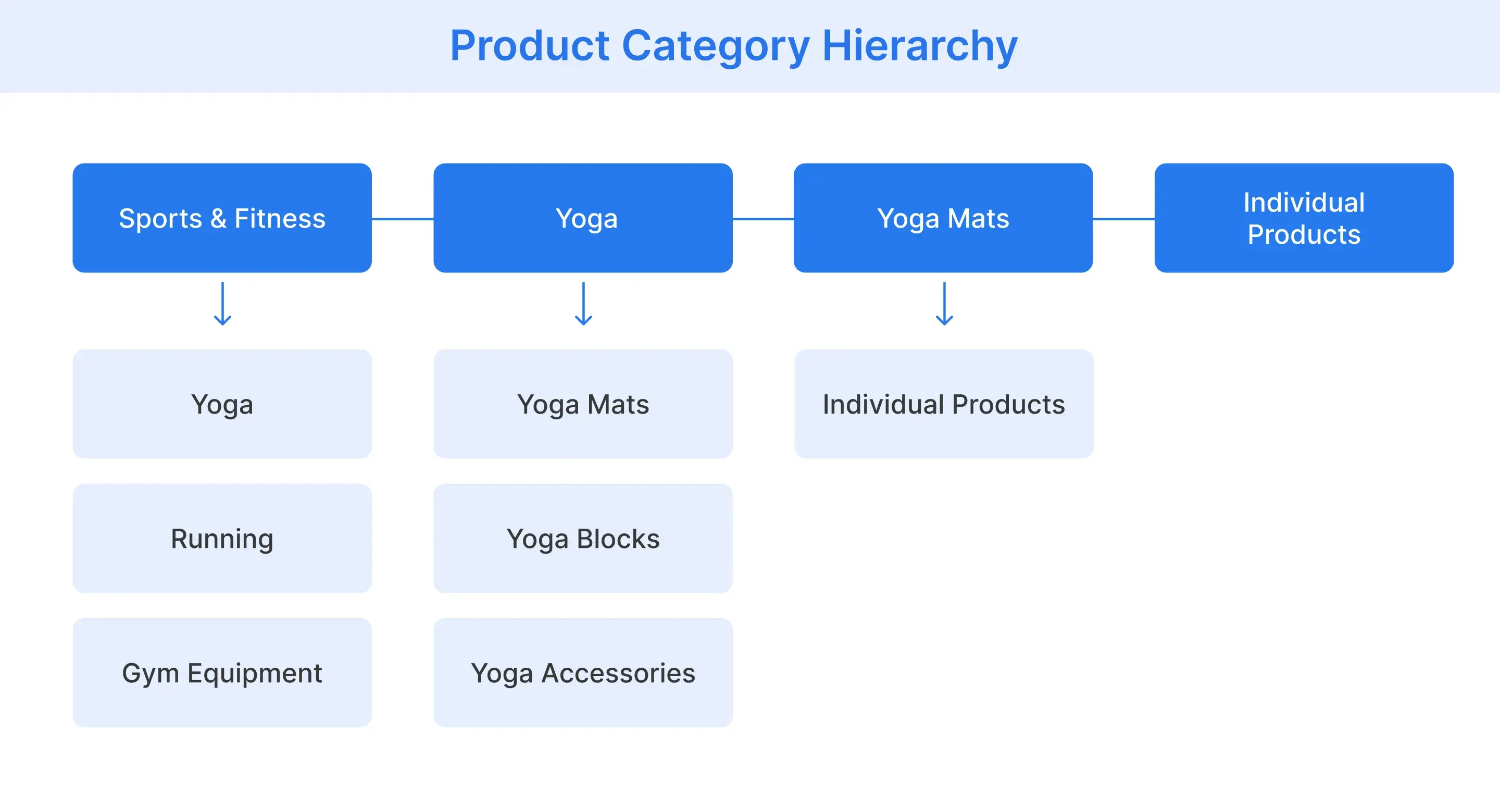
For example, an online shop selling sports equipment may organize its catalog into broad categories such as yoga equipment, running equipment, and fitness accessories. The yoga category could then contain products such as yoga mats, yoga blocks, and water bottles.
Product categories can also be divided into more specific categories as the catalog becomes larger. This creates a hierarchical structure that allows retailers to organize products from broad categories into more specific groups.
Effective categorization gives both shoppers and internal teams a clearer understanding of how products are organized. It can also make it easier to manage product listings, product pages, and inventory systems across an ecommerce site.
What Is the Difference Between a Product Category and a Product Type?
Although the terms are sometimes used interchangeably, a product category and a product type serve different purposes.
A product category groups related products according to a shared purpose, use, or set of characteristics. A product type describes the specific kind of product within that category.
|
Product Category vs. Product Type |
|
|---|---|
|
Product category |
Product type |
|
Yoga equipment |
Yoga mat |
|
Home goods |
Kitchen appliance |
|
Footwear |
Running shoes |
|
Electronics |
Smartphones |
For example, yoga equipment can be a product category containing several product types, including yoga mats and yoga blocks. The category provides a broader way to organize related products, while the product type identifies the specific kind of item.
Understanding this distinction helps retailers create clearer product categorization and avoid inconsistent naming across their online store.
What Are the Different Types of Product Categories?
Product categories can be organized in different ways depending on the products a retailer sells, the needs of its online shoppers, and the structure of its catalog.
Common approaches include:
- Broad categories: These group products into large areas based on their general purpose or use.
- Specific categories: These provide more detailed groupings for shoppers who already know what they are looking for.
- Product-based categories: These organize products according to their type, such as shoes, furniture, or smartphones.
- Use-based categories: These group products according to how customers use them, such as workout equipment or travel accessories.
- Customer-based categories: These organize products around different buyers or customer needs.
The right approach depends on the retailer’s catalog and purchase behavior. A large ecommerce store may use several levels of categorization to make its entire catalog easier to browse.
How Are Product Categories Structured in Ecommerce?
Product categories in ecommerce are usually organized using a hierarchical structure. Broad categories sit at the top, while more specific categories and products appear underneath them.
Consistent naming conventions are also important. If similar products are placed under inconsistent category names, shoppers may struggle to find them and internal teams may have to rely on more manual work to maintain the catalog.
A clear category structure can therefore make product management easier while creating a more consistent shopping experience.
How Do Product Categories Improve Website Navigation and Product Discovery?
Well-structured product categories can make it easier for online shoppers to move through an ecommerce site and discover relevant products.
Instead of searching through an entire catalog, shoppers can narrow their options by selecting the category that matches their needs. This can help them reach relevant product pages more quickly and reduce the effort required to find what they want.
Category pages can also provide an opportunity to highlight related products and product recommendations. For example, a shopper browsing yoga mats may also see yoga blocks or other relevant products.
For retailers, this structure can contribute to a smoother customer experience and potentially support metrics such as conversion rate and average order value.
How Can Retailers Use Product Categories for Marketing?
Product categories can also support category marketing by giving retailers a way to organize promotional activity around groups of related products.
Retailers can use category pages to promote relevant products, create targeted marketing copy, and connect shoppers with products that match their interests or purchase behavior.
For example, a retailer could create a campaign around home goods during a seasonal shopping period and direct shoppers to a dedicated category page containing relevant products.
Category marketing can also help retailers identify opportunities to promote related products and make product recommendations based on what shoppers are browsing or purchasing.
How Do Product Categories Support Ecommerce SEO?
Product categories can contribute to ecommerce SEO by giving search engines a clearer understanding of how products are organized across an ecommerce site.
Well-structured category pages can create logical destinations for relevant searches and help retailers build topical authority around the products they sell.
Consistent category names and useful category pages can also improve how products are discovered through search results. When category structures are clear, retailers can create more relevant content around specific categories and potentially attract qualified organic traffic.
However, category pages should be created for shoppers first. Simply adding categories to target search terms can create unnecessary pages and make the ecommerce site harder to navigate.
Conclusion
Product categories provide the structure that helps retailers organize their catalogs and helps shoppers find relevant products. From broad categories to specific product types, a clear categorization system can support product discovery, customer experience, inventory management, and ecommerce SEO.
When categories are organized around how customers actually browse and shop, retailers can create a more useful online store while making their product catalog easier to manage and discover.

FAQ
To choose the right product category, retailers analyze market demand, profit margins, and consumer search behavior. Evaluating target audience needs ensures businesses select expanding product lines that align with their overall marketing strategy, optimize inventory investments, and consistently connect with the right shopper across digital sales channels.
Retailers organize products into categories and subcategories by developing a clear product taxonomy tailored to intuitive browsing habits. Establishing an effective product categorization system through logical grouping of related products helps shoppers navigate storefronts seamlessly, reduces site friction, and ultimately elevates overall search engine indexing.
In ecommerce marketing, product category marketing leverages structured catalog groupings to run tailored promotional campaigns. Retailers use targeted merchandising strategies across each primary destination page to analyze purchasing patterns, display relevant recommendations, and present personalized cross-selling opportunities that boost overall conversion rates across online storefronts.
An ecommerce store should have enough product categories to organize inventory clearly without overwhelming site visitors. While optimal structure depends on catalog depth, maintaining a streamlined layout improves site navigation, delivers better search rankings, and creates an effortless browsing experience that keeps customers engaged.