
June 20, 2026
What Is a Reseller?
A reseller is a business or individual that purchases products or services from manufacturers, suppliers, or distributors and sells them to customers for profit. Resellers help businesses expand market reach across ecommerce, retail, and digital marketplaces.
Drishti, Manager - Digital Marketing

Table of Contents
- What Is a Reseller?
- How Does a Reseller Work?
- What Are the Main Types of Resellers?
- Reseller vs Retailer: What Is the Difference?
- What Are the Benefits of the Reseller Business Model?
- What Are the Challenges to Being a Reseller?
- How Can Businesses Succeed as Resellers?
- Conclusion
What Is a Reseller?
A reseller is a business or individual that purchases products or services from manufacturers, suppliers, or distributors and sells them to end customers at a higher price to make a profit. Instead of creating products themselves, resellers operate by sourcing existing products and selling them through online stores, marketplaces, physical retail locations, or other sales channels.
Depending on the business model, resellers may sell to other businesses (B2B commerce) or directly to consumers (B2C commerce). For example, a wholesale electronics reseller may supply gadgets to retail stores, while an online fashion reseller may sell directly to shoppers through an e-commerce store or marketplace.
The reseller business model is widely used across e-commerce and retail because it allows businesses to launch quickly without investing in manufacturing. From fashion and electronics to beauty products and home goods, many reseller businesses build product lines by sourcing inventory from wholesalers or suppliers and reselling it to customers through digital and physical channels.
In e-commerce, resellers often use marketplaces, branded websites, and social media to attract customers, manage sales, and grow their online presence. While profit margins vary by product category and competition, successful resellers typically focus on customer service, pricing strategy, and product selection to remain competitive.
How Does a Reseller Work?
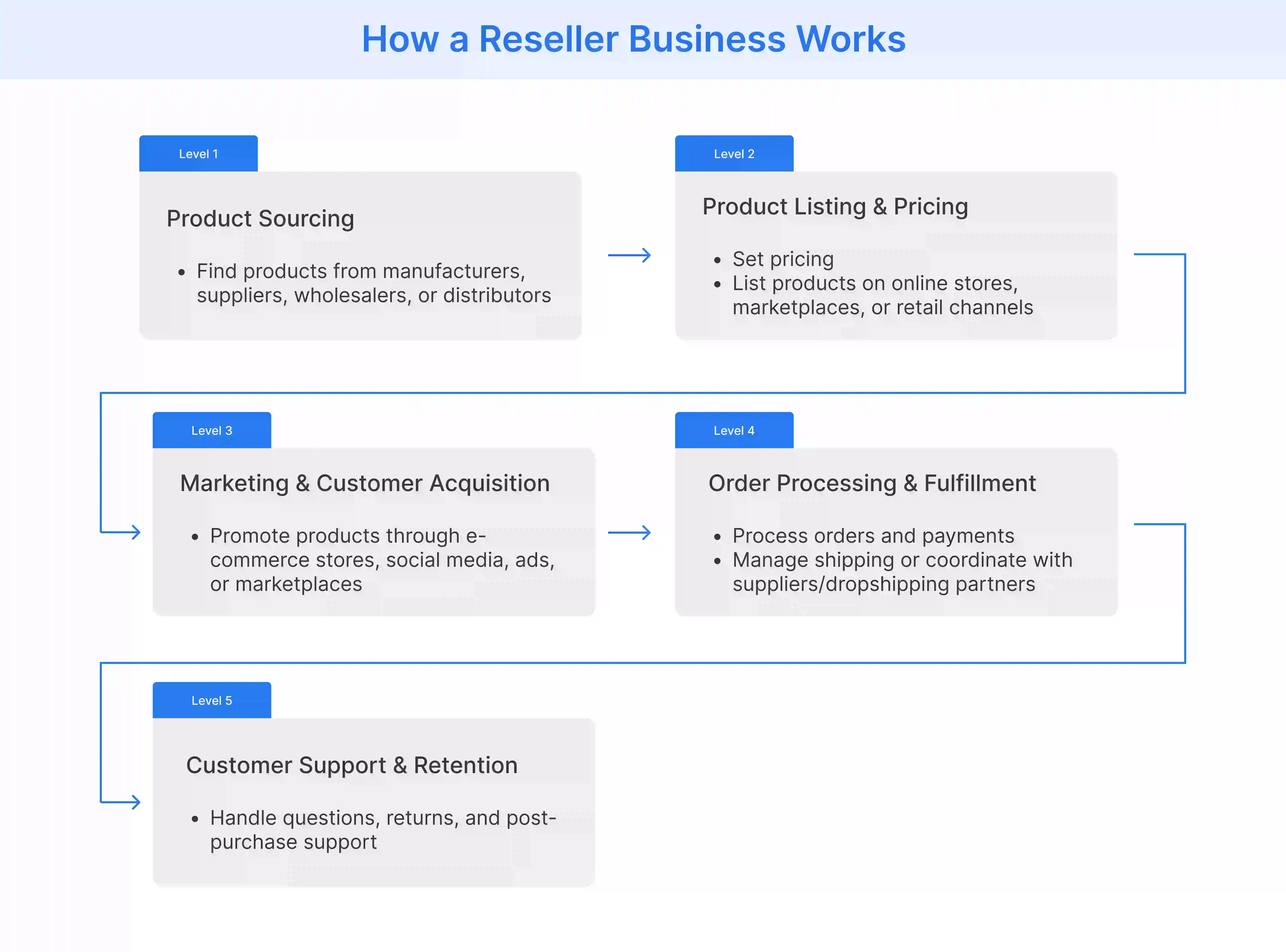
A reseller purchases products or services from manufacturers, suppliers, wholesalers, or distributors and sells them to end customers at a markup. Instead of producing goods themselves, resellers focus on sourcing products, setting prices, and managing sales channels to generate profit.
The reseller business model usually follows a straightforward process. First, a reseller identifies products that match customer demand and sources them at wholesale or discounted prices. The products are then listed on an online store, an e-commerce marketplace, a social media storefront, or a physical retail location to attract buyers.
Once a customer places an order, the reseller manages order processing, payment collection, fulfillment, and customer interactions. Depending on the reseller model, some businesses hold inventory directly, while others rely on suppliers or dropshipping partners to fulfill orders.
Successful reseller businesses often focus on pricing strategy, customer service, and product selection to remain competitive while building customer trust.
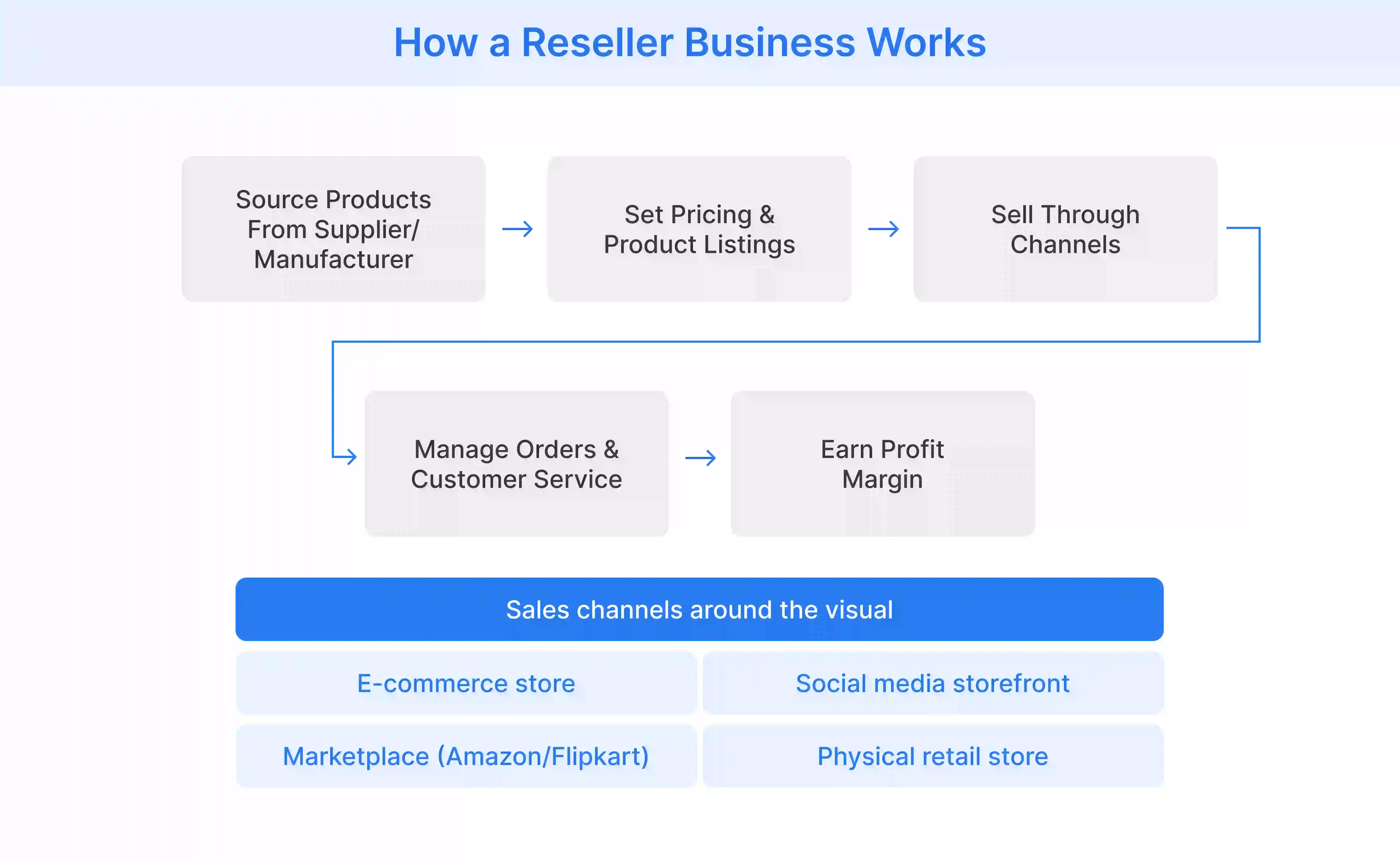
A reseller’s responsibilities typically include:
- Product sourcing: Identifying products with market demand and purchasing them from manufacturers, wholesalers, or distributors.
- Pricing strategy: Setting prices that balance competitiveness and profit margins.
- Sales and distribution: Selling products through ecommerce stores, marketplaces, social media storefronts, or physical retail locations.
- Marketing and promotion: Managing product listings, promotions, and digital marketing efforts to improve visibility and attract customers.
- Customer service: Handling inquiries, complaints, returns, and post-purchase support to improve customer experience.
- Order management: Managing payments, fulfillment, and delivery processes, either directly or through suppliers or dropshipping partners.
What Are the Main Types of Resellers?
Resellers operate across different business models depending on how they source, market, and sell products. Some focus on direct sales to consumers, while others sell in bulk or provide additional services alongside products.
Retail Resellers
Retail resellers purchase products from wholesalers or distributors and sell them directly to consumers in smaller quantities. They typically operate through physical stores, online stores, or marketplaces and generate profit through markup pricing.
Wholesale Resellers
Wholesale resellers buy products in bulk from manufacturers or distributors and resell them to retailers or businesses. Their business model focuses on higher sales volume rather than direct consumer sales.
Online or E-commerce Resellers
Online resellers sell products through e-commerce websites, social commerce platforms, or digital marketplaces such as Amazon, eBay, or Shopify stores. Many e-commerce businesses use this reseller model because it allows them to reach customers without manufacturing products.
Value-Added Resellers (VARs)
Value-added resellers sell products alongside additional services such as setup, customization, training, or customer support. While commonly used in technology and software industries, the model can also apply to e-commerce businesses offering installation or premium services.
Reseller vs Retailer: What Is the Difference?
Resellers and retailers are closely related, but they are not the same. A reseller buys products or services and sells them for profit, often through different sales channels or business models. A retailer, however, sells products directly to end consumers.
In simple terms, all retailers are resellers, but not all resellers are retailers. Some resellers sell in bulk or serve other businesses, while retailers focus primarily on individual customers.
|
Basis of Difference |
Reseller |
Retailer |
|
Definition |
Buys and resells products for profit |
Sells products directly to consumers |
|
Customer Type |
Businesses or consumers |
End consumers |
|
Sales Model |
May sell wholesale or retail |
Primarily retail sales |
|
Product Volume |
May sell in bulk or smaller quantities |
Usually sells in smaller quantities |
|
Example |
Marketplace seller or wholesaler |
Fashion or electronics store |
What Are the Benefits of the Reseller Business Model?
- Lower Startup Costs: Resellers avoid manufacturing expenses, making it easier to start a business with lower upfront investment.
- Faster Time to Market: Businesses can launch quickly by sourcing existing products instead of creating products from scratch.
- Flexible Product Selection: Resellers can test different product lines and adapt to changing customer demand more easily.
- Scalability: Many reseller businesses can expand quickly by adding more suppliers, marketplaces, or product categories.
- Access to Established Products: Selling proven products reduces the risks associated with product development and manufacturing.
- Opportunity to Build a Brand: Some reseller businesses create a unique shopping experience, private labeling strategy, or niche product positioning to stand out in competitive markets.
What Are the Challenges to Being a Reseller?
- High Competition: Many reseller businesses may sell similar or identical products, making pricing and differentiation more difficult. Strong competitive pricing strategies can help businesses remain attractive in crowded markets.
- Limited Control Over Product Quality: Since products come from manufacturers or suppliers, resellers may have less control over quality issues or production delays.
- Lower Profit Margins: Competition and supplier pricing can reduce margins, especially in highly saturated ecommerce categories.
- Inventory and Stock Issues: Products may become unavailable, delayed, or discontinued, affecting customer satisfaction.
- Dependence on Suppliers: A reseller business often depends on supplier reliability, shipping timelines, and pricing stability.
- Customer Service Expectations: Even when issues come from suppliers, customers typically expect resellers to provide fast customer support and resolutions.
How Can Businesses Succeed as Resellers?
- Choose the Right Niche: Focus on products or categories with consistent demand and manageable competition.
- Build Reliable Supplier Relationships: Working with dependable suppliers helps maintain product quality, pricing stability, and inventory availability.
- Offer Excellent Customer Service: Fast responses, clear communication, and effective customer support can help build trust and repeat purchases.
- Use Multiple Sales Channels: Selling through e-commerce stores, marketplaces, or social media can increase reach and sales opportunities.
- Invest in Marketing: SEO, email marketing, paid ads, social media, and promotional pricing strategies can help reseller businesses attract customers and increase visibility.
- Monitor Trends and Customer Demand: Successful reseller businesses regularly evaluate product performance, customer preferences, and pricing trends. Some businesses also use dynamic pricing strategies to remain competitive.
Conclusion
Resellers help move products from manufacturers, suppliers, or distributors to customers through online stores, marketplaces, wholesale channels, or value-added services. Success as a reseller depends on choosing the right products, managing pricing, and delivering a strong customer experience. Flipkart Commerce Cloud helps businesses streamline reseller operations through inventory, pricing, promotions, and order management tools.
FAQ
The main difference between a seller and a reseller comes down to the source of the product. A primary seller typically manufactures goods under their own brand. Conversely, a reseller is a merchant that buys finished inventory from those original manufacturers and alters the distribution to sell those items directly to consumers at a higher price.
To understand what a reseller does, you look at how they bridge the gap between suppliers and the end market. They source inventory in bulk, manage an online store, and market products directly to shoppers. This role adds immense value by making diverse goods accessible to everyday consumers without requiring massive upfront logistics.
Common reselling mistakes include overestimating market demand, setting uncompetitive prices, and neglecting to collect necessary sales tax. Many businesses also fail to invest in proper infrastructure. Using robust e-commerce tools, like the centralized operations features within Flipkart Commerce Cloud, helps merchants avoid these costly slipups by keeping data perfectly organized.
The benefits of being a reseller include incredibly low initial startup costs and the freedom to skip complex product development cycles entirely. Because you sell existing, trusted goods, you can focus your time and energy on building out your digital storefront, optimizing marketing campaigns, and expanding your catalog instantly.
The risks of buying from a reseller usually involve counterfeit products, inflated retail costs, and compromised warranty coverages. Because shoppers aren't purchasing directly from the original manufacturer, they must carefully vet the vendor’s reputation to ensure they receive genuine items and dependable post-purchase customer support if something goes wrong.
The rules of reselling require adhering to strict manufacturer pricing policies, obtaining proper business licenses, and avoiding trademark infringement. Merchants must secure legal distribution rights before listing restricted products. Advanced marketplace platforms, such as FCC, help businesses enforce these compliance checks smoothly to protect both the brand and the buyer.