
August 4, 2026
Product Detail Page in Ecommerce: Best Practices & Examples to Boost Conversions
A product detail page (PDP) is a dedicated ecommerce page that provides customers with the information they need to evaluate and purchase a product. It combines product descriptions, images, pricing, reviews, and key purchase details.
Drishti, Manager - Digital Marketing

Table of Contents
- What Is a Product Detail Page in Ecommerce?
- What Should a Product Detail Page Include?
- What Are the Best Practices for Product Detail Pages?
- Product Detail Page Example 1: Apple
- Product Detail Page Example 2: Jeni's Ice Creams
- What Metrics Should You Track for Product Detail Page Performance?
- How to Use Flipkart Commerce Cloud to Build High-Converting Product Detail Pages
Product Detail Page in Ecommerce: Best Practices & Examples to Boost Conversions
A product detail page (PDP) is one of the most important pages in an online shopping journey. It gives shoppers the information they need to evaluate a product, compare options, and decide whether to make a purchase. From product descriptions and images to pricing, reviews, and shipping details, every element of a PDP influences customer confidence and buying decisions.
In this glossary, you will learn how to transform standard product listings into high-converting product detail pages. We cover the core elements every effective PDP needs, the best design practices to maximize buyer engagement, the gold-standard examples of product page design, and how to measure the success of your product detail pages.
What Is a Product Detail Page in Ecommerce?
A Product Detail Page (PDP) in ecommerce is a dedicated page on an online store that gives shoppers all the information they need to evaluate and purchase a specific product. It consists of product descriptions, images, pricing, specifications, customer reviews, shipping details, and purchase options in one place, helping customers make informed buying decisions.
Unlike category pages or search results that help customers discover products, a product detail page focuses on a single item. A PDP’s purpose is to give an overview of the product, answer common questions, showcase product value, and reduce purchase uncertainty.
A well-designed PDP improves customer experience, conversion rates, reduces cart abandonment, lowers product return rates, and increases average order value. Additionally, a well-optimized PDP provides rich, relevant content that improves search engine visibility and draws more organic traffic to the ecommerce store.
What Should a Product Detail Page Include?
A product detail page should include accurate product information, high-quality visual content, visible trust signals, and clear conversion tools. These page elements work together to build buyer confidence and drive sales.
Product Information
Product data encompasses the product name, description, specifications, and pricing. These text-based elements help shoppers understand product features, technical details (such as dimensions or compatibility), and overall financial value.
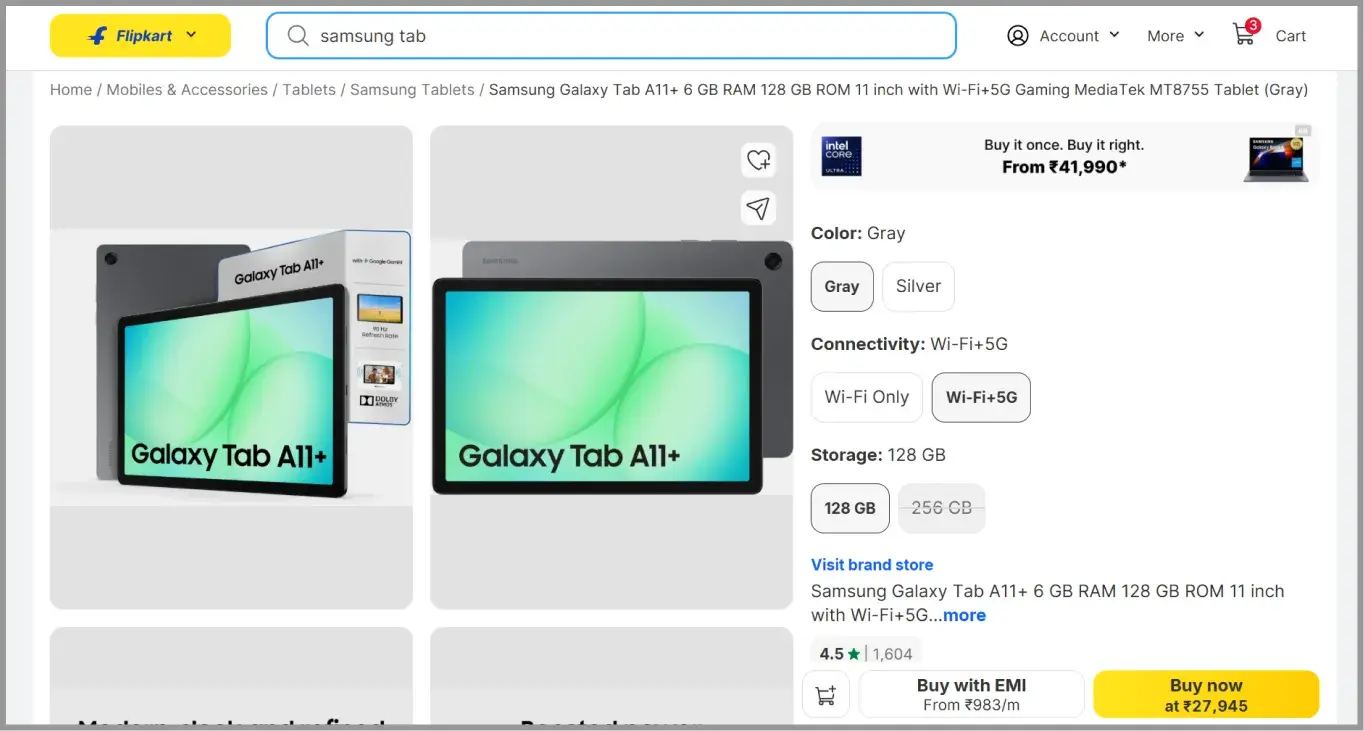
Credit: Flipkart
Visual Content
Visual content includes high-resolution product images, product videos, 360-degree views, and lifestyle photography. Visuals allow buyers to examine items from multiple angles and accurately gauge quality, reducing purchase uncertainty.
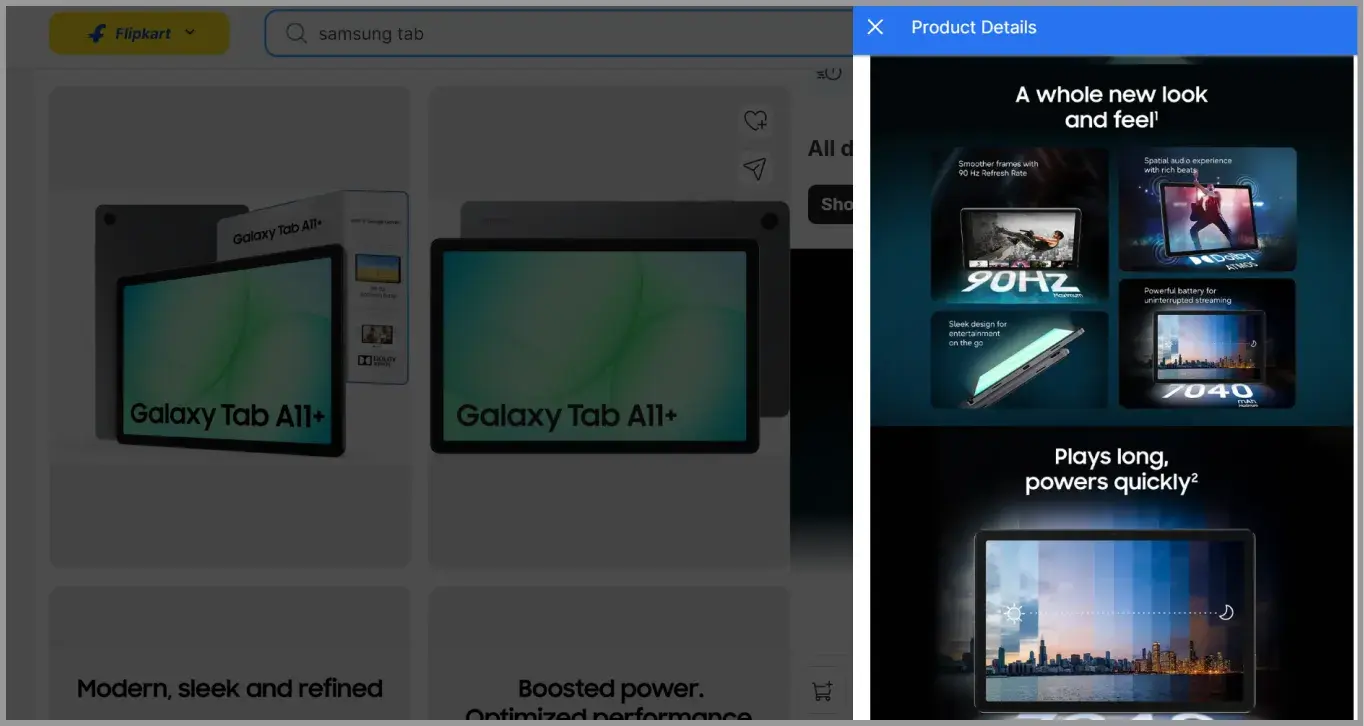
Credit: Flipkart
Trust and Transparency
Trust-building elements include product ratings and reviews, stock availability, shipping costs, and return policies. Displaying this logistical and peer-reviewed information upfront reassures shoppers and sets clear delivery expectations.
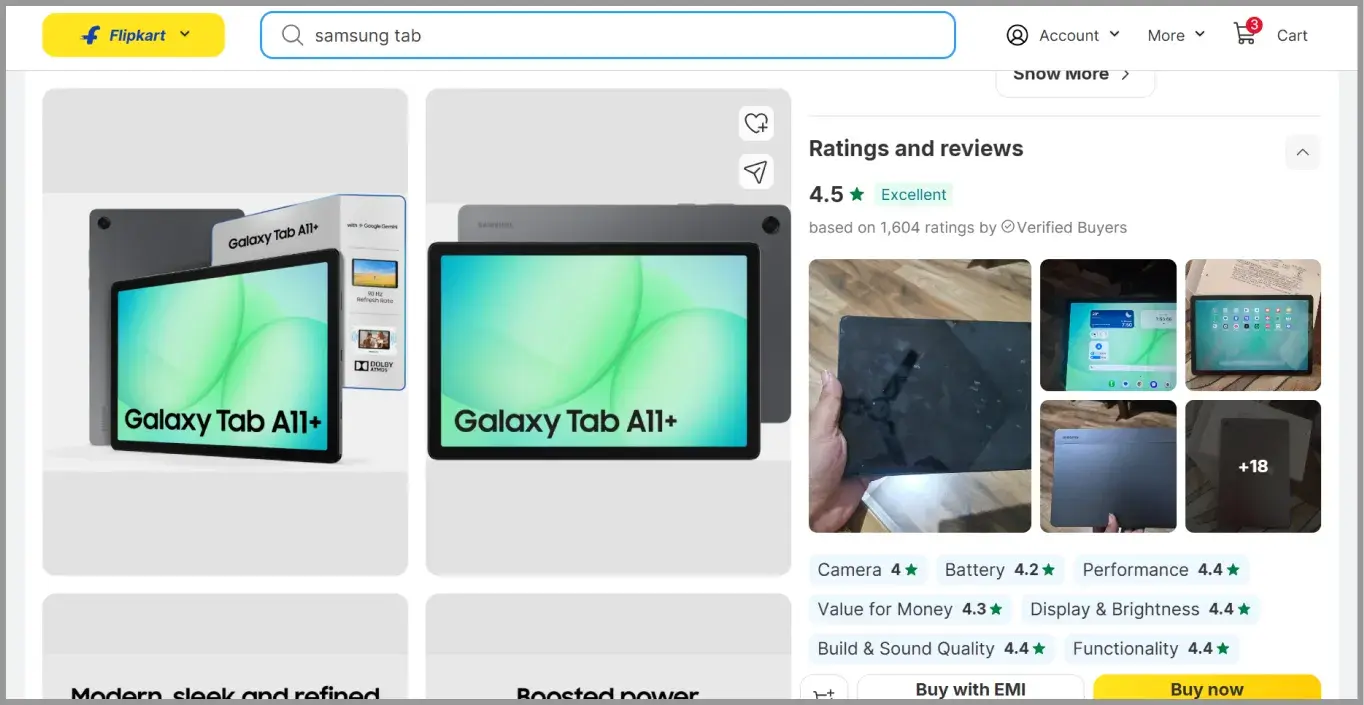
Credit: Flipkart
Conversion Elements
Conversion elements center around a highly visible call-to-action (CTA), such as an "Add to Cart" or "Buy Now" button. Recommending similar products and promotional offers also serve as conversion tools to increase average order value.
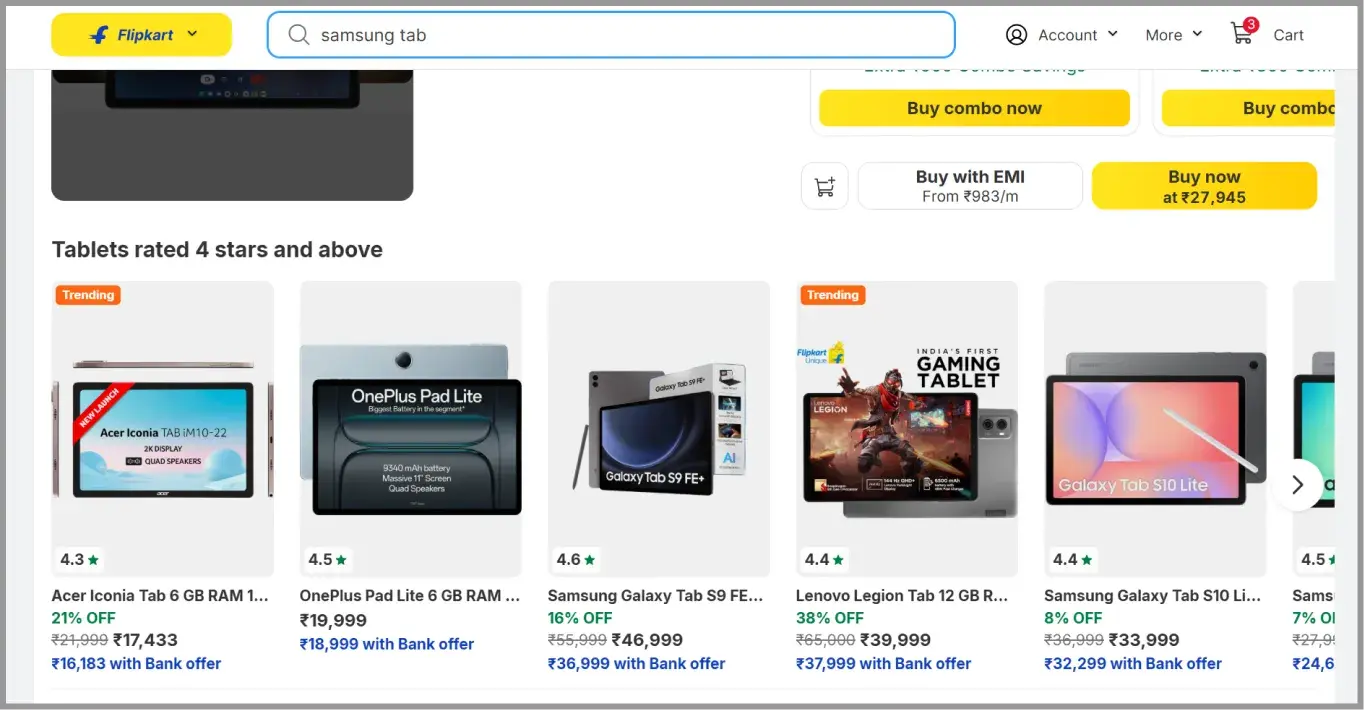
Credit: Flipkart
What Are the Best Practices for Product Detail Pages?
To create effective product detail pages, ecommerce brands should prioritize high-quality visuals, write clear descriptions, provide social proof, and ensure a seamless experience on mobile devices. Following these guidelines helps ecommerce businesses maximize customer engagement and conversions.
- Avoid generic feature lists. Product descriptions should highlight unique value, explain how the item solves a specific problem, and directly answer common buyer questions.
- Include relevant keywords. These include short-tail, long-tail, and backend keywords. These will help your product detail page rank high on the search results when prospective customers search for the product.
- Feature authentic customer reviews, star ratings, and user-generated content. Social proof validates product quality and increases buyer confidence prior to checkout.
- Place Calls-to-Action such as "Add to Cart" or "Buy Now" buttons above the fold. A highly visible CTA reduces friction and clearly guides the shopper to the next step in the purchasing journey.
- Ensure product pages load fast and are responsive. A smooth mobile navigation experience is crucial for capturing the massive segment of smartphone shoppers.
- Regularly update dynamic information like pricing, inventory levels, and shipping details. Accurate, real-time data prevents customer frustration and reduces post-purchase returns.
- Reveal shipping and return information upfront. Concealing shipping costs or return policies until checkout is a leading cause of cart abandonment. Transparency is required early in the browsing process to prevent sticker shock and build trust.
- Conduct A/B testing with test layouts, CTAs, and content to understand customer behavior, see what works best, and improve performance.

Product Detail Page Example 1: Apple
Apple is widely considered the gold standard for electronics product detail pages. Rather than overwhelming the user with a dense list of technical specifications immediately, Apple uses visual storytelling to explain complex hardware and software features.
-
The page uses scroll-triggered animations and massive, high-resolution 3D renders to let users virtually "inspect" the device from different angles.

Credits: Apple
-
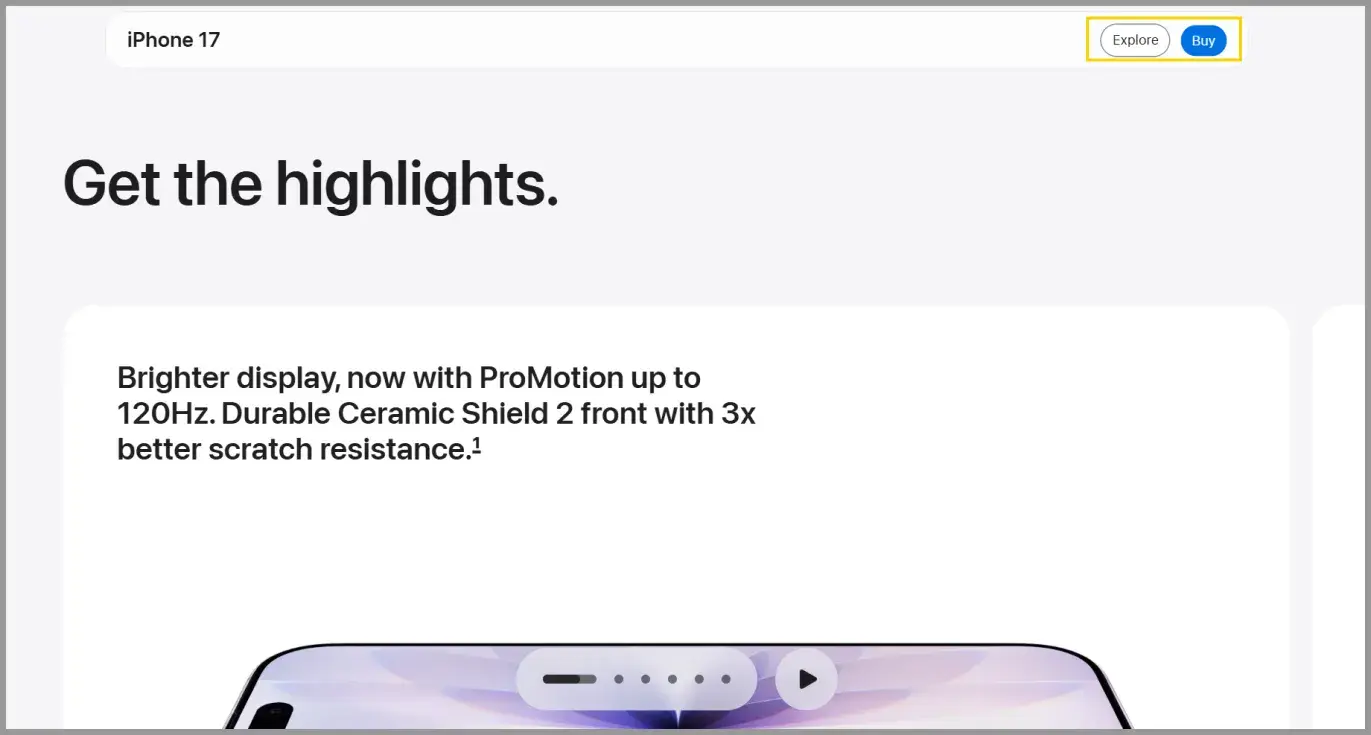
Sticky Call-to-Action: As you scroll through the long-form feature explanations, a persistent navigation bar with a "Buy" button and the starting price remains pinned to the top of the screen.
Credits: Apple
-
Simplified Technical Specs: Apple translates technical jargon into user benefits (e.g., instead of just listing battery capacity in mAh, they say "Up to 29 hours of video playback"). For power users, a dedicated "Tech Specs" link provides the granular data without cluttering the main page.

Credits: Apple
-
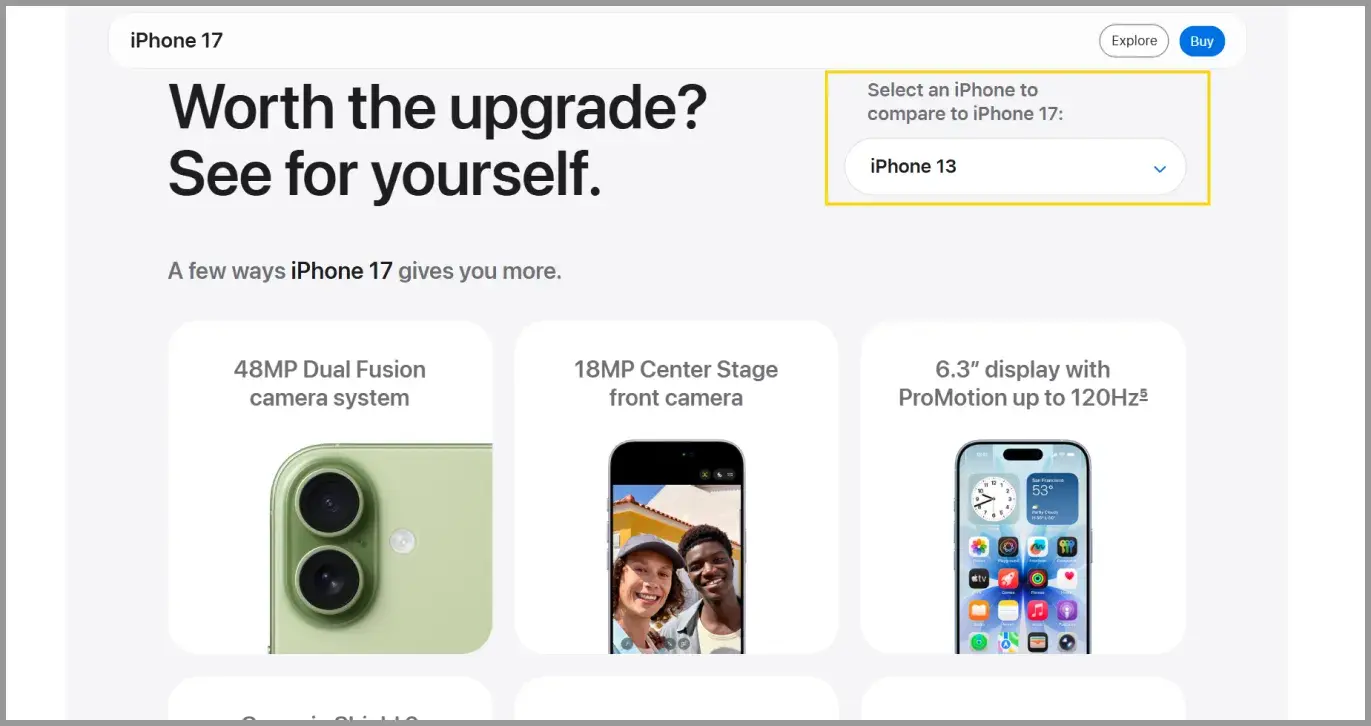
Comparison Tools: They integrate a comparison matrix near the bottom, helping buyers decide between different models without leaving the page.
Credits: Apple
Product Detail Page Example 2: Jeni's Ice Creams
Selling frozen food online requires a product detail page that not only makes the product look appetizing but also builds extreme trust regarding shipping and fulfillment. Jeni's executes this flawlessly.
-
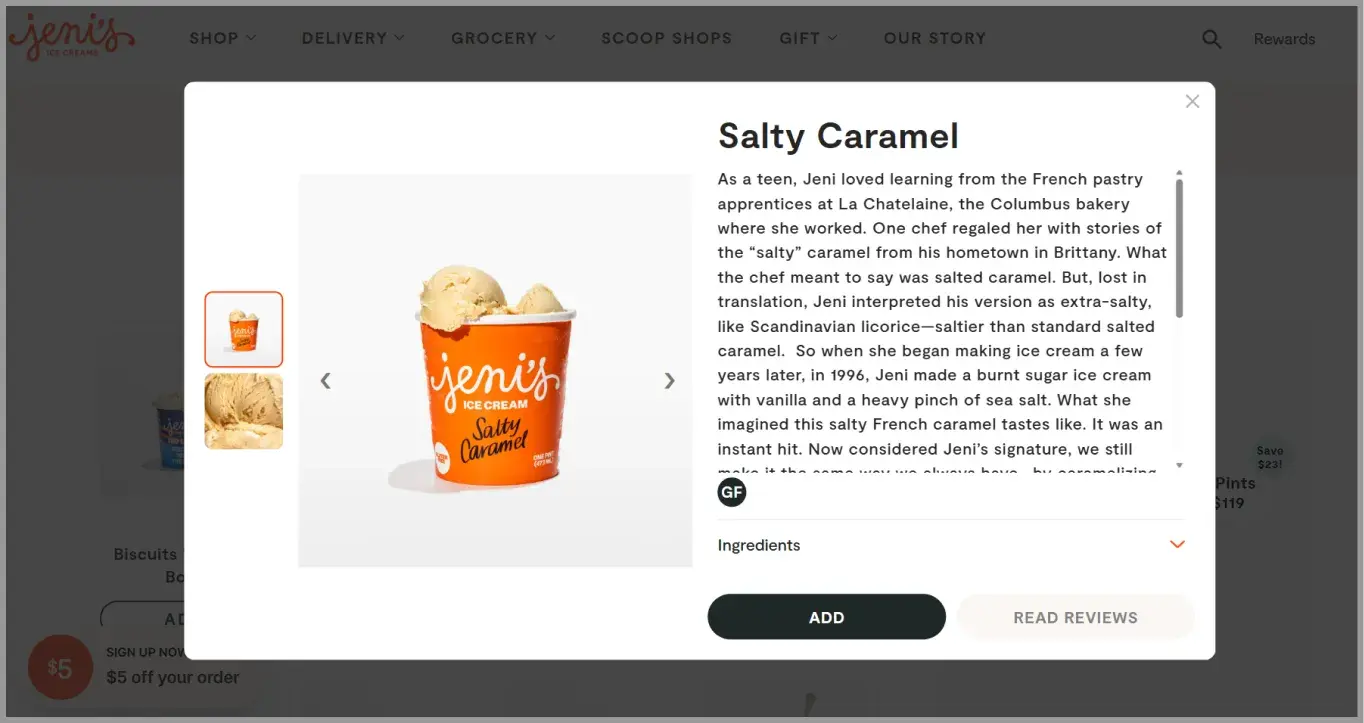
Sensory Copywriting: Because you cannot taste or smell the product through a screen, Jeni's relies on highly evocative, vivid copy. They describe flavor profiles, textures, and ingredients in a way that creates an immediate craving.
Credits: Jeni’s ice creams
-
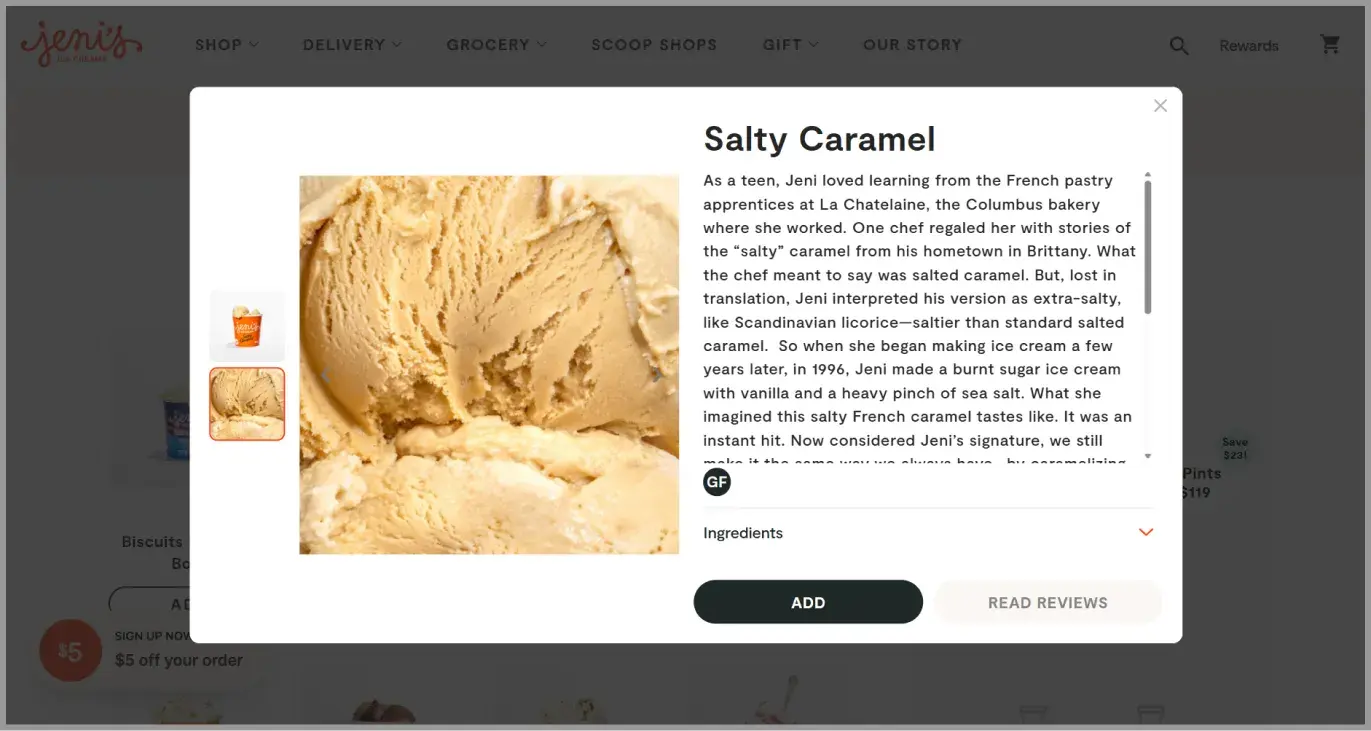
Texture-Focused Visuals: Instead of just showing the outside of a pint, their main images feature high-definition close-ups of the ice cream scooped out, highlighting the chunks and swirls to showcase quality.
Credits: Jeni’s ice creams
-
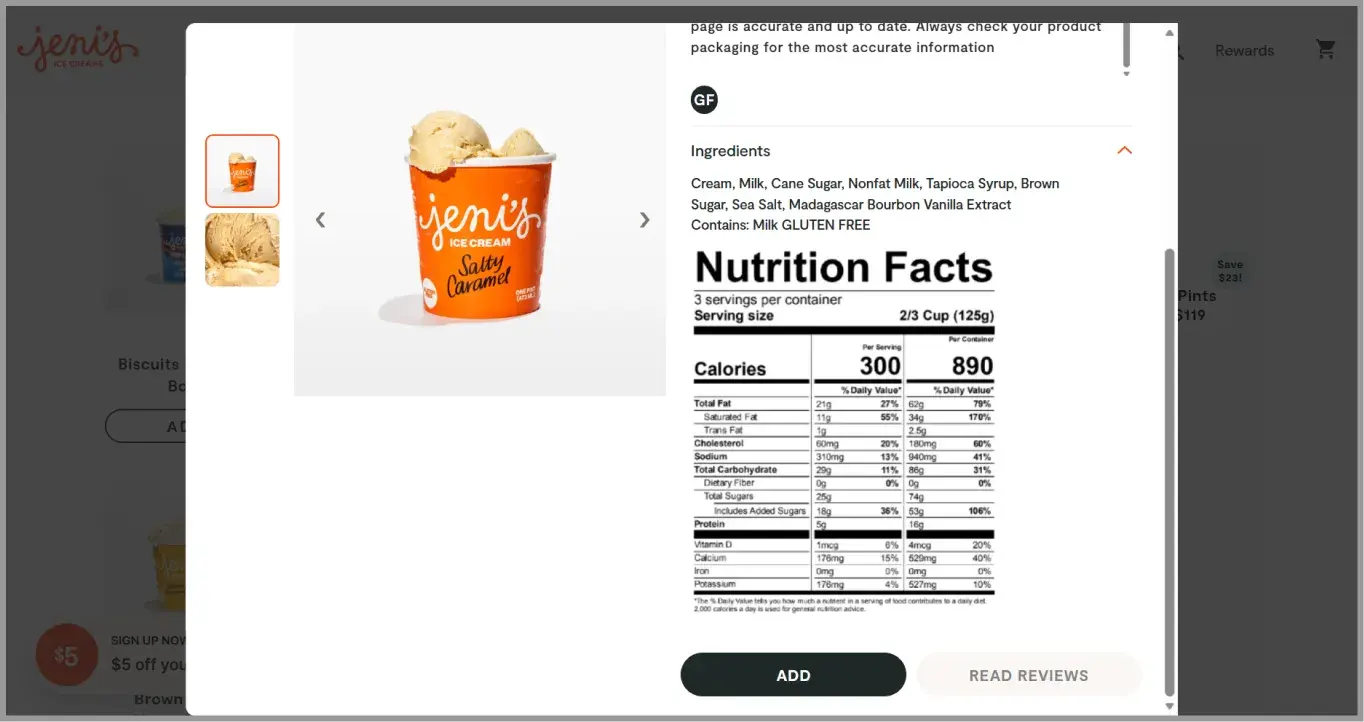
Easily Accessible Dietary Info: They use simple, collapsible accordion menus for ingredients, allergens, and nutritional facts, ensuring shoppers with dietary restrictions can find information instantly without cluttering the page design.
Credits: Jeni’s ice creams
What Metrics Should You Track for Product Detail Page Performance?
Tracking the right performance metrics helps retailers understand how customers interact with product detail pages and identify opportunities to improve the shopping experience. Monitoring these key performance indicators (KPIs) allows businesses to optimize product pages, reduce friction, and increase conversions.
- Conversion rate: Measures how effectively a product detail page converts visitors into customers. A higher conversion rate indicates that the page successfully encourages shoppers to complete a purchase.
- Click-through rate (CTR): Tracks how often shoppers click primary calls-to-action, such as Add to Cart or Buy Now, helping retailers evaluate the effectiveness of their page design and messaging.
- Average time on page: Shows how long visitors spend on a product detail page. Longer engagement often indicates that shoppers are actively exploring product information before making a purchase.
- Bounce rate: Measures the percentage of visitors who leave the product detail page without taking any further action. A high bounce rate may indicate that the page is not meeting customer expectations.
- Cart abandonment rate: Tracks how often shoppers add products to their cart but leave without completing the purchase. Monitoring this metric can help retailers identify friction points in the buying journey.
- Product return rate: Measures how often purchased products are returned. A high return rate may indicate inaccurate product descriptions, misleading images, or unmet customer expectations.
Businesses should also monitor user behavior using analytics tools, heatmaps, and session recordings. These methods reveal how shoppers interact with product images, descriptions, reviews, and call-to-action buttons, making it easier to identify optimization opportunities and continuously improve product detail page performance.
How to Use Flipkart Commerce Cloud to Build High-Converting Product Detail Pages
Despite their importance, creating product pages that are informative, personalized, and optimized for conversions can be challenging, especially when managing large product catalogs across multiple channels. Businesses need a solution that makes it easy to deliver accurate product information while tailoring the shopping experience to each customer.
Flipkart Commerce Cloud helps businesses create engaging product detail pages by combining AI-powered merchandising, rich product content management, personalized recommendations, and intelligent search capabilities. Retailers can deliver consistent product information, showcase relevant recommendations, optimize product discovery, and create seamless shopping experiences that encourage customers to complete their purchases across every touchpoint.
Book a demo to discover how FCC can help your business build high-performing product detail pages that improve customer engagement, increase conversions, and drive sustainable e-commerce growth.

FAQ
You should update your item pages whenever specifications change, stock fluctuates, or new reviews are submitted. Refreshing PDP content, imagery, and seasonal pricing ensures search engines crawl the page frequently, optimizing the overall user experience and keeping prospective buyers informed with accurate, up-to-date information.
The main difference between a product listing page and a product detail page lies in focus. A listing page displays a catalog grid of multiple items for browsing, whereas a dedicated web page zooms in on a particular product, providing important details, imagery, and purchase options to drive immediate conversions.
Yes, optimized product detail page design can significantly improve SEO by capturing high-intent search traffic. Targeting relevant keywords (both short- and long-tail), rich snippets, and structured data on a PDP helps search engines index unique features, driving active online shoppers directly to your store.
You should update your item pages whenever specifications change, stock fluctuates, or new reviews are submitted. Refreshing PDP content, imagery, and seasonal pricing ensures search engines crawl the page frequently, optimizing the overall user experience and keeping prospective buyers informed with accurate, up-to-date information.
Customer reviews are critical on a product page because they provide social proof and reduce buying hesitation. Seeing authentic feedback from real shoppers builds trust, addresses hesitation in consumer behavior, and boosts buyer confidence, ultimately serving as your best chance to increase overall conversion rates across your store.